
Hassabis: AI Breakthroughs to Fundamentally Reshape Human-Machine Interaction
Google DeepMind's CEO details how AI will soon perceive, create, and act autonomously in our complex digital and physical realities.
December 6, 2025
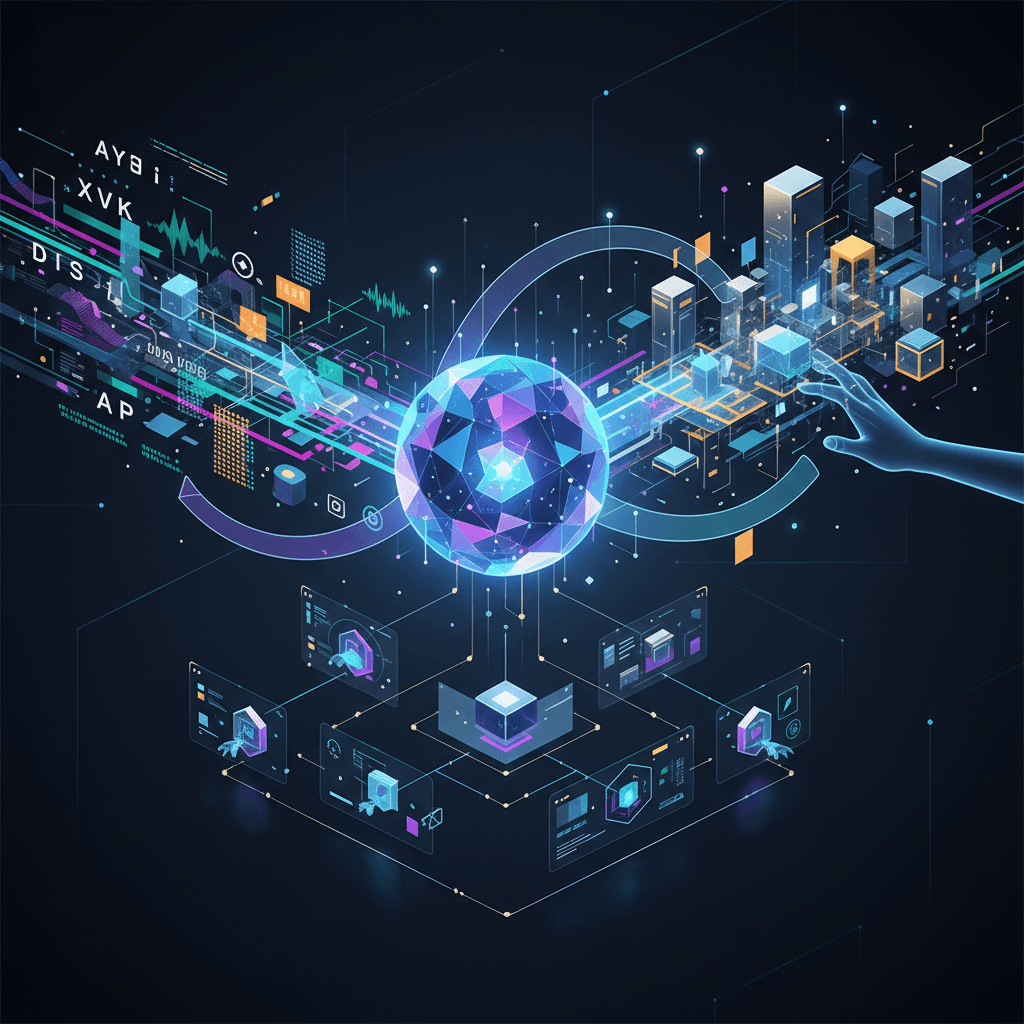
As the world of artificial intelligence continues its rapid acceleration, Demis Hassabis, the chief executive of Google Deepmind, anticipates the next year will be marked by significant breakthroughs in three key areas that could fundamentally reshape how humans and machines interact. Hassabis foresees major progress in the development of sophisticated multimodal models, the emergence of truly interactive and generative video worlds, and the deployment of more reliable and autonomous AI agents. These trends, moving in concert, point toward a future where AI possesses a more nuanced and holistic understanding of the world, capable of not just processing information, but of acting within and upon complex digital and, eventually, physical environments. The progression in these domains is expected to move AI beyond its current, often text-centric, limitations into a more dynamic and integrated force in technology and society.
The first major trend revolves around the evolution of multimodal models, which are designed to process and reason across a wide spectrum of information, including text, images, audio, video, and code.[1][2] Google DeepMind's own Gemini family of models exemplifies this push towards a more comprehensive form of machine understanding.[3][4][5] Hassabis has emphasized that for AI to become a truly universal assistant, it must comprehend the spatio-temporal context of the real world, a feat that requires seamless integration of various data types.[6] This approach is a departure from earlier models that often handled different modalities in separate components that were later stitched together.[2] The new generation of AI is being built to be natively multimodal, which enhances its ability to handle complex reasoning tasks.[2] This capability is not merely an incremental improvement; it is a foundational shift aimed at creating what Hassabis refers to as a "world model" rather than just a language model.[6] The practical applications of advanced multimodal systems are vast, ranging from more accurate and efficient diagnoses in healthcare by analyzing medical scans alongside patient notes, to creating richer, more engaging educational content.[3] For the everyday user, this trend points toward AI assistants that can see, hear, and understand the world in a way that is far more aligned with human perception, enabling more natural and context-aware interactions.
Building on a more holistic understanding of the world, the second trend Hassabis highlights is the creation of interactive video worlds generated by AI. This concept, reminiscent of the "Holodeck" from science fiction, is being brought closer to reality through the development of "world models" like Google's Genie.[7][8] The Genie model can take a single image or a text prompt and generate a playable, interactive 3D environment on the fly.[4][9][8] This technology represents a significant leap beyond current video generation tools, which typically produce static, non-interactive clips.[8] Hassabis explained that every pixel in these generated worlds is created by the AI as the user explores, meaning the environment doesn't exist until the user interacts with it.[8] This has profound implications for the future of entertainment, potentially creating a new medium that lies somewhere between a game and a film, where narratives can dynamically adapt to a user's choices in a truly open-ended fashion.[10][11] Beyond entertainment, Hassabis sees these generated worlds as critical for training other AI systems.[7] An AI agent, for instance, could learn to navigate and perform tasks in an infinite variety of simulated environments, a method that is far safer and more efficient than training in the real world, especially for applications like robotics.[7][11]
The third predicted trend is the rise of more reliable and capable AI agents. This marks a shift from the current paradigm of passive, question-answering systems to autonomous agents that can understand a complex goal, break it down into sub-tasks, and execute a plan to achieve it.[12] Hassabis envisions a future where AI agents handle much of the mundane work people currently perform, such as filling out forms, booking appointments, or conducting research across multiple websites.[13] Google's Project Mariner is an early example of this, designed to allow AI agents to use a web browser to act on a user's behalf.[6][14] A key challenge, however, is reliability. For agents to be trusted with complex tasks, their error rates must be significantly reduced, as even a small percentage of errors can compound over a multi-step process and lead to failure.[15] Looking further ahead, Hassabis has discussed the potential for multi-agent systems, where a general agent might orchestrate a team of specialized agents—one for mathematics, another for programming—to solve a complex problem collaboratively.[12] This evolution of AI agents is poised to cause significant disruption, fundamentally changing the structure of the web and creating a new "economics model where agents talk to other agents and negotiate things between themselves" before presenting the results to the user.[13]
In conclusion, the convergence of these three trends—advanced multimodal understanding, interactive world generation, and autonomous, reliable agents—paints a clear picture of the direction Google DeepMind and the broader AI industry are heading in the near future. Demis Hassabis's predictions suggest a move away from siloed AI tools toward integrated systems that can perceive, understand, and act within the world with increasing autonomy and sophistication. While the full realization of artificial general intelligence may still be several years away, the progress in these key areas in the coming year is expected to lay the groundwork for this future.[15][16] The implications are far-reaching, promising to enhance human creativity and productivity and accelerate scientific discovery in unprecedented ways.[8][17] If Hassabis's vision holds true, 2026 could be a pivotal year in transitioning AI from a powerful analytical tool to a true collaborator in both the digital and physical realms.
Sources
[1]
[6]
[7]
[8]
[10]
[11]
[13]
[14]
[15]
[16]
[17]