
Google Gemini Redefines Translation: AI Now Preserves Tone in Live Voice
Beyond words: Gemini AI in Google Translate captures tone and emotion in live speech, fostering empathetic global communication.
December 13, 2025
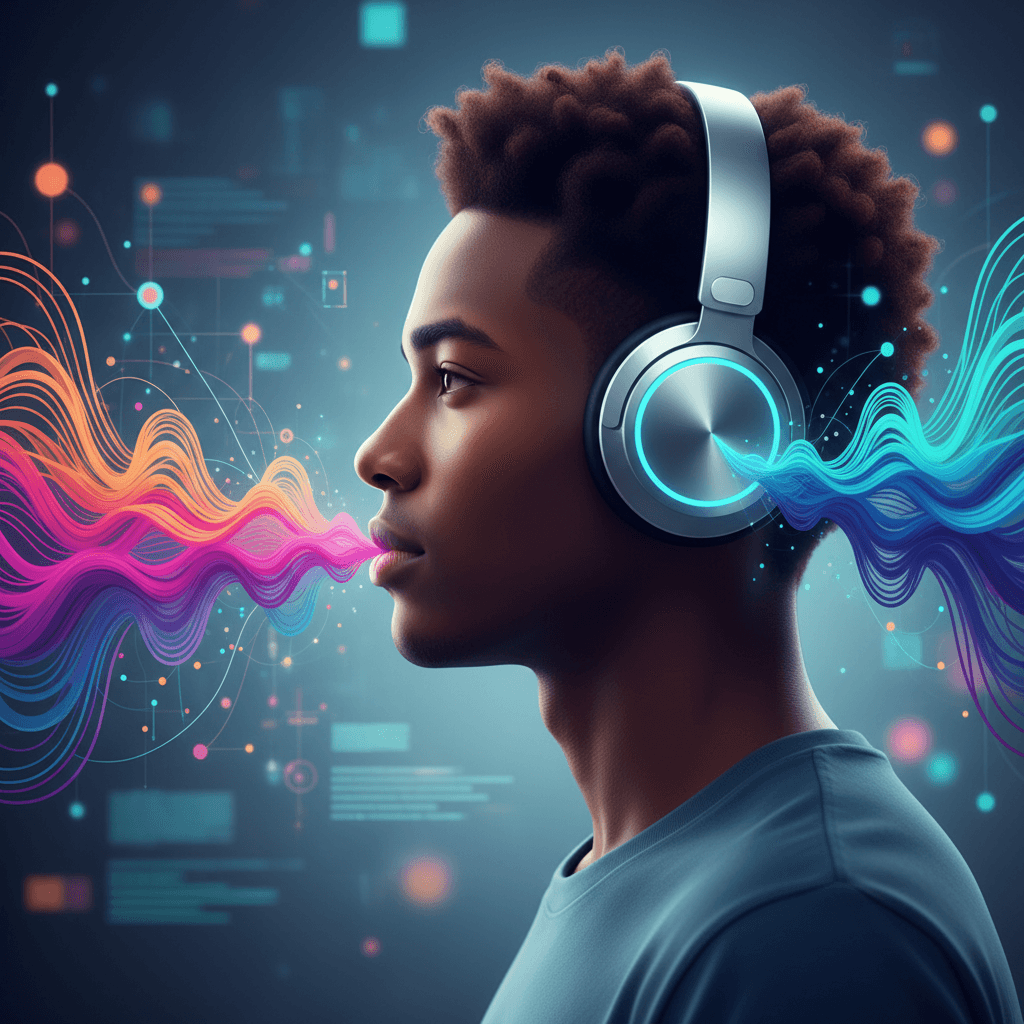
Google is redefining the landscape of digital communication with the integration of its advanced Gemini artificial intelligence model into Google Translate. This significant update not only promises more accurate and natural-sounding text translations but also introduces a groundbreaking beta feature for live, real-time voice translation that preserves the speaker's tone, emphasis, and rhythm.[1][2][3] This leap forward in translation technology, delivered directly through headphones, has the potential to fundamentally alter how we interact across language barriers, moving beyond simple word-for-word conversion to a more nuanced and human-centric form of communication. The new capabilities are being rolled out in stages, with the enhanced text translations available on Android, iOS, and the web, while the live translation beta is initially available for Android users in the United States, Mexico, and India, with plans for iOS and wider global availability in 2026.[4][5][6]
At the heart of this innovation is Gemini 2.5 Flash Native Audio, a powerful AI model designed to process complex voice interactions.[7][4] Unlike traditional translation systems that can often produce flat, robotic-sounding speech, Gemini employs a technique referred to as "style transfer."[7] This allows the system to capture and replicate the subtle prosodic elements of human speech, such as intonation, pacing, and pitch.[8][6] The result is a translated output that not only conveys the literal meaning of the words but also the speaker's emotional context and intent, making conversations feel more natural and engaging.[9] This is a significant departure from previous iterations of translation technology, which have historically struggled with the nuances of human expression. Furthermore, Gemini's advanced capabilities enable it to better handle complex linguistic features like idioms, slang, and local expressions, providing users with translations that are not just accurate but also culturally relevant.[7][9][5]
The new live translation feature in Google Translate is designed for a variety of real-world scenarios. For travelers, it offers the ability to have more fluid and natural conversations with locals. In academic or professional settings, it can provide real-time translations of lectures and speeches, making it easier to follow along.[9][5] The feature also enhances the consumption of foreign-language media, such as films and television shows, by offering a more expressive and less jarring audio translation.[9][5] The beta supports over 70 languages and is compatible with any pair of headphones, a strategic move that sets it apart from competitors like Apple, whose live translation features have been more closely tied to their own hardware ecosystems.[4][6] The system is also designed to be robust in various environments, with features like noise filtering to improve performance in loud settings and automatic language detection to simplify the user experience.[7]
The introduction of Gemini-powered live translation is a significant development in the competitive landscape of AI and technology. While companies like Microsoft have integrated real-time translation into their platforms, and Apple has introduced similar features for its AirPods, Google's emphasis on preserving the emotional and tonal qualities of speech represents a new frontier.[10][11] This focus on prosody addresses a long-standing challenge in machine translation, moving the technology closer to the ideal of a "universal translator" that can facilitate truly seamless and empathetic communication.[12] The broader implications for the AI industry are substantial, as this technology demonstrates the increasing sophistication of large language models in understanding and replicating the complexities of human interaction. As AI continues to evolve, the ability to not just process information but also to understand and convey the emotional subtext will become increasingly important.
The advent of highly advanced, tone-preserving AI translation raises important questions about the future of the professional translation and interpretation industry. While some may view these technological advancements as a threat to human translators, many experts suggest a future of collaboration rather than replacement.[13][14] AI is expected to handle a significant portion of routine translation tasks, increasing efficiency and speed.[15][16] However, the nuanced understanding of cultural context, complex emotions, and creative intent remains a uniquely human skill.[17][1][14] The role of the professional translator may evolve to that of a cultural mediator or an editor who refines AI-generated translations to ensure they are not only accurate but also culturally appropriate and emotionally resonant.[13][18] The ability of AI to preserve prosody may also create new opportunities for translators and interpreters to focus on higher-level tasks that require deep cultural and linguistic expertise.
In conclusion, Google's integration of Gemini into its translation services marks a pivotal moment in the evolution of AI-powered communication. The ability to preserve the tone and rhythm of speech in real-time translation is a significant technological achievement that has the potential to make cross-lingual communication more natural, intuitive, and empathetic. While the long-term impact on the professional translation industry is still unfolding, it is clear that this technology will reshape how we interact with one another on a global scale. As the beta program expands and the technology continues to be refined, the world will be watching to see how this new era of nuanced, real-time translation transforms the way we connect and understand each other across linguistic and cultural divides.
Sources
[1]
[3]
[5]
[7]
[9]
[10]
[11]
[12]
[13]