
Google Bets Big: Gemini AI Becomes The Glue For Open XR Future
Google bets on Gemini AI and Android XR to build an open ecosystem, unifying spatial computing for ambient intelligence.
December 9, 2025
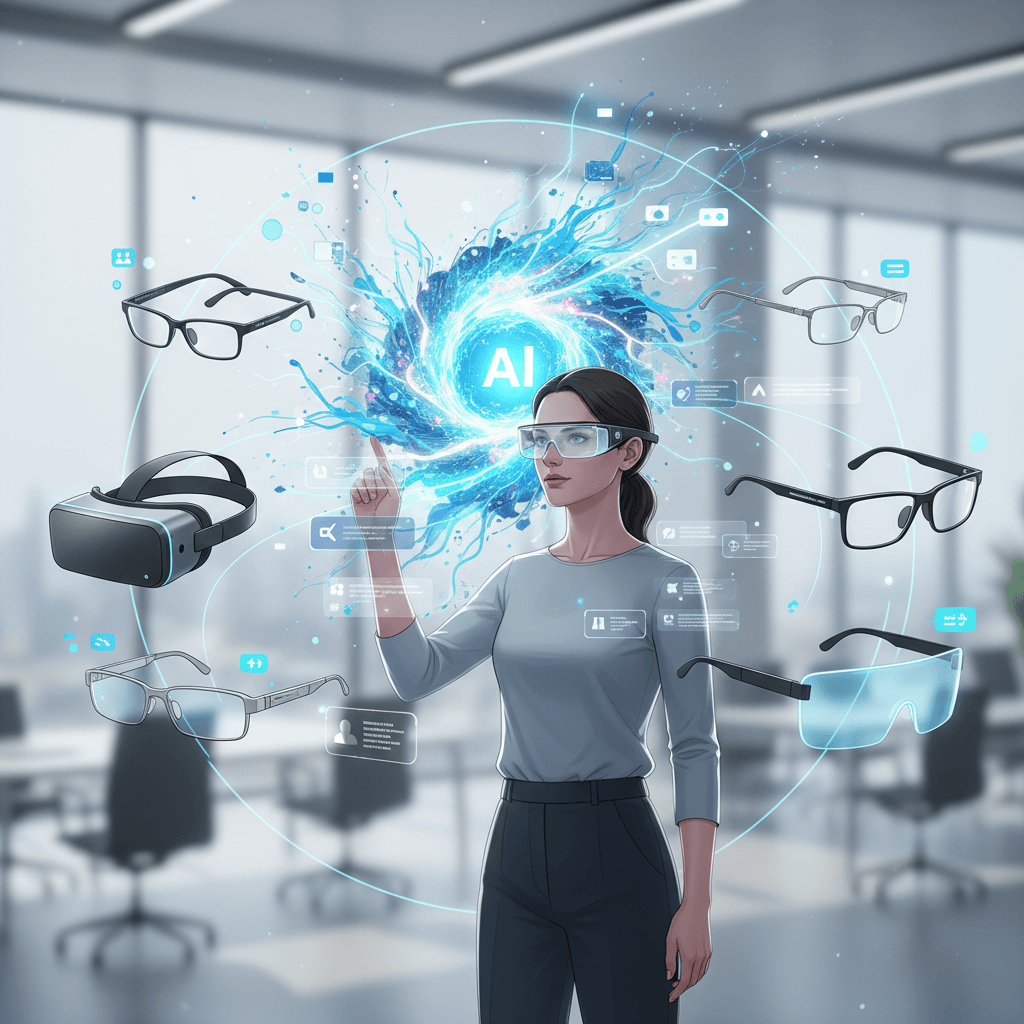
Google is strategically positioning its advanced Gemini AI model as the foundational "glue" for a new, open ecosystem for extended reality, signaling a major push into the next generation of computing. The initiative, centered around the Android XR platform, aims to unify a fragmented market of headsets and smart glasses by providing a common, AI-centric software layer. This ambitious strategy relies on a network of hardware partners and a vision of "ambient computing," where digital information and AI assistance are seamlessly woven into a user's daily life, moving beyond the limitations of handheld screens. The approach leverages Google's long-standing strength in building open platforms, a playbook that led to Android's dominance in the smartphone market, and now aims to replicate that success in the nascent world of spatial computing.
At the heart of this strategy is the deep integration of Gemini, Google's multimodal AI, which is designed to be the primary interface across all XR devices.[1][2] This "AI-first" approach means that instead of relying on clunky controllers or awkward gestures, users will interact with XR devices through natural conversation and contextual awareness.[1] Gemini will be able to see what the user sees, understand the context of their environment, and provide proactive assistance.[3] For instance, the AI will offer capabilities like live language translation that appears as subtitles in the real world and the ability to "search what you see."[4][3] This vision extends to a concept Google calls Project Astra, a real-time, multimodal AI assistant that remembers and reasons about everything it sees and hears, moving beyond on-demand queries to a more continuous and integrated form of assistance.[5] By making AI the core of the user experience, Google hopes to overcome the interface friction that has historically hindered mainstream XR adoption.
This platform-centric strategy is brought to life through a series of strategic hardware partnerships, deliberately avoiding the walled-garden approach favored by competitors like Apple.[6] Google is collaborating with Samsung on headsets, with the Samsung Galaxy XR headset being the first commercial Android XR device.[6][7] This device, powered by Qualcomm's Snapdragon XR2+ Gen 2 processor, is already receiving new AI-powered features.[6] One such feature is "Likeness," which creates a realistic digital avatar of the user for more authentic interactions in virtual spaces.[2] Another upcoming feature is "System Autospatialization," which will use on-device AI to convert traditional 2D content, like videos and games, into stereoscopic 3D experiences in real-time.[8][2] This focus on an open ecosystem is designed to foster a diverse range of hardware, giving consumers more choices and accelerating innovation across the industry.[7]
Perhaps the most significant element of Google's long-term vision is its multi-tiered approach to smart glasses, which are viewed as the key to making ambient computing a practical reality.[9] Recognizing that a single, all-powerful device is unlikely to win over the mainstream market, Google is planning a phased rollout of different types of glasses, slated to begin in 2026.[9][10][11] The entry point will be audio-only AI glasses, which look like regular eyewear but offer hands-free access to Gemini through built-in microphones and speakers.[10][12][13] These will be followed by display AI glasses, which add a small, in-lens display for showing private, contextual information like turn-by-turn directions or live translation captions.[10][14] For these, Google is partnering with fashion-forward eyewear brands like Warby Parker and Gentle Monster to ensure the devices are stylish and socially acceptable for all-day wear.[4][15] The ecosystem will also include more advanced wired XR glasses, such as XREAL's Project Aura, for more immersive experiences, and eventually, binocular XR glasses with dual displays for true mixed-reality capabilities.[4][10][13] This tiered strategy is designed to gradually acclimate consumers to wearable technology, lowering the barrier to entry for spatial computing.[10]
The implications of Google's strategy extend far beyond new gadgets; they represent a fundamental effort to define the next major computing paradigm.[6] By building on the familiar foundation of Android, Google is providing millions of developers with the tools to create applications for Android XR, leveraging an existing and massive ecosystem.[6][16] The release of the Android XR SDK (Software Development Kit) allows developers to extend their existing mobile apps to glasses and other XR form factors, a significant advantage over platforms being built from scratch.[4][9] This open, collaborative approach could democratize XR development in the same way Android democratized mobile computing.[6] While significant challenges related to privacy, user adoption, and technological execution remain, Google's bet is clear: a future where a diverse ecosystem of interconnected, AI-powered devices finally dissolves the barrier between the digital and physical worlds, with Gemini serving as the intelligent, unifying force.[17][18]
Sources
[1]
[3]
[5]
[6]
[8]
[9]
[10]
[11]
[16]
[17]
[18]