
Creatives Covertly Leverage AI for Productivity, Battling Stigma and Job Loss
Creatives secretly leverage AI for powerful gains, but 70% fear stigma and job obsolescence, revealing a hidden tension.
December 7, 2025
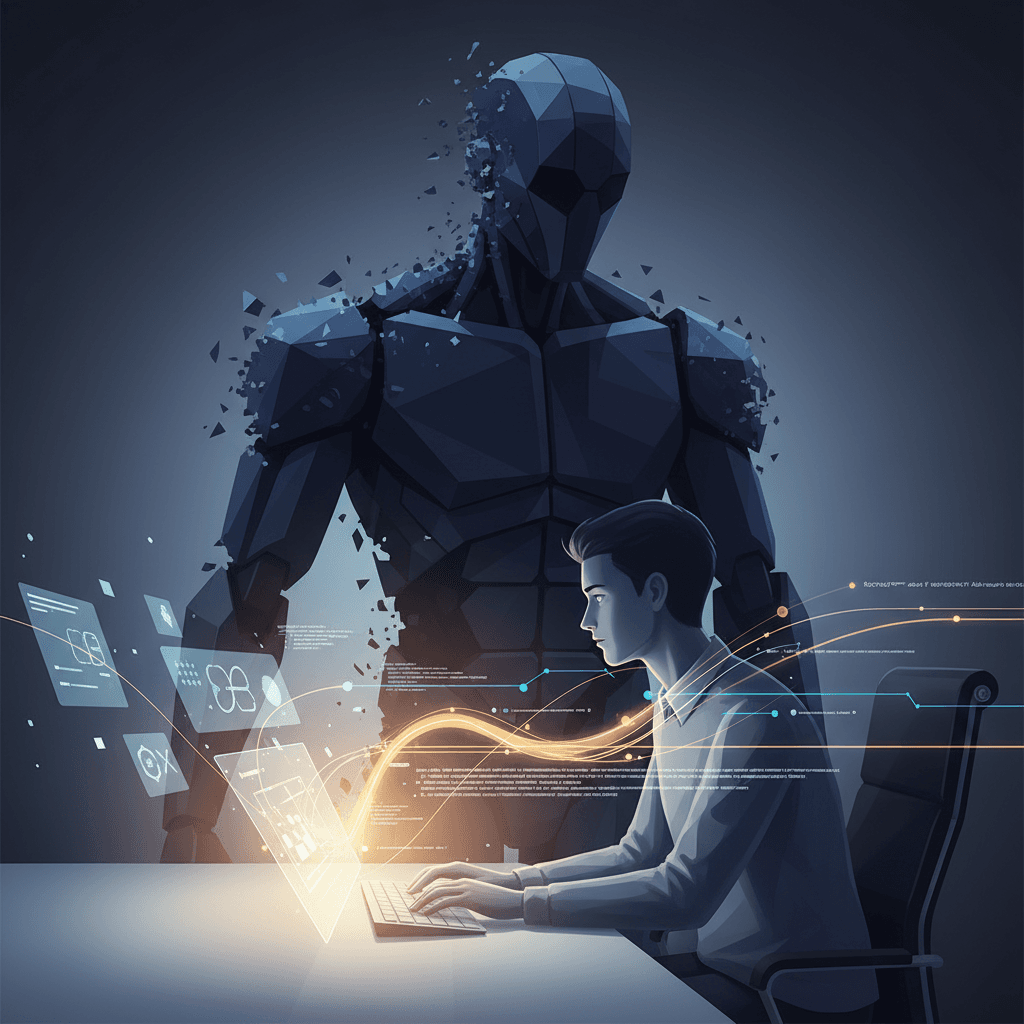
A revealing new study from AI safety and research company Anthropic has pulled back the curtain on a significant apprehension within creative industries: while professionals are increasingly turning to artificial intelligence to boost productivity and enhance their work, a substantial majority are afraid to admit it.[1] The research found that 70% of creative professionals harbor fears of stigma associated with using AI tools, choosing to conceal their usage from colleagues and clients.[1] This widespread anxiety exists alongside a deep-seated concern that the very technology they are discreetly using could eventually render their jobs obsolete, painting a complex picture of AI's integration into the creative workforce. The study, which utilized an AI-powered research tool called Anthropic Interviewer to survey 1,250 professionals, including 125 creatives, highlights a critical tension between the practical benefits of AI and the cultural and economic anxieties it engenders.[1][2]
The fear of being judged or devalued for using AI is a significant barrier to open adoption in creative fields. Many professionals worry that their reliance on AI tools might be perceived as a shortcut, a lack of originality, or a deficiency in their own skills. This stigma is not entirely unfounded, as there is a growing discourse around the authenticity of AI-assisted or generated content.[3][4] The concern is that the "human touch," that element of unique perspective and emotional depth, is lost when algorithms play a significant role in the creative process.[5][6] As a result, many creatives are using AI in isolation, fearful that disclosure could damage their professional reputation or lead to being ostracized by their peers.[7] One fact-checker interviewed in a similar context outside the creative-specific group expressed this sentiment, stating they remain silent about their AI use because they "know how a lot of people feel about AI."[1][8]
Despite these social and professional pressures, the study makes it clear that creative professionals are deriving substantial benefits from AI. An overwhelming 97% of those surveyed reported that AI saves them time, with 68% stating that it has improved the quality of their work.[1][8][2] These are not trivial gains; the efficiency boosts are transformative. For example, a web content writer reported being able to produce more than double their daily word count, from 2,000 to over 5,000 polished words.[1][8] Similarly, a photographer noted a dramatic reduction in editing turnaround time from twelve weeks down to just three, thanks to AI handling routine tasks.[1] These tools are automating repetitive and time-consuming aspects of creative work, freeing up professionals to concentrate on more strategic and conceptual endeavors.[5][6] This increased efficiency allows for faster project completion, more consistent output, and the ability to explore a wider range of creative possibilities.[5][9]
However, this increased productivity is shadowed by profound economic anxiety. The fear of job displacement is a recurring theme, with many creatives expressing concern that as AI capabilities advance, their roles will be diminished or eliminated entirely.[1][10] The very efficiency that makes AI so attractive is also what makes it a perceived threat. A creative director in the study acknowledged the double-edged sword, stating, "I fully understand that my gain is another creative's loss," referring to no longer needing to hire a photographer for certain tasks.[8] This sentiment captures the core of the economic unease: the commodification of creative skills that were once considered uniquely human. There is a palpable worry that AI will flood the market with cheap, rapidly produced content, devaluing the work of human artists and making it harder to earn a living.[8] One artist worried about needing to sell AI-generated content just to remain competitive in the marketplace.[8]
In conclusion, the Anthropic study reveals a creative industry at a crossroads, grappling with the paradoxical nature of artificial intelligence. The technology offers undeniable advantages in efficiency and creative augmentation, yet it simultaneously fuels a culture of secrecy born from stigma and a legitimate fear of economic irrelevance.[8][11] This complex dynamic has significant implications for the future of creative work and the development of AI itself. For the industry to move forward, there needs to be a more open and nuanced conversation about the role of AI, one that acknowledges both its potential as a powerful tool and the ethical and economic challenges it presents.[12][11] Finding a balance where AI enhances rather than replaces human creativity is the critical task ahead, requiring a shift in perception from viewing AI as a clandestine shortcut to embracing it as a collaborative partner in the creative process.[13][14]
Sources
[3]
[4]
[5]
[7]
[9]
[10]
[11]
[12]
[13]
[14]