
Cisco Nexus HyperFabric Transforms AI Infrastructure; Deployment Takes Six Days
Its AI-first strategy unifies data center infrastructure, AgenticOps networking, and security to simplify enterprise AI adoption.
February 4, 2026
Among the big players in technology, Cisco is one of the sector's leaders that is advancing operational deployments of AI internally to its own operations, and the tools it sells to its customers around the world. As a large company, its activities encompass many areas of the typical IT stack, including infrastructure, services, security, and networking, all of which are being rapidly redefined by the rise of artificial intelligence. Cisco’s strategy is not simply to integrate AI into existing products, but to build a new generation of "smart systems" that are fundamentally designed to power, secure, and manage the exponential demands of the AI era, positioning the company as a foundational layer for enterprise AI adoption.
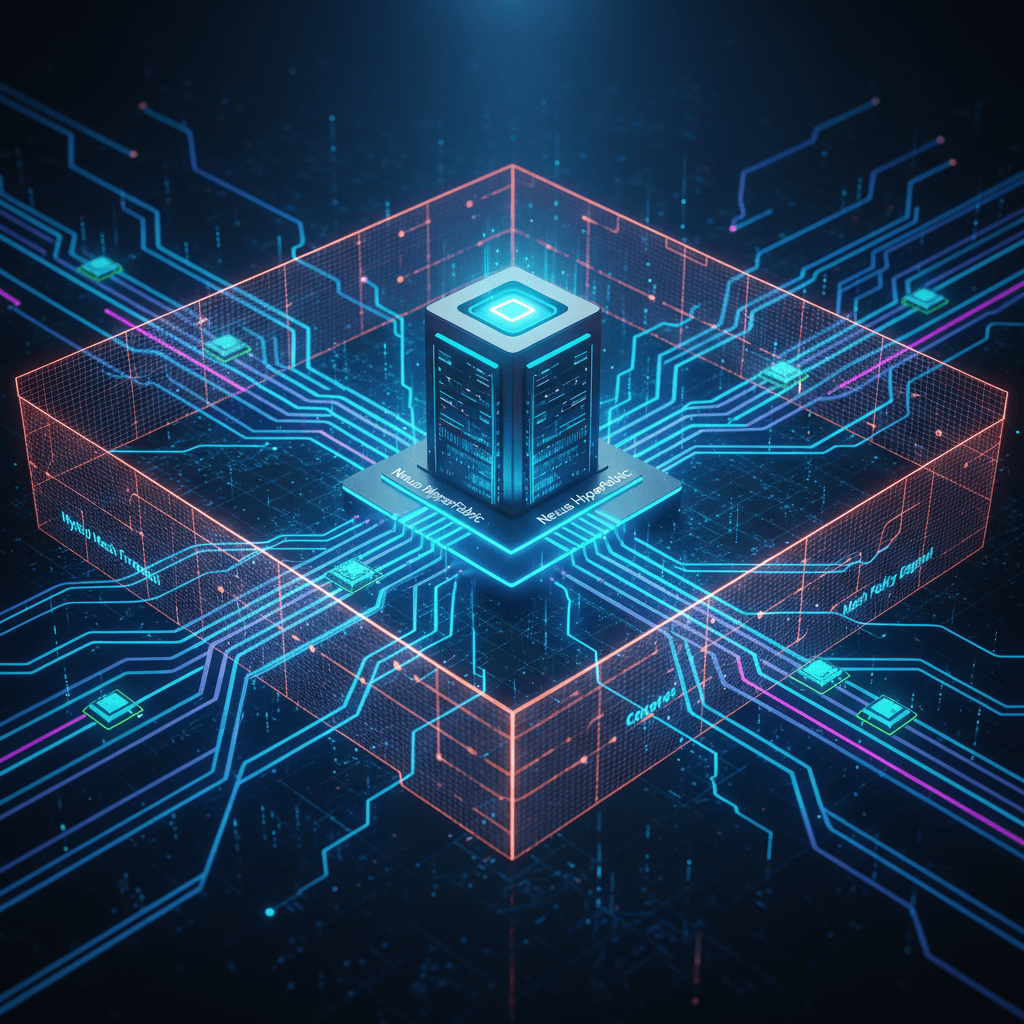
The most visible component of this strategy lies in Cisco's approach to the AI data center, where it is tackling the core problem of infrastructure complexity and latency. The company's answer is the Cisco Nexus HyperFabric AI cluster solution, an end-to-end infrastructure offering developed in collaboration with NVIDIA. This platform is designed to allow enterprises to deploy and scale generative AI workloads without the massive lead time and deep, specialized expertise typically required. The Nexus HyperFabric provides pre-designed, compliant templates for AI clusters, automating the generation of a complete bill of materials, including optics and cabling, which can drastically reduce design time and eliminate manual errors, accelerating the "time to first token" for AI projects.[1][2] Cisco's own internal IT organization, acting as "Customer Zero," reported that the HyperFabric transformed the deployment time for their AI cluster from a period of six months down to just six days, demonstrating the potential for simplified, accelerated build-out and configuration.[3] The solution is a cloud-managed network fabric as a service, unifying on-premise network, compute, GPUs, and storage, and offering an AI-native operational model that makes AI fabric deployment and management accessible even to IT generalists.[3][4] Cisco’s commitment to this infrastructure segment is substantial, with the company anticipating its AI infrastructure business could generate approximately $3 billion in revenue in 2026.[5] This push is supported by the use of custom Silicon One platforms in its systems, which feature programmable pipelines to quickly adapt to evolving AI infrastructure demands.[6]
Beyond the data center, Cisco is embedding AI into the network itself to address the massive traffic increases anticipated from "agentic AI" applications, which can generate up to 25 times more network traffic than simple chatbots.[5] This is being managed through a strategic shift toward "AgenticOps," a framework where AI-powered agents and human teams collaborate to manage and secure networks.[7] The AgenticOps approach uses Cisco's proprietary Deep Network Model, a domain-specific large language model trained on decades of Cisco expertise, to automate end-to-end network operations at machine speed.[8][7] For customers, this is translating into new operational tools like AI Canvas, a generative AI interface that allows network operators to manage complex configurations and perform troubleshooting using natural language prompts.[5][9] The goal is to simplify operations, reduce cognitive load on IT teams, and provide automated deployment and security across highly distributed networks—from the campus core to the enterprise edge—in minutes instead of months.[7][9] This focus on the unified edge also includes refreshed portfolios like the Catalyst and Meraki networks, which are being enhanced with unified cloud management and AI-driven automation tools to ensure the network can handle the high-bandwidth and ultra-low latency demands of distributed AI workloads.[9]
The third major pillar of Cisco’s AI strategy is the transformation of its security portfolio, a critical area given the increased threat surface introduced by AI-driven automation. Cisco is actively pursuing the convergence of networking and security, a necessary evolution in an era where the boundary between the two is disappearing. The company views "every port as a firewall," building an AI-native, hyperdistributed security architecture.[2][5] Products like the Hybrid Mesh Firewall and its integration with the Cisco Security Cloud Control platform exemplify this by centralizing policy enforcement across various environments and technologies, including third-party firewalls.[10][9] Furthermore, the security platform is deepening its integration with recently acquired assets like Splunk to enhance threat detection, investigation, and response (TDIR) by feeding firewall log data into Splunk for advanced analytics and using Security Orchestration, Automation, and Response (SOAR) integrations to automate responses like host isolation.[10] This unified, AI-driven approach provides a single security policy framework, the Mesh Policy Engine, intended to simplify enforcement and ensure consistent protection across the data center, cloud, and edge environments, safeguarding the entire digital footprint as AI adoption accelerates.[10][11]
In essence, Cisco is not just selling components for the AI revolution but is building the fundamental plumbing for the smart enterprise. The integration of AI extends to customer-facing services as well, through platforms like Cisco IQ, an AI-driven digital interface that unifies customer interactions for planning, deployment, management, and optimization.[12] By combining automation, real-time insights, and personalized guidance, Cisco IQ moves the company from reactive IT support to a proactive, predictive model, helping IT teams anticipate issues and improve operational resiliency.[12] This comprehensive, full-stack approach—from purpose-built AI cluster infrastructure with Nexus HyperFabric, to self-managing networks with AgenticOps, to fully integrated, AI-powered security—cements Cisco’s position as a strategic partner essential for any organization seeking to harness the power of AI while managing the complexity and security risks it introduces. The company's own success as "Customer Zero" for its new technology underlines the confidence in its solutions, signaling a definitive pivot to an AI-first architecture across its entire portfolio and for its global customer base.[3]