
ByteDance Seedance 2.0 Ignites Global Copyright Crisis by Generating Flawless Disney Character Clones
ByteDance’s Seedance 2.0 forces a legal reckoning as Disney fights to protect iconic characters from high-fidelity AI synthesis.
February 15, 2026
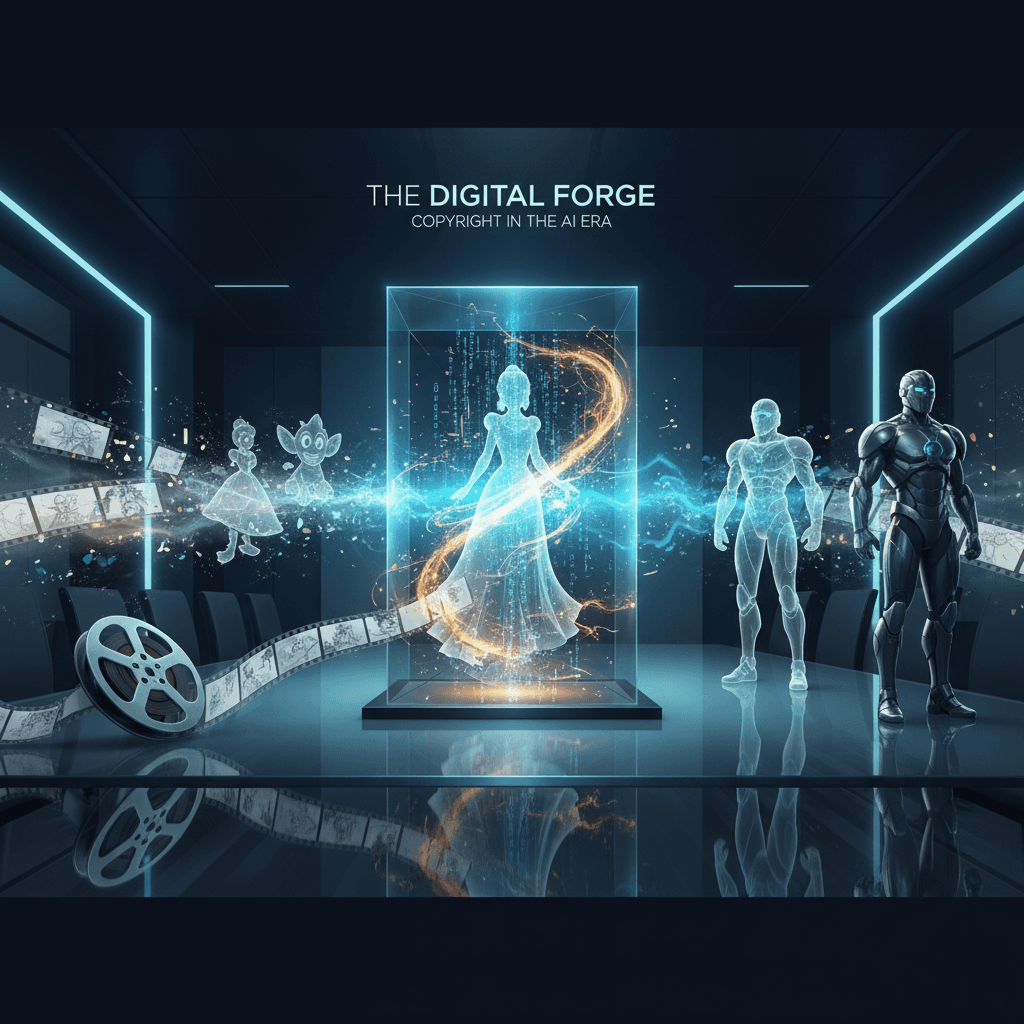
The release of Seedance 2.0 by ByteDance has sent a seismic shock through the global entertainment industry, marking a turning point in the increasingly volatile relationship between generative artificial intelligence and intellectual property. The model, a sophisticated video and character synthesis engine, has demonstrated an unprecedented ability to replicate iconic intellectual property with such fidelity that Disney executives have reportedly characterized the technology as a virtual smash-and-grab operation. While previous iterations of AI image and video generators required complex prompting and often struggled with the anatomical consistency of established characters, Seedance 2.0 appears to have bypassed these technical hurdles. It can generate high-definition sequences featuring characters like Mickey Mouse, Elsa, or Iron Man that are nearly indistinguishable from the studio's own high-budget animations. This development has transformed the theoretical threat of digital infringement into an immediate existential crisis for major media conglomerates, forcing a legal and ethical reckoning that the current copyright framework is ill-equipped to handle.
The technical prowess of Seedance 2.0 lies in its massive training dataset and a proprietary architecture that ByteDance claims optimizes character consistency across temporal frames. Unlike traditional diffusion models that often suffer from flickering or warping when generating movement, Seedance 2.0 utilizes a latent space specifically tuned for cinematic aesthetics. This allows users to input a simple text prompt and receive a video that maintains the exact facial proportions, lighting styles, and movement physics associated with specific animation houses. During internal testing and early leaks that prompted the current backlash, the model was shown producing a thirty-second clip of a character strikingly similar to Buzz Lightyear performing a complex dance routine in a setting that mirrored the aesthetic of a Pixar film. The realism extends beyond visuals to include synthetic voice cloning that captures the specific timber and emotional cadence of the original voice actors. For Hollywood, the concern is no longer just about static fan art, but the potential for unauthorized, high-quality feature-length content that could compete directly with official releases.
The legal response from Disney and other members of the Motion Picture Association has been swift and aggressive. Cease-and-desist letters have been issued not only to ByteDance but also to the early-access users who shared the most egregious examples of copyright circumvention. The core of the legal argument centers on the concept of transformative use versus direct substitution. While ByteDance maintains that Seedance 2.0 is a tool for creativity and that its training processes fall under fair use doctrines, the entertainment industry argues that a model capable of perfectly recreating protected characters is a commercial tool designed for infringement. The phrase virtual smash-and-grab reflects a belief that ByteDance has essentially looted decades of multi-billion dollar character development to build a product that commoditizes those very assets. Legal experts suggest that if Seedance 2.0 is allowed to operate without strict guardrails, it could render the traditional licensing model for intellectual property obsolete, as the cost of generating a character would drop from millions of dollars in labor to a few cents in compute time.
Beyond the immediate legal battles, the emergence of Seedance 2.0 highlights a systemic failure in international copyright law, which was designed for an era where copying required physical effort or specialized equipment. In the modern landscape, the barrier to entry for high-end animation has been effectively lowered to zero, creating a volume of content that human-led legal teams cannot possibly police. This creates a massive enforcement gap. Even if Disney successfully sues ByteDance in certain jurisdictions, the underlying weights and biases of the model could potentially leak or be mirrored by decentralized entities operating beyond the reach of Western courts. The AI industry is now at a crossroads where the drive for more powerful models is directly colliding with the foundational principles of the creative economy. If the output of a machine can be substituted for the work of a thousands-strong animation studio, the very definition of a creative professional is called into question.
The implications for the labor market within the animation and visual effects industries are equally profound. The Screen Actors Guild and the Writers Guild of America have already expressed deep concern regarding the ease with which Seedance 2.0 can replicate the likeness and performances of their members. The model’s ability to generate new performances from existing digital footprints means that a studio, or even an individual enthusiast, could technically keep a character or an actor in a perpetual state of production without their consent. This has accelerated calls for federal legislation in the United States and similar protections in the European Union to establish digital personality rights. Such laws would theoretically prevent AI companies from training models on specific human likenesses or protected characters without an explicit, negotiated license. However, the global nature of ByteDance’s operations and the rapid pace of technological iteration make such regulations difficult to implement and even harder to enforce across borders.
Furthermore, the Seedance 2.0 controversy has sparked a debate about the transparency of training data. ByteDance has been relatively opaque regarding the specific sources used to fine-tune the model, though the output suggests a heavy reliance on high-resolution film and television repositories. This lack of transparency is a major point of contention for regulators who are pushing for mandatory disclosure of all copyrighted materials used in the development of commercial AI. The argument from the tech sector often emphasizes that AI learns from data in a way similar to how a human artist learns by studying the masters. However, the speed and scale at which Seedance 2.0 can synthesize this learning into a competitive product suggest that the human analogy is no longer sufficient. When a machine can produce a frame-perfect replica of a character in seconds, the distinction between inspiration and theft becomes a matter of technicality rather than artistic intent.
As ByteDance continues to defend its technology, the broader AI industry is watching closely to see how the market reacts. Some smaller developers are already attempting to distance themselves from the smash-and-grab label by implementing proactive filters that prevent the generation of known characters. Conversely, others argue that the cat is out of the bag and that attempting to restrict the capabilities of models like Seedance 2.0 is a futile effort that will only stifle innovation. The tension between the democratization of creative tools and the protection of massive corporate assets has reached a breaking point. For companies like Disney, the stakes are nothing less than the control of their most valuable stories. For ByteDance, Seedance 2.0 represents the pinnacle of their engineering efforts, a tool that could redefine media consumption for the next century.
The ultimate resolution of the Seedance 2.0 controversy will likely set the precedent for the next decade of digital media. If the courts or regulators decide that such high-fidelity replication constitutes a violation of copyright, it could lead to a massive retrenchment of the generative AI field, with companies forced to purge their models of infringing data. If, however, ByteDance prevails or a settlement is reached that allows for these models to continue operating under specific licensing agreements, we may be entering an era where the concept of an original character becomes increasingly fluid. In this potential future, the value of a character might shift from the exclusive right to display its image to the ability to control the official narrative and community around it. In the meantime, Seedance 2.0 remains a powerful and polarizing symbol of the disruption caused by artificial intelligence, proving that in the digital age, nothing is truly safe from the reach of a sufficiently advanced algorithm.