
Broadcom stalls OpenAI’s 18 billion dollar chip project over Microsoft purchase guarantee
OpenAI’s eighteen-billion-dollar custom chip project hits a wall as Broadcom demands purchase guarantees from a hesitant Microsoft.
May 9, 2026
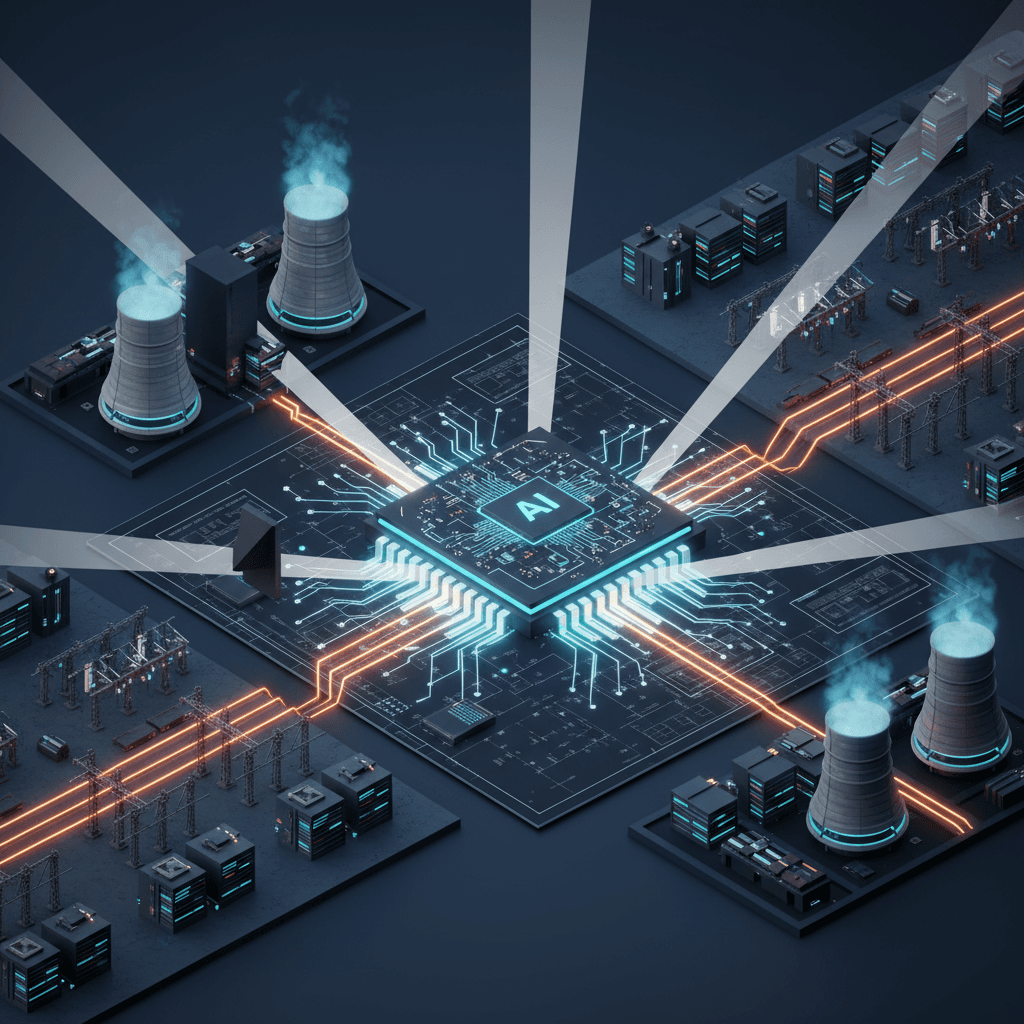
The multibillion-dollar race to secure the hardware necessary for the next generation of artificial intelligence has encountered a significant obstacle as OpenAI and Broadcom grapple over the financing of a massive custom semiconductor project.[1][2][3][4][5][6] Codenamed Project Nexus, the initiative represents OpenAI’s ambitious attempt to move beyond its heavy reliance on third-party hardware by designing its own specialized silicon. However, the first phase of the project, which carries a staggering 18-billion-dollar price tag, has reportedly hit a funding wall.[2][3][7][5][6][1] Broadcom, the primary design partner for the effort, has informed OpenAI that it will not finance the production of these custom chips unless Microsoft, OpenAI’s largest backer and primary cloud provider, commits to purchasing 40 percent of the initial output.
This standoff highlights a deepening tension between the software giants driving the AI revolution and the hardware manufacturers responsible for the underlying infrastructure. At the heart of the dispute is the first-generation inference chip, internally referred to as Jalapeno, designed specifically to power the large-scale computation required for ChatGPT and other generative models. To bring this chip to life, OpenAI has sought a deal where Broadcom would effectively act as a financier for the manufacturing phase, a form of vendor financing that would allow the startup to scale without shouldering the full capital burden upfront. Broadcom, however, appears unwilling to take on such a concentrated risk without a firm guarantee from a reliable anchor customer. Given that OpenAI’s models run on Microsoft’s Azure cloud infrastructure, Broadcom views a purchase commitment from Microsoft as the only viable path to ensuring a return on its massive investment.
Internal communications within OpenAI reveal that the management team is growing increasingly concerned about this dependency. Sachin Katti, a manager at OpenAI, reportedly described the current financing requirement as financially unattractive in a message to colleagues. The internal sentiment suggests that Broadcom may not fully appreciate the complexities of the relationship between OpenAI and Microsoft, or the risk that Microsoft might ultimately decline to honor such a significant procurement commitment.[4][3][8] For OpenAI, the project is an existential necessity.[6] The company anticipates burning through more than 200 billion dollars in operating expenses by the end of the decade, much of which is driven by the high costs of renting general-purpose graphics processing units from Nvidia. Developing custom silicon tuned specifically for its proprietary models is seen as the primary way to improve gross profit margins and achieve long-term financial sustainability.
Microsoft’s hesitation to sign on to the 40 percent purchase agreement stems from more than just a reluctance to spend money.[3] The two companies are reportedly locked in a fundamental disagreement over data center architecture.[3] OpenAI envisions a new generation of highly specialized data centers optimized specifically for its custom silicon, which would require significant changes to cooling systems, power distribution, and rack layouts. In contrast, Microsoft prefers to maintain its standard, versatile data center designs that can accommodate a wide variety of hardware, from standard CPUs to the latest Nvidia GPUs and its own in-house AI accelerator, known as Maia. This clash of visions creates a logistical hurdle: if Microsoft buys the Jalapeno chips, it must have a place to put them that satisfies OpenAI’s performance requirements without upending its own standardized global infrastructure.
The scale of Project Nexus is almost unprecedented in the history of semiconductor development. The first phase alone is designed to consume approximately 1.3 gigawatts of data center capacity, a power requirement equivalent to that of a large nuclear reactor. This is only the beginning of a broader 10-gigawatt roadmap that OpenAI hopes to realize by 2030. To put that in perspective, such a buildout would require enough electricity to power five Hoover Dams.[4] The financial and physical scale of these plans has forced OpenAI to look beyond traditional venture capital, leading to the complex "XPU" co-development model with Broadcom. Broadcom has successfully employed this model with other tech giants, such as Google for its Tensor Processing Units and Meta for its custom inference hardware.[9] However, those companies possess their own massive balance sheets and data center footprints, whereas OpenAI remains uniquely tethered to Microsoft for both funding and physical hosting.
Broadcom’s insistence on a Microsoft guarantee also reflects the shifting power dynamics in the custom silicon market. Broadcom currently holds an estimated 70 percent share of the custom AI accelerator market, and its leadership is cautious about overextending its resources. While the company has seen its AI-related revenue double recently, it must manage its project pipeline carefully across several high-profile clients, including Anthropic and ByteDance. By demanding a firm commitment for 40 percent of the OpenAI chips, Broadcom is effectively pushing the financial risk onto Microsoft, which has the capital to absorb it. If Microsoft continues to withhold its signature, OpenAI may be forced to seek alternative financing, replace its manufacturing partners, or significantly scale back the project.
The implications for the broader AI industry are profound. If Project Nexus fails to move forward, OpenAI will remain beholden to the market pricing and supply constraints of Nvidia, which currently dominates the AI hardware landscape. This would not only impact OpenAI’s path to profitability but could also slow the deployment of more efficient, lower-cost AI services for consumers. Conversely, if the deal proceeds, it would mark a major shift toward the fragmentation of the AI chip market, where every major model builder operates on bespoke silicon optimized for its specific software architecture. This "vertical integration" is the same strategy that allowed companies like Apple to dominate the smartphone market, but applying it at the scale of warehouse-sized AI clusters is proving to be a much more difficult and capital-intensive endeavor.
As the standoff continues, the tension between the "three-body" system of OpenAI, Broadcom, and Microsoft remains unresolved.[3] The draft agreements currently include clauses that would require OpenAI to find alternative buyers if Microsoft’s purchases fall short of the required threshold, but finding another customer willing to buy billions of dollars worth of chips designed specifically for someone else’s model is unlikely. For now, the future of the Jalapeno chip and OpenAI’s broader hardware independence remains contingent on whether Microsoft is willing to pivot its data center strategy to support its partner’s custom silicon dreams.[3] Without that 40 percent commitment, the 18-billion-dollar project may remain a theoretical blueprint, leaving the world’s most famous AI startup dependent on the very hardware providers it is trying to outpace.