
Boom Supersonic Converts Jet Engine Tech to Power AI, Fund Flights.
Boom Supersonic powers AI data centers with jet engine tech, creating a financial runway for its supersonic flight dream.
December 10, 2025
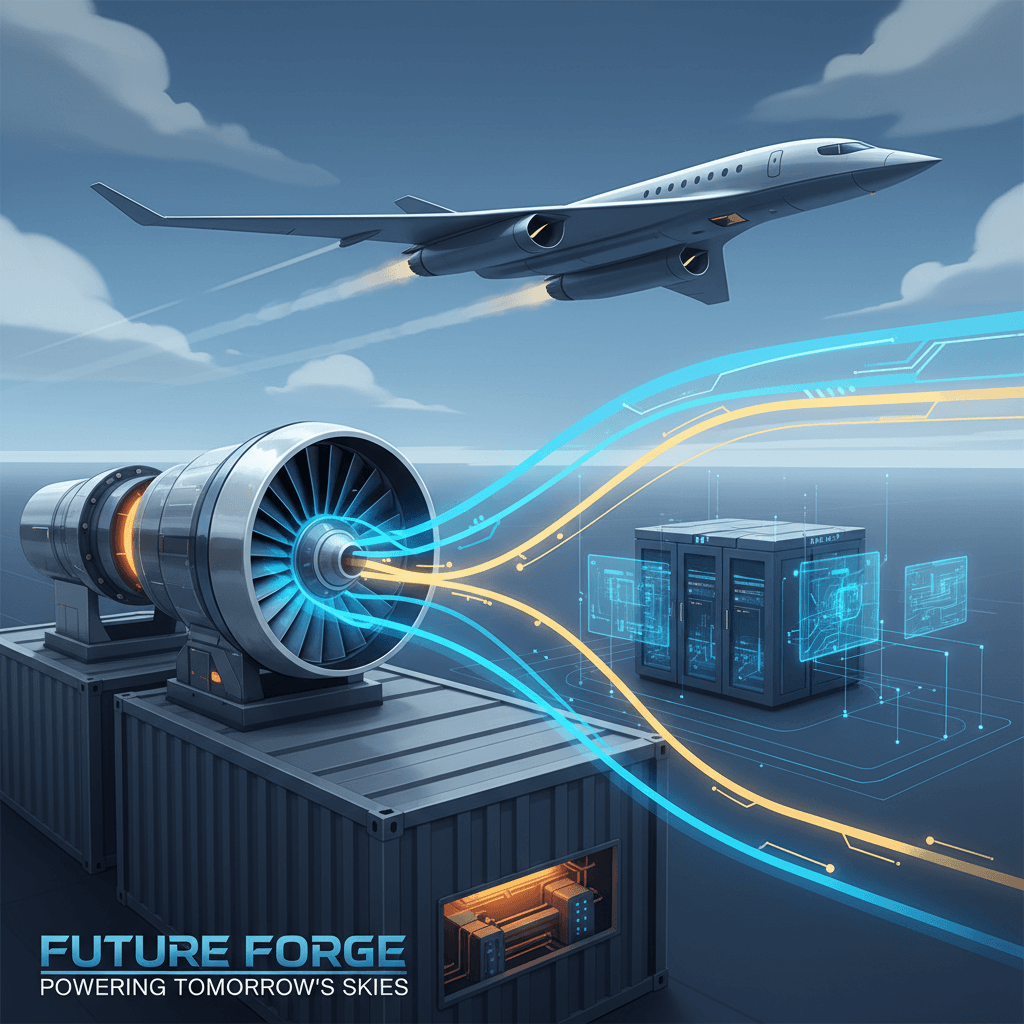
In a strategic pivot that underscores the voracious energy appetite of the artificial intelligence industry, aviation startup Boom Supersonic is entering the power generation market. The company, known for its ambition to resurrect supersonic passenger flight with its Overture airliner, is now developing industrial gas turbines derived from its jet engine technology to provide electricity for AI data centers. This surprising move is not an abandonment of its aviation goals but rather an inventive strategy to fund them, leveraging the technological symbiosis between a supersonic jet engine and the power needs of power-hungry computing infrastructure. The venture, dubbed Superpower, aims to solve a critical bottleneck for AI's growth while simultaneously securing a financial runway for Boom's ultimate mission of high-speed travel.
The insatiable demand for computational power driven by the rise of artificial intelligence has created a significant challenge for global energy infrastructure. Data centers, the backbone of the AI revolution, are projected to see their electricity consumption double by 2030.[1] This surge is creating a critical bottleneck, where the development of new AI capabilities is outpacing the availability of reliable, scalable power. Tech companies are finding that securing enough electricity for their massive GPU clusters is becoming a primary obstacle to expansion. The existing power grid is often unable to handle the intense, concentrated, and sometimes unpredictable loads required by AI operations, leading to delays and limitations on growth.[1][2] This power crunch has opened a substantial market for on-site, behind-the-meter generation solutions that can provide consistent and robust energy independent of grid constraints. Boom Supersonic has identified this pressing need as a commercial opportunity that aligns remarkably well with its existing core technology.
At the heart of Boom's new energy venture is the adaptation of its Symphony engine, the powerplant designed for the Mach 1.7 Overture jet.[3] The core of a supersonic engine is engineered to operate continuously at extremely high temperatures and pressures, conditions that are ideal for efficient power generation.[3][4] This shared DNA is being repurposed to create the "Superpower" turbine, a 42-megawatt natural gas-fueled generator.[3][5][6] Unlike traditional industrial turbines, which are often based on older subsonic engine designs and can lose significant performance in hot weather, the Superpower unit is designed to maintain its full output at ambient temperatures exceeding 110 degrees Fahrenheit without needing water for cooling.[7][8][4][9] This makes it particularly well-suited for the hot, arid climates where many data centers are located.[4][9] The Superpower turbine packages this high-performance core into a modular, container-sized unit, designed for rapid deployment to meet the urgent needs of AI infrastructure providers.[8][10][9]
This diversification is a calculated financial and engineering strategy to propel the Overture program forward. Boom has secured a landmark launch order from Crusoe, an AI infrastructure company, for 29 Superpower units, a deal valued at over $1.25 billion that represents 1.21 gigawatts of planned capacity.[3][5][8] In conjunction with this order, Boom has also closed a new $300 million funding round led by Darsana Capital Partners.[3][11][10] According to Boom's founder and CEO, Blake Scholl, the revenue generated from the Superpower business is intended to fully fund the remainder of the Overture aircraft program, effectively making this the last round of private capital the company will need to raise.[3] Beyond the financial benefits, the Superpower venture serves as a massive, real-world testbed for the Symphony engine's core technology.[7][12] Every hour the turbines operate in a data center contributes thousands of validation hours for the engine's core components, significantly accelerating and de-risking the development and certification process for the passenger jet.[3][7][9]
Boom Supersonic's entry into the energy sector is a compelling example of cross-industry innovation, where the advanced technology of aerospace is being harnessed to solve a critical bottleneck in the digital world. By resequencing its business plan to prioritize power generation, the company has devised a self-sustaining path toward its ambitious goal of reviving supersonic flight.[7][11] This pivot not only provides a pragmatic solution to the AI industry's immediate and growing power crisis but also creates a robust financial and technical foundation for its aviation endeavors. It demonstrates a novel approach to funding capital-intensive hardware development, potentially setting a precedent for how aerospace and other deep-tech industries can leverage their innovations in adjacent, high-demand markets. For the AI industry, it signals the arrival of a new class of power solutions designed specifically for its unique challenges, while for aviation enthusiasts, it brings the dream of supersonic passenger travel an unconventional, but significant, step closer to reality.