
ANYbotics and SAP deploy physical AI to automate dangerous industrial inspections with autonomous robots
How SAP and ANYbotics are leveraging physical AI and quadruped robots to automate hazardous inspections and optimize industrial operations.
March 31, 2026
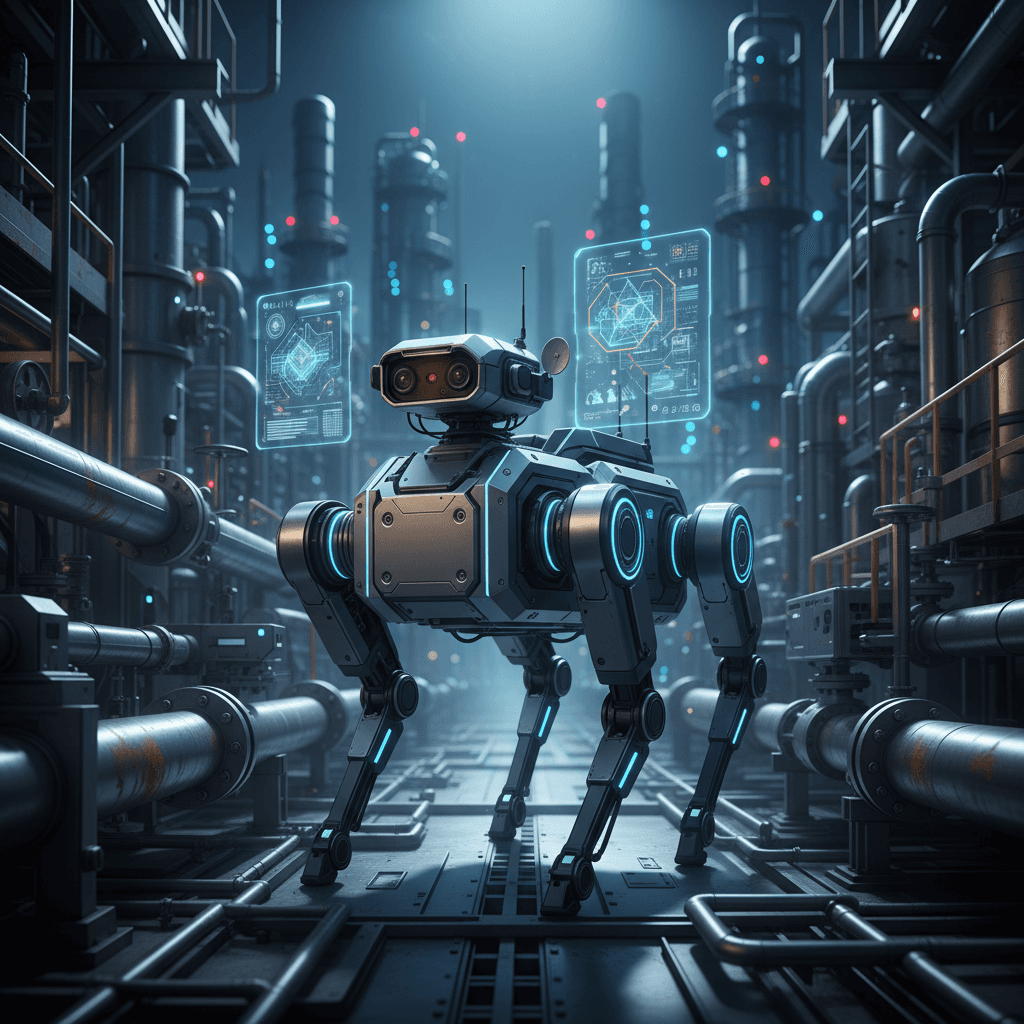
The landscape of industrial maintenance is undergoing a fundamental transformation as artificial intelligence migrates from digital dashboards into the physical world. For decades, heavy industries such as oil and gas, chemical processing, and power generation have faced a persistent challenge: the reliance on human personnel to conduct manual inspections in environments that are inherently hazardous, remote, or physically taxing. These "dirty, dusty, and dangerous" tasks are not only expensive and prone to human error but also represent a significant safety liability for enterprise organizations. In response to these challenges, a strategic collaboration between Swiss robotics pioneer ANYbotics and global enterprise software leader SAP is redefining the role of autonomous machines within the industrial ecosystem.[1][2] By integrating four-legged autonomous robots directly into backend enterprise resource planning software, the two companies are driving a shift toward what is known as physical AI, where robotic hardware and enterprise logic operate as a single, unified system.
At the heart of this initiative is the concept of embodied AI, a term that describes the integration of advanced machine intelligence into a physical form capable of interacting with the real world.[3] Historically, industrial robots functioned as isolated tools, often requiring specialized third-party software and manual data transfers to communicate findings to management. The partnership between ANYbotics and SAP dismantles these silos by making the robot a native participant in the enterprise workflow.[1] Through SAP’s Project Embodied AI, the ANYmal quadruped robot is treated not as an experimental pilot but as a standard field resource.[1] This integration allows maintenance managers to dispatch work orders directly to the robot through SAP Field Service Management, just as they would to a human technician.[1] The robot autonomously navigates the facility, performs its assigned inspection tasks, and feeds the results back into the SAP system in real-time.[2][1] This creates a continuous digital thread that connects the physical conditions of a factory floor or an offshore platform directly to the organization’s primary system of record.[1]
The technical capabilities of the ANYmal robot are specifically engineered to meet the brutal demands of heavy industry.[2] Unlike wheeled or tracked robots that struggle with stairs, debris, and narrow corridors, the quadrupedal design of ANYmal allows it to navigate complex industrial terrain with human-like agility.[2] To operate in high-risk zones where the presence of flammable gases or dust creates a constant threat of explosion, ANYbotics developed the ANYmal X, which is the world’s first Ex-certified autonomous quadruped robot. This machine is equipped with a sophisticated multi-modal sensor suite that extends far beyond human perception.[1][2] It utilizes thermal imaging to detect overheating components, ultrasonic sensors to identify pressurized gas leaks, and acoustic sensors to recognize the subtle sound of a bearing beginning to fail. This "inspection intelligence" transforms raw sensor data into actionable insights.[1][2] Because the robot is integrated with SAP, these insights are automatically compared against historical data and asset hierarchies, allowing the system to trigger follow-up actions or maintenance requests without human intervention.
The implications of this integration for operational efficiency and safety are significant.[4] Early results from proof-of-concept applications within SAP’s broader robotics initiative have demonstrated up to a 50 percent reduction in unplanned downtime and a 25 percent improvement in overall productivity.[5][3] These gains are realized by moving from a reactive maintenance model to one based on constant, autonomous condition monitoring. In one notable application, an offshore wind platform operator utilized ANYmal to manage all routine inspections, effectively eliminating the need to send personnel to the remote site for several months.[2][1] When a human visit finally became necessary, the maintenance team arrived with a precise understanding of the fault, the correct spare parts, and the specific expertise required for the job. By reducing the number of "trial-and-error" trips to hazardous locations, companies are significantly lowering the risk of workplace accidents while simultaneously optimizing their return on investment for specialized labor.
This shift toward physical AI also addresses a growing concern in the industrial sector: the loss of institutional knowledge due to an aging workforce and high turnover rates. Traditionally, the nuanced understanding of how a specific machine "looks" or "sounds" when it is functioning correctly resided in the minds of experienced technicians. When those individuals leave the workforce, that knowledge often disappears with them. By embedding robotic inspections into the SAP backend, organizations can capture and codify this specialized data into a central intelligence repository.[1] The robot’s consistent and repeatable inspection routes ensure that data is gathered under the same conditions every time, providing a reliable baseline for predictive analytics. This ensures that the intelligence required to maintain critical infrastructure remains within the enterprise, providing a level of operational resilience that manual processes cannot match.[1]
Furthermore, the integration of robotics into the SAP Business Technology Platform enables a higher degree of scalability for global operations.[1] As companies deploy fleets of robots across different geographic locations, the data generated by these machines can be aggregated and analyzed at the corporate level.[1] This allows for the identification of patterns and vulnerabilities across the entire enterprise, rather than just within a single facility. For example, if a specific type of pump shows a pattern of premature failure at three different refineries, the centralized AI can identify the correlation and adjust the maintenance schedules for that asset type globally. This capability moves the needle from localized automation to enterprise-wide autonomous operations, where the software and the hardware are constantly learning from one another to optimize the business.
For the broader AI industry, the SAP and ANYbotics partnership serves as a blueprint for the maturation of the market. It signals a move away from "disembodied" AI, which is confined to text and image generation, toward a more pragmatic application of intelligence that solves physical-world problems. The focus is no longer just on the novelty of a walking robot but on the value of the data that robot can provide when it is connected to a business context. By establishing a clear separation of concerns—where ANYbotics manages the robot’s physical behavior and SAP manages the business logic and work orchestration—the two companies are creating a modular architecture that can be adapted to various industries and use cases. This collaborative approach is essential for the widespread adoption of robotics, as it allows industrial customers to leverage their existing investments in enterprise software while adding new layers of physical automation.
The future of industrial inspection is increasingly defined by the seamless fusion of digital and physical systems. As autonomous robots like ANYmal become more commonplace, the definition of the industrial workforce will continue to evolve. Human workers are not being replaced; rather, they are being elevated to more strategic roles that focus on decision-making and complex repairs, while the "3D" tasks are delegated to intelligent machines. The collaboration between SAP and ANYbotics demonstrates that when physical AI is deeply integrated into the core processes of an enterprise, it ceases to be a futuristic concept and becomes a vital component of modern industrial strategy. The result is a safer, more efficient, and more resilient industrial landscape that is better equipped to meet the challenges of a rapidly changing global economy. Through the marriage of sophisticated quadrupedal hardware and robust enterprise software, the era of truly autonomous industrial operations has moved from the realm of theory into productive, large-scale reality.[1]