
Anthropic reaches 14 billion dollar run rate as CEO warns rivals of trillion-dollar bankruptcy
Anthropic CEO Dario Amodei warns that OpenAI’s trillion-dollar infrastructure bets risk financial ruin, favoring a disciplined fiscal path to AGI.
February 14, 2026
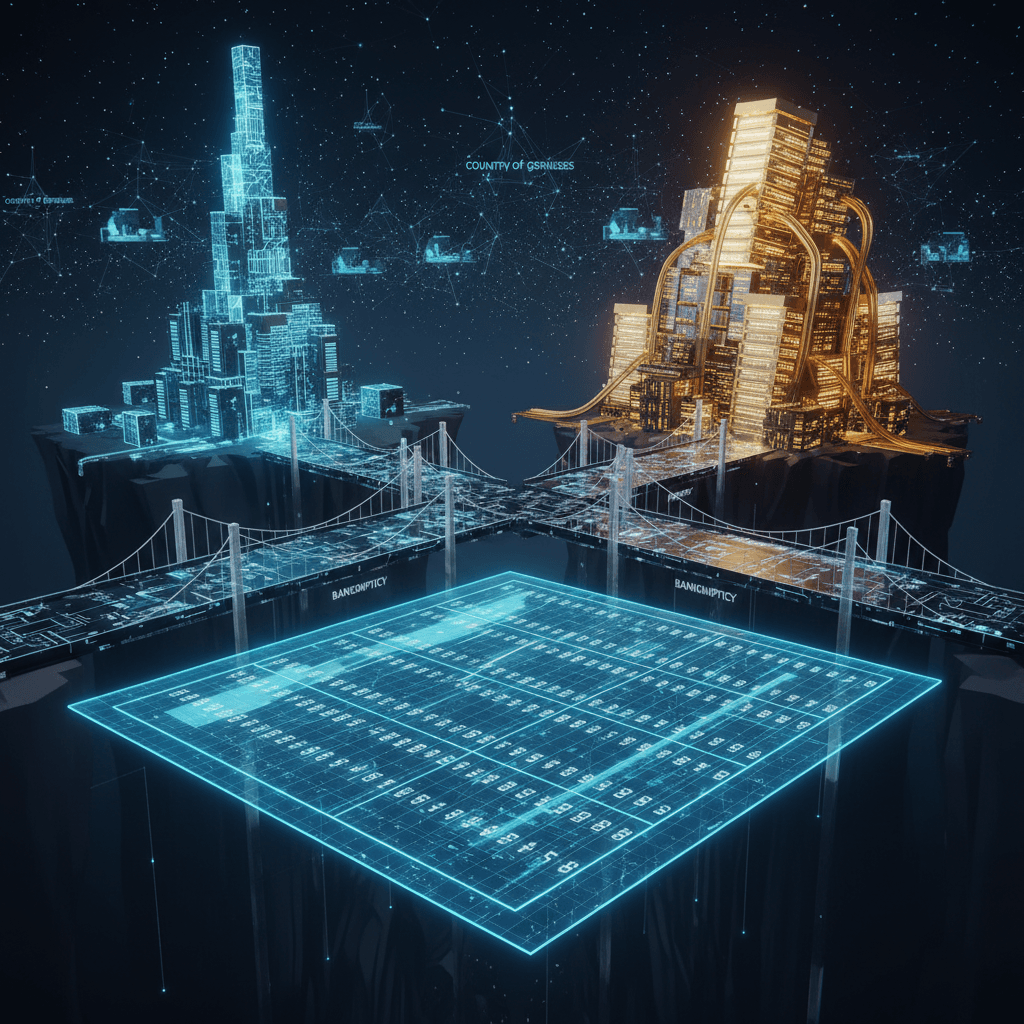
In a series of candid public assessments regarding the trajectory of the artificial intelligence industry, Anthropic CEO Dario Amodei has signaled a growing ideological and financial rift between his company and its primary rival, OpenAI. While acknowledging the staggering potential of upcoming models, Amodei has warned that competitors may be drastically underestimating the existential financial risks associated with the current "arms race" for computing power.[1] At the heart of his concern is a belief that some industry leaders have failed to perform the rigorous mathematical modeling necessary to justify trillion-dollar infrastructure investments, suggesting that many are operating on a philosophy of momentum rather than fiscal reality.
The tension comes at a moment of unprecedented growth for Anthropic, which recently reported that its revenue has expanded tenfold annually for three consecutive years.[2][3] From a starting point of near zero, the company’s annualized revenue run rate reached approximately 100 million dollars in 2023, climbed to 1 billion dollars in 2024, and surged to nearly 10 billion dollars by the end of 2025.[4][5] As of early 2026, the company sits at a 14 billion dollar run rate, fueled largely by the success of its enterprise-focused products like Claude Code.[6][2][7] This specialized coding tool alone has reportedly surpassed a 2.5 billion dollar run rate, doubling its revenue in the first few weeks of the year. Despite this success, Amodei remains remarkably cautious about the scale of capital expenditure required to stay at the frontier of AI development.
Amodei’s primary critique centers on the "math of compute." He argues that while the capability of AI models is increasing at an exponential rate—leading him to predict that AI performing at the level of Nobel Prize-winning scientists could arrive within the next year or two—the economic return on those capabilities may not materialize fast enough to service massive debt. He has noted that while an AI might theoretically be able to cure a disease today, the actual revenue from such a breakthrough would be delayed by years of biological testing, manufacturing, and regulatory approvals.[4] For a company that has committed to a trillion-dollar compute cluster, being off by even a single year in its revenue projections could lead to immediate and irreversible bankruptcy.[4]
The contrast in strategy between the two leading AI labs is increasingly stark.[3][1] While Anthropic has secured roughly 10 gigawatts of power and compute capacity to support its future models, OpenAI has moved toward much larger ambitions, announcing partnerships and infrastructure deals totaling more than 30 gigawatts.[4] Amodei has characterized this level of spending by competitors as "YOLO-ing"—a reference to "you only live once"—suggesting that these firms are pulling the risk dial to its absolute limit. He has explicitly stated that he is not convinced his rivals have "written down the spreadsheet" to account for what happens if the exponential growth in revenue hitches or slows even slightly. In his view, Anthropic’s heavy tilt toward enterprise customers provides a more stable and high-margin buffer than the more fickle consumer market that defines much of OpenAI’s current user base.
This financial caution is inextricably linked to Amodei’s broader vision of "Powerful AI." In his recent essays and interviews, he has described a near-term future where data centers house what he calls a "country of geniuses"—millions of genius-level AI instances working around the clock at speeds 10 to 100 times faster than humans. He believes this transition will compress a century of scientific and economic progress into a single decade. However, he maintains that the pressure to survive this transition economically while upholding safety values is immense.[5] He has noted that Anthropic deliberately avoids what he calls "code reds" or reactionary product releases, preferring a more measured approach that prioritizes the stability of the enterprise platform over public hype.
The stakes of this disagreement are underscored by the massive valuations currently assigned to both companies.[1] Anthropic recently closed a 30 billion dollar funding round, the largest of 2026 so far, which valued the company at 380 billion dollars.[8][6][7] OpenAI remains more highly valued at roughly 500 billion dollars, but it also carries significantly higher capital commitments. Amodei’s skepticism suggests that the industry may be approaching a "stress test" where the ability to turn raw intelligence into durable, cash-flow-positive revenue becomes the only metric that matters. He has warned that if a company buys 1 trillion dollars worth of compute and its revenue reaches 800 billion dollars instead of the projected trillion, there is no hedge on earth that can prevent a total collapse.[4]
Beyond the financial risks, the ideological split also encompasses how both companies view the timeline for Artificial General Intelligence (AGI). Amodei is now on record stating there is a 50 percent chance that AGI-level capabilities will emerge within the next two years and a 90 percent certainty within the next decade.[9] He argues that the scaling laws for reinforcement learning are mirroring the earlier scaling laws for pre-training, showing no signs of a plateau.[9] While this bullishness on technology might seem to justify aggressive spending, Amodei insists that the bottleneck is no longer just the AI’s intelligence, but the physical and institutional world’s ability to absorb that intelligence. This "diffusion lag" is precisely why he views the massive infrastructure bets of his competitors as potentially reckless.
The fallout from this rivalry will likely define the next era of the global economy. As both Anthropic and OpenAI reportedly prepare for potential initial public offerings, investors are being forced to choose between two very different visions of the future. One vision, championed by OpenAI, bets that the first company to reach a certain scale of compute will achieve a dominant, winner-take-all position that justifies any level of debt. The other, represented by Amodei and Anthropic, argues that the path to AGI must be navigated with a rigorous, "safety-first" accounting mindset, where the goal is to build a sustainable enterprise that can survive the volatile years of the transition.
As the industry moves toward the end of 2026, the question of who has accurately "written down the spreadsheet" remains unanswered.[5][4] If Amodei is correct, the AI industry may be heading toward a period of consolidation or high-profile failures as the reality of infrastructure costs meets the friction of economic adoption. If he is wrong, and the rewards of massive scale are as immediate as his rivals believe, Anthropic may find itself trailing in raw power. For now, Amodei appears content to wait, relying on a 10-fold revenue curve and a philosophy of restraint that he believes will ultimately prove more resilient than the high-velocity gambles of his peers. The coming twenty-four months will serve as the ultimate validation of which strategy truly understands the risks of the frontier.
Sources
[1]
[2]
[3]
[5]
[7]
[9]