
Anthropic launches Cowork, turning Claude into an autonomous desktop collaborator.
The new Cowork feature grants Claude controlled access to local files, transforming it into an autonomous desktop assistant.
January 13, 2026
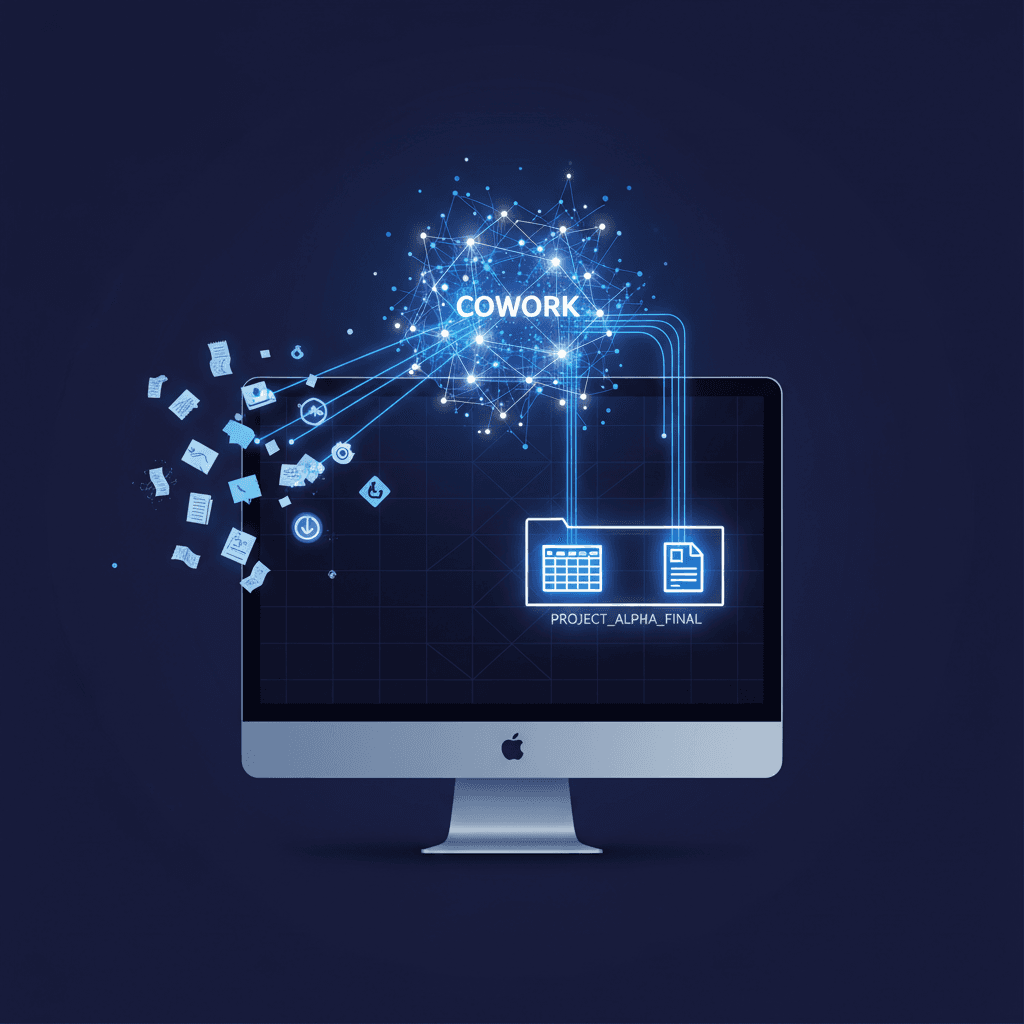
Anthropic has unveiled a new feature for its AI assistant, Claude, called Cowork, marking a significant step in the company'[1][5]s strategy to democratize 'agentic' artificial intelligence tools. This development extends the powerful, autonomous workflow capabilities previously exclusive to the developer-focused Claude Code to a broader audience of non-technical users. Cowork is billed as a simpler way for anyone to work with Claude, moving the AI from a purely conversational tool to a practical, task-completing collaborator.[1][2][3] The feature is built on top of the same Claude Agent Software Development Kit (SDK) that powers its coding counterpart, allowing the AI to autonomously plan, execute, and iterate on multi-step tasks without needing constant manual intervention from the user.[2][4][3]
The inspiration for Cowork came directly from observing how Anthropic's power users, particularly those on the Claude Code platform, were already employing the agent.[2][3] While initially designed for automating rote programming tasks like editing files, running commands, and creating code commits, developers were increasingly repurposing the tool for general productivity tasks—everything from organizing file systems to drafting reports.[1][5][4] Recognizing this organic shift in usage, Anthropic created Cowork to package this agentic power into a more approachable, user-friendly interface that operates through a standard chat window, eliminating the need for command-line tools or virtual environments.[2][4] It represents a key strategic move for Anthropic, translating a complex developer technology into a mass-market productivity feature.[2][3]
The core functionality of Cowork centers on granting the AI controlled, explicit access to a designated folder on a user's computer.[1][2][6] Once granted permission, Claude can read, edit, and create new files within that specific directory on the user’s behalf.[1][2][3] This capability enables a wide range of practical, real-world applications for non-coders. For instance, a user can ask Claude to organize a messy downloads folder by intelligently sorting and renaming files, or to transform a collection of receipt screenshots and invoices into a structured, organized expense report spreadsheet.[1][2][3][6] Beyond file management, Cowork can also draft comprehensive reports by synthesizing scattered notes across multiple documents, or even perform tasks that require web access through an accompanying Chrome plugin.[1][5][6] The feature's ability to queue up tasks and work through them in parallel fundamentally changes the interaction model, shifting the user's role from constantly providing context or converting outputs to simply delegating a job to an autonomous 'co-worker.' Furthermore, Cowork is designed to integrate with Anthropic’s Connectors framework, linking Claude to third-party business tools like Canva, Asana, and Notion, extending its agentic reach across a user’s digital workspace.[1][5]
This launch underscores a profound industry-wide transition from large language models (LLMs) that merely chat to powerful, 'agentic' AI systems that can actually execute complex, multi-step actions.[2][3] The speed of Cowork's development, which was reportedly achieved in approximately one and a half weeks with significant portions of its code written by Claude Code itself, highlights an accelerating, recursive improvement loop in AI development.[5][4] This self-improving capacity signals that core agentic features are rapidly becoming table stakes for major AI platforms. For software builders and smaller companies, this trend presents a challenge, as niche, single-purpose AI tools—like an application solely for organizing receipts into a spreadsheet—are quickly being subsumed as standard features within a $100-per-month subscription to a general-purpose agent.[7] The new competitive moats are shifting away from "AI can do X" and towards deep domain expertise, proprietary data, and complex workflows that the general-purpose agents cannot replicate in a short development sprint.[7]
However, the greater autonomy granted to Cowork also brings with it inherent risks that Anthropic has been quick to address.[2][3] The company emphasizes that while the system can only access files the user explicitly permits, its ability to take "potentially destructive actions," such as deleting files or misinterpreting vague instructions, necessitates user caution.[1][2] Anthropic advises users to be precise with their prompts and warns of the potential for prompt injection attacks, where malicious external content could hijack the agent's actions.[2][4][6] By being transparent about these risks, Anthropic is framing Cowork as an advanced, powerful tool that requires a new level of user engagement and clarity, moving beyond the simple conversational safety of a chatbot.[2] Cowork is currently available as a research preview exclusively to Claude Max subscribers on macOS, with a waitlist for other plans, indicating a cautious, staged rollout as the company gathers data on agent reliability and user interaction in real-world, non-coding environments.[2][4][6] The product's emergence solidifies agentic AI as the next frontier in productivity, positioning Anthropic at the forefront of extending these capabilities to every desktop user.