
Leaders Must Master Anxiety to Unlock AI's Trillion-Dollar Potential
The secret to successful AI adoption is prioritizing psychological change management and developing unique human skills.
January 13, 2026
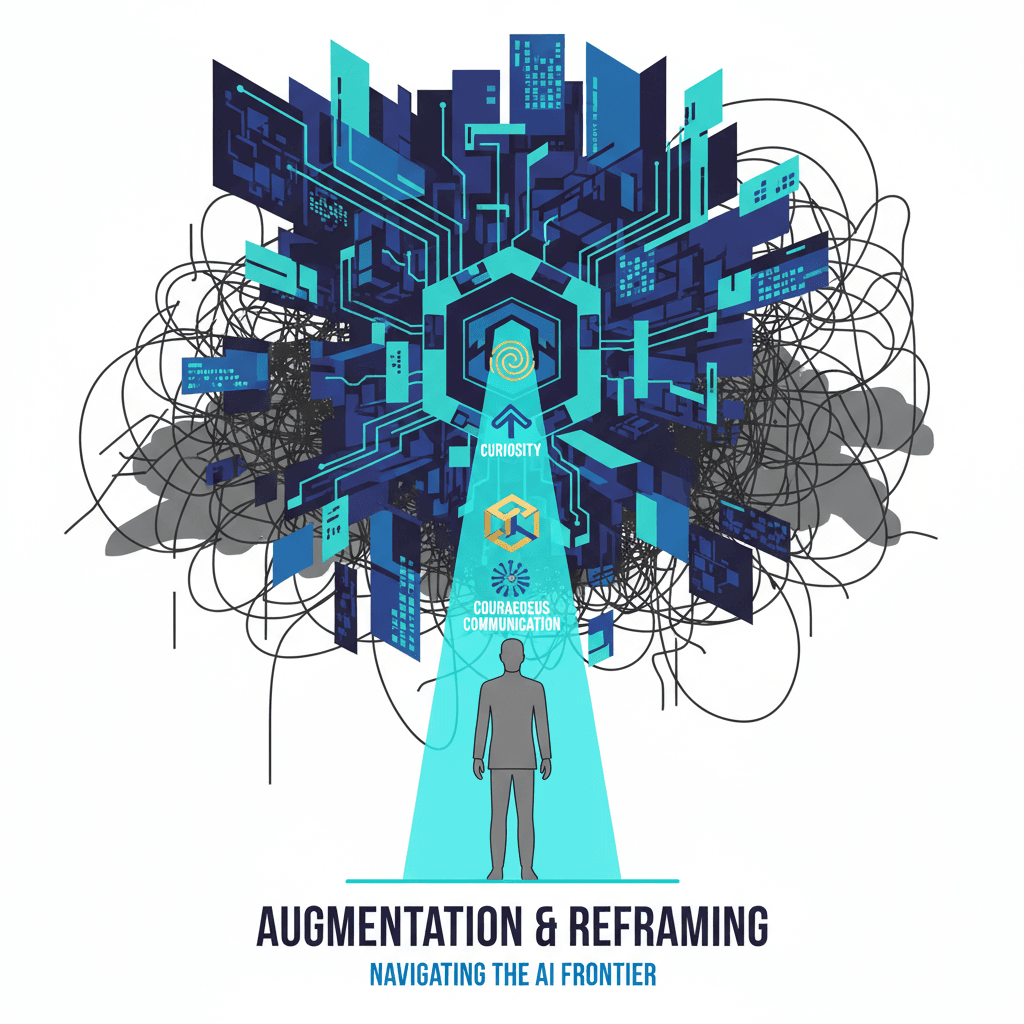
The accelerating integration of artificial intelligence into the corporate structure has made navigating workforce anxiety a primary, non-technical challenge for leaders seeking modern enterprise success. While the deployment of advanced algorithms promises profound efficiency gains, the speed and ultimate success of adoption are largely dictated by the human element, turning AI integration from a technical hurdle into a complex exercise in psychological change management. Resistance fueled by fear of displacement or obsolescence can effectively halt the innovation leaders are attempting to foster, creating a tangible risk to return on investment for multi-million-dollar AI initiatives. The scale of this challenge is underscored by global data, which shows that a majority of employees feel a palpable sense of anxiety regarding AI’s explosive adoption, with one survey of employed US workers finding 71 percent are concerned about the technology.[1]
A significant portion of this workplace friction stems from a fundamental misunderstanding of AI’s capabilities, a misconception that enterprise leaders inadvertently reinforce through their communication strategies. Former Microsoft leader and business transformation expert, Allister Frost, argues that a common error is treating generative AI and Large Language Models (LLMs) as autonomous, human-like agents rather than sophisticated pattern-matching data processors.[2] This anthropomorphism drives the deep-seated fear that machines are poised to render human cognition obsolete. Frost notes that the greatest misconception is believing AI possesses true intelligence and can perform complex human-like tasks.[2] In reality, AI excels at pattern-matching at scale, offering a powerful utility to augment human potential for working smarter and innovating faster.[2] The critical step for leadership is therefore to communicate this distinction clearly, shifting the narrative from one of competition with a sentient replacement to one of collaboration with an advanced utility. This reframing, viewing AI as augmented intelligence rather than artificial intelligence, is essential for reducing apprehension and encouraging engagement.[3]
The anxiety felt by the workforce is deeply rooted in concerns about economic and professional instability. Data shows a significant portion of the workforce links their job security to AI, with one in three workers viewing their long-term professional prospects as being at risk.[4][5] This vulnerability is even more pronounced among younger cohorts, with one UK survey indicating that 52 percent of Gen Z workers feel this heightened sense of job insecurity.[4] Beyond job loss, employees are anxious about the impact on their financial wellbeing, with 72 percent worrying that the technology will negatively affect their salary or pay.[6] This fear extends to career progression; 67 percent of employees worry about losing out on promotions for not knowing how to use AI, while 66 percent express concern about falling behind if they do not adopt the new tools.[6] This climate of anxiety leads to a silent resistance, where 28 percent of workers admit to overstating their AI usage to appear more favorable to management, pointing to a culture of pressure and hidden confusion that actively slows genuine adoption.[4]
To counteract this resistance and unlock the promised productivity gains—such as the reported one hour per day saved by AI users—leaders must prioritise a human-centric adoption strategy centered on empowerment and upskilling.[5] The demand for guidance is overwhelming: 80 percent of employees report that more training would make them more comfortable using AI, and 73 percent are concerned their organization is not offering sufficient opportunities for upskilling.[1] This gap between urgent executive desire for AI integration and actual employee readiness is stark, with one Slack Workforce Lab report finding that while 96 percent of executives are driven to integrate AI, less than a third of employees have engaged with AI tools, and only 16 percent use them weekly.[6] To bridge this divide, experts like Frost champion the cultivation of three inherently human superpowers: curiosity, creativity, and courageous communication.[7][3] These skills are positioned as the unique capabilities that technology cannot replicate. Curiosity, which involves asking fundamental 'why' questions and looking at the workplace with fresh eyes, allows employees to identify new pathways for innovation that AI’s pattern-matching capabilities may miss.[7][3] Creativity, in a human context, involves using AI not for final output but as a volume generator, which the human mind then steers and refines to create original, believable ideas.[3] Finally, courageous communication—the act of sharing ideas and engaging in authentic human conversation—is a vital element of emotional connection and complex problem-solving that remains outside of technology's grasp.[8]
Successful AI integration is fundamentally a leadership challenge that requires humility and an empathetic, culture-first approach. Leaders must acknowledge the fear, offer radical transparency, and involve employees from all levels in the adoption process, an approach that 77 percent of employees say would increase their comfort with the technology.[1] This involves creating a safe space for open dialogue, practising empathy to acknowledge fears without judgment, and providing continuous, practical support and training.[9] A culture that abandons the "Highest Paid Person's Opinion" (HIPPO) and encourages input from those performing the work can foster a more adaptable and future-ready mindset across the organisation.[7][3] By reframing AI as a tool for augmentation and focusing on developing uniquely human skills, enterprises can transition from a state of passive resistance and anxiety to one of collaborative excitement. The implication for the AI industry is clear: the technology's success is no longer a question of algorithm quality but a testament to effective change management, making the human mindset the single most important factor in realising the trillion-dollar potential of artificial intelligence.[10]