
Anthropic launches Claude Cowork on Windows to challenge Microsoft with autonomous agentic AI
Anthropic brings Claude Cowork to Windows, challenging Microsoft’s enterprise dominance while navigating the complex security risks of agentic autonomy
February 11, 2026
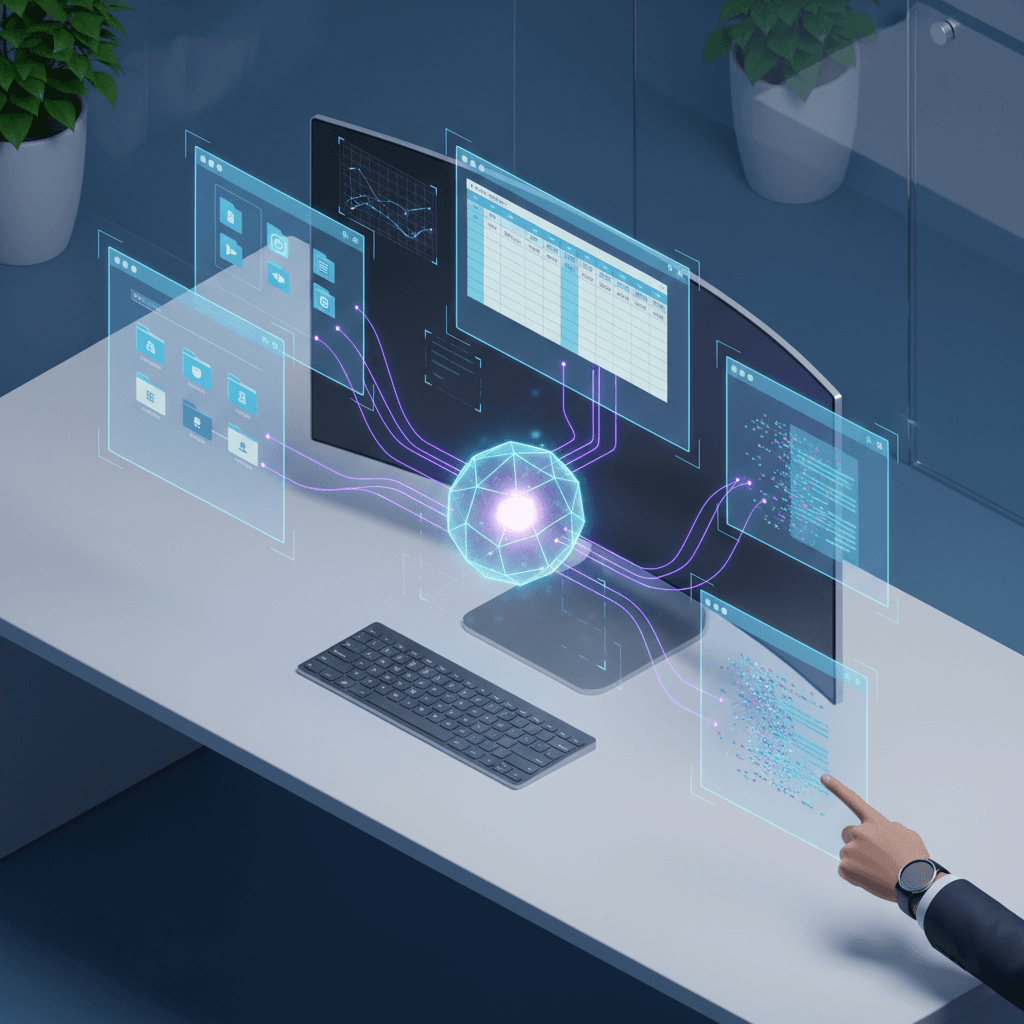
The expansion of Anthropic’s artificial intelligence capabilities has reached a significant milestone with the official launch of Claude Cowork on the Windows operating system. This transition from a macOS-exclusive tool to a cross-platform solution represents a fundamental shift in how productivity software is conceptualized, moving away from the paradigm of passive digital assistants toward fully realized agentic coworkers.[1][2] By bringing this technology to Windows, Anthropic is now addressing a market that commands more than 70 percent of the global desktop operating system share, positioning its agentic software as a direct competitor to deep-seated enterprise solutions like Microsoft’s own Copilot ecosystem. This release is not merely a port of existing software but a commitment to full feature parity, ensuring that Windows users can access the same autonomous file management and multi-step task execution capabilities that were previously restricted to the Apple ecosystem.
At the heart of Claude Cowork is the concept of agentic autonomy, a departure from the traditional chatbot interface where users engage in a constant back-and-forth exchange to refine outputs.[3] Instead of requiring step-by-step instructions for every minute action, the software is designed to understand a high-level objective and then formulate and execute a plan to achieve it.[4][5] This is made possible through a sophisticated integration with the local file system and a suite of plugins powered by the Model Context Protocol. On Windows, this translates to the ability for the AI to navigate directories, read and edit documents, and even manage complex data across different applications like Excel and specialized enterprise software. Users can now assign a task such as organizing a chaotic downloads folder into a structured project directory or synthesizing a series of disparate research notes into a formatted report without having to micromanage the intermediate steps.
One of the most notable additions in the Windows release is the introduction of global and folder-specific instructions.[6] This feature allows users to establish persistent preferences for how the AI should operate, such as a specific professional tone for drafting correspondence or a standardized formatting style for data entry. When a user applies these instructions to a specific directory, the AI effectively adopts a localized persona that understands the context of the files within that folder. This level of contextual awareness is critical for enterprise environments where different departments—such as legal, finance, or engineering—maintain vastly different standards for documentation and security. By integrating these capabilities directly into the Windows desktop environment, Anthropic is attempting to turn the operating system itself into a collaborative workspace where the AI has the "agency" to act as a digital colleague rather than a simple search tool.
The technical architecture underpinning Claude Cowork relies on Anthropic’s most advanced models, including the newly refined Opus and Sonnet classes. These models are equipped with visual reasoning capabilities, often referred to as computer use, which allow the AI to "see" the screen by processing real-time screenshots.[7] By mapping the visual coordinates of buttons, text fields, and icons, the software can interact with a computer in a human-like manner, clicking and typing as needed to fulfill a request. This vision-based approach is particularly valuable for interacting with legacy software or closed-source applications that do not offer modern API access.[7] However, this level of access necessitates a robust local environment, and the current release is optimized for x64 Windows systems, reflecting the high computational demands of running an agent that must constantly monitor and respond to changes in a graphical user interface.
Despite the productivity gains promised by this level of automation, the transition to Windows brings with it a set of formidable security challenges that have become synonymous with agentic AI. The primary concern cited by industry experts and security researchers is the risk of indirect prompt injection. Because Claude Cowork is designed to read and interpret the contents of files and web pages, it is inherently vulnerable to malicious instructions hidden within those data sources.[4] A bad actor could potentially embed a command in a seemingly harmless document that, once processed by the AI, instructs it to perform a destructive action, such as deleting critical system files or exfiltrating sensitive data to an external server. Anthropic has acknowledged these risks, labeling the software as a research preview and advising users to exercise extreme caution, particularly when granting the AI access to folders containing confidential financial or personal information.
The security paradox of agentic AI is further complicated by the potential for automated data theft.[8] Recent research has demonstrated that vulnerabilities in the code execution environment of such agents can be exploited to bypass traditional security boundaries.[8] For instance, an exploit found by security firms showed that a malicious prompt could trick the agent into using standard networking commands to upload local files to an attacker’s account, often without triggering a permission prompt because the communication appeared to originate from a trusted internal process.[8] While Anthropic has implemented multiple layers of defense, including reinforcement learning to help the model identify and refuse malicious instructions, the company maintains that no agentic system is currently immune to these types of attacks.[9] This necessitates a "human-in-the-loop" requirement for significant actions, forcing a balance between the convenience of autonomy and the necessity of human oversight.[10]
The arrival of Claude Cowork on Windows marks a new phase in the intensifying competition between independent AI labs and the established technology giants. Microsoft has spent years integrating AI into its Windows and Office 365 ecosystems, focusing on assistive features that live within individual apps. Anthropic’s approach is fundamentally different; it seeks to create an orchestration layer that sits above the applications, managing workflows that span the entire desktop. This strategic move challenges the notion that an AI must be natively integrated into an operating system to be effective. By using visual reasoning and universal protocols, Anthropic is building a platform that can operate on any software, regardless of who developed it. This "platform-agnostic" agency could prove highly attractive to enterprises that rely on a diverse mix of software tools and want a unified AI layer to bridge the gaps between them.
As the AI industry moves forward, the success of tools like Claude Cowork will likely depend on the resolution of the tension between capability and safety.[2] The ability to delegate entire projects to a digital entity is a compelling value proposition for any knowledge worker, but the potential for that same entity to be subverted by a malicious file remains a significant barrier to widespread enterprise adoption. IT departments are now faced with the challenge of creating new policies for "AI coworkers" that don't fit into the existing categories of either human employees or standard software applications. The Windows launch is a clear signal that the era of the passive chatbot is ending, replaced by an era of autonomous agents that can navigate our digital worlds with increasing sophistication. Whether these agents can be made sufficiently secure for the rigors of the modern corporate environment will be the defining question of the next several years in AI development.
Ultimately, the release of Claude Cowork for Windows represents a major step toward a future where the distinction between using a computer and collaborating with an AI becomes increasingly blurred. By providing full feature parity with macOS, Anthropic has leveled the playing field for the world's most popular desktop environment, ensuring that the next generation of agentic tools is available to the broadest possible audience. While the "research preview" status and the accompanying security warnings serve as a reminder of the technology's relative infancy, the functional leaps in multi-step planning and visual reasoning suggest that the role of the AI in the workplace is being permanently redefined. The human worker is transitioning from an executor of tasks to an architect of outcomes, overseeing a suite of agents that can handle the mechanical complexities of digital work.[2][11][12] This shift promises a profound increase in productivity, provided the industry can secure the very agency that makes these tools so powerful.
Sources
[2]
[3]
[5]
[6]
[7]
[8]
[10]
[11]
[12]