
Anthropic and OpenAI launch multibillion dollar service ventures to bridge the AI implementation gap
Anthropic and OpenAI are launching billion-dollar service ventures to bring customized AI solutions to the global mid-market
May 4, 2026
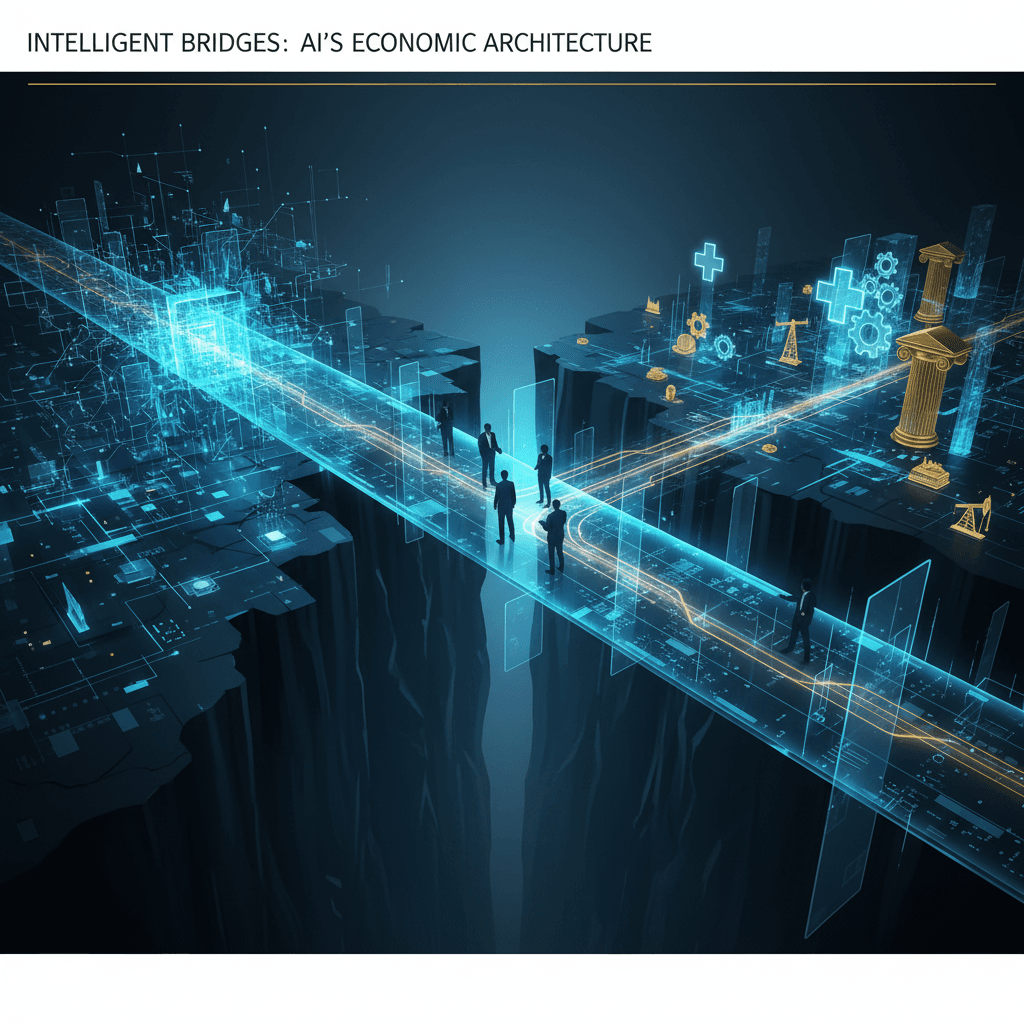
The shift from laboratory breakthroughs to boardroom utility has reached a critical inflection point as the worlds leading artificial intelligence companies move beyond selling software to selling solutions. In a landscape where state-of-the-art large language models are increasingly viewed as foundational infrastructure rather than standalone products, Anthropic and OpenAI have reached a shared conclusion that the real revenue lies in the messy work of implementation. This strategic pivot was solidified by Anthropics announcement of a major joint venture with Wall Street heavyweights, signaling that the next phase of the AI race will not be won by the smartest model alone, but by the company that can most effectively embed that intelligence into the legacy workflows of the global economy.
The center of this transition is a newly formed, standalone AI-native enterprise services firm launched by Anthropic in collaboration with Blackstone, Hellman and Friedman, and Goldman Sachs.[1][2][3][4][5][6] Backed by an estimated 1.5 billion dollars in total commitments, including 300 million dollars each from Anthropic and its anchor private equity partners, the venture is designed to bridge the growing gap between theoretical AI potential and practical business application.[7] Unlike traditional software-as-a-service models where a customer buys a subscription and is left to their own devices, this new entity will embed Anthropics own applied AI engineers directly into its operations. These engineers will work alongside specialized teams to design, deploy, and maintain custom solutions for mid-market companies that lack the internal technical resources to navigate the complexities of frontier AI on their own.[6]
This move marks a departure from Anthropics earlier reliance on large systems integrators like Accenture or Deloitte. While those partnerships continue, the new venture focuses specifically on the vast middle market—businesses in sectors like healthcare, manufacturing, and financial services that have the capital to invest but lack the specialized talent to bridge the implementation gap. By partnering with private equity giants like Blackstone, which manages over 1.3 trillion dollars in assets, Anthropic gains direct access to a massive built-in customer base of portfolio companies. This model creates a direct distribution channel that bypasses traditional software sales cycles, allowing for the rapid deployment of the Claude platform across hundreds of disparate organizations.[8]
OpenAI has followed a strikingly similar trajectory, albeit through different structural means.[9][10][11] The creator of ChatGPT has signaled its own commitment to the services-heavy model through the launch of The Deployment Company, a joint venture reported to have upwards of 4 billion dollars in funding. This initiative, alongside OpenAIs Frontier Alliances with consulting titans like McKinsey, Boston Consulting Group, and PwC, highlights a shared realization: the technology is now moving faster than the average corporations ability to absorb it. OpenAI has increasingly positioned itself as a partner in business transformation rather than just a provider of API credits. Its relationship with PwC is particularly illustrative, with the accounting giant serving as both the largest enterprise customer and a primary reseller of OpenAIs technology.[12][13] This reflects a broader trend where the AI developer essentially outsources the risk and labor of integration to firms that already have deep, trusted relationships with C-suite executives.
The economic reality driving these partnerships is the lopsided cost of AI adoption. Industry data suggests that for every dollar a company spends on an AI model, it may spend between five and ten dollars on integration, data governance, compliance, and staff training. This implementation overhead has become a significant bottleneck. Large language models are not plug-and-play tools; they require sophisticated Retrieval-Augmented Generation (RAG) pipelines, meticulous prompt engineering, and rigorous security assessments to be useful in a professional setting. Furthermore, because these models evolve on a near-monthly basis, the systems built on top of them must be equally dynamic. The new services firms are being built specifically to manage this continuous evolution, ensuring that a mid-sized manufacturer or a regional health system stays at the frontier without needing to hire a full-time department of machine learning PhDs.
The competition between Anthropic and OpenAI is now being fought on the ground of reliability and trust. Anthropic has long marketed its Claude model as the more stable, enterprise-aligned choice, leaning on its Constitutional AI framework to appeal to industries where safety and auditability are non-negotiable.[14] By launching a dedicated services arm with Goldman Sachs and Blackstone, Anthropic is doubling down on this "safe hands" reputation. The involvement of major financial institutions provides a layer of institutional credibility that is often missing from pure tech startups. For a CFO at a mid-market firm, the decision to adopt AI is often less about the models benchmark scores and more about whether the implementation will disrupt core operations or create unforeseen legal liabilities.
This shift toward services is also a response to the looming commoditization of intelligence. As the performance gap between top-tier models from OpenAI, Anthropic, and Google narrows, the models themselves become a utility.[9] In such a market, value accrues to the companies that own the "last mile" of the user experience—the specific application or workflow where the AI actually performs the task. By moving into services, the developers are attempting to capture more of that value and build stickier relationships with their customers. A company that has spent six months working with Anthropics engineers to re-engineer its entire supply chain around Claude is far less likely to switch to a competitor just because a new model has slightly better reasoning capabilities.
The implications for the broader tech industry are profound. We are witnessing the birth of a new category of "AI-native" professional services that could eventually rival the scale of the traditional consulting industry. As AI moves from simple chatbots to agentic systems capable of handling end-to-end business processes, the need for human-led design and oversight only increases. The partnership between Anthropic and its financial backers suggests that the winners of the AI era will be those who can combine world-class engineering with a deep understanding of vertical-specific business operations.[6][7]
In the long term, this focus on the mid-market could be the catalyst for the widespread democratization of AI productivity gains. Historically, advanced technology has been the exclusive domain of the largest corporations with the deepest pockets. By creating a structured, capital-backed service model, Anthropic and OpenAI are lowering the barrier to entry. This ensures that the benefits of frontier AI are not restricted to the Fortune 500, but can be harnessed by the thousands of companies that form the backbone of the global economy. The consensus is clear: the age of the "pure" AI company is over, and the era of the AI-powered service provider has begun. Success in this new phase will be measured not just by the complexity of the neural network, but by the tangible efficiency it brings to a factory floor or a bank’s back office.
Sources
[5]
[8]
[9]
[10]
[11]
[12]
[13]