
Alibaba unveils RynnBrain open-source foundation model to challenge Western dominance in physical robotics
Alibaba’s open-source RynnBrain model challenges Western rivals by bridging the gap between digital intelligence and physical robotic action.
February 13, 2026
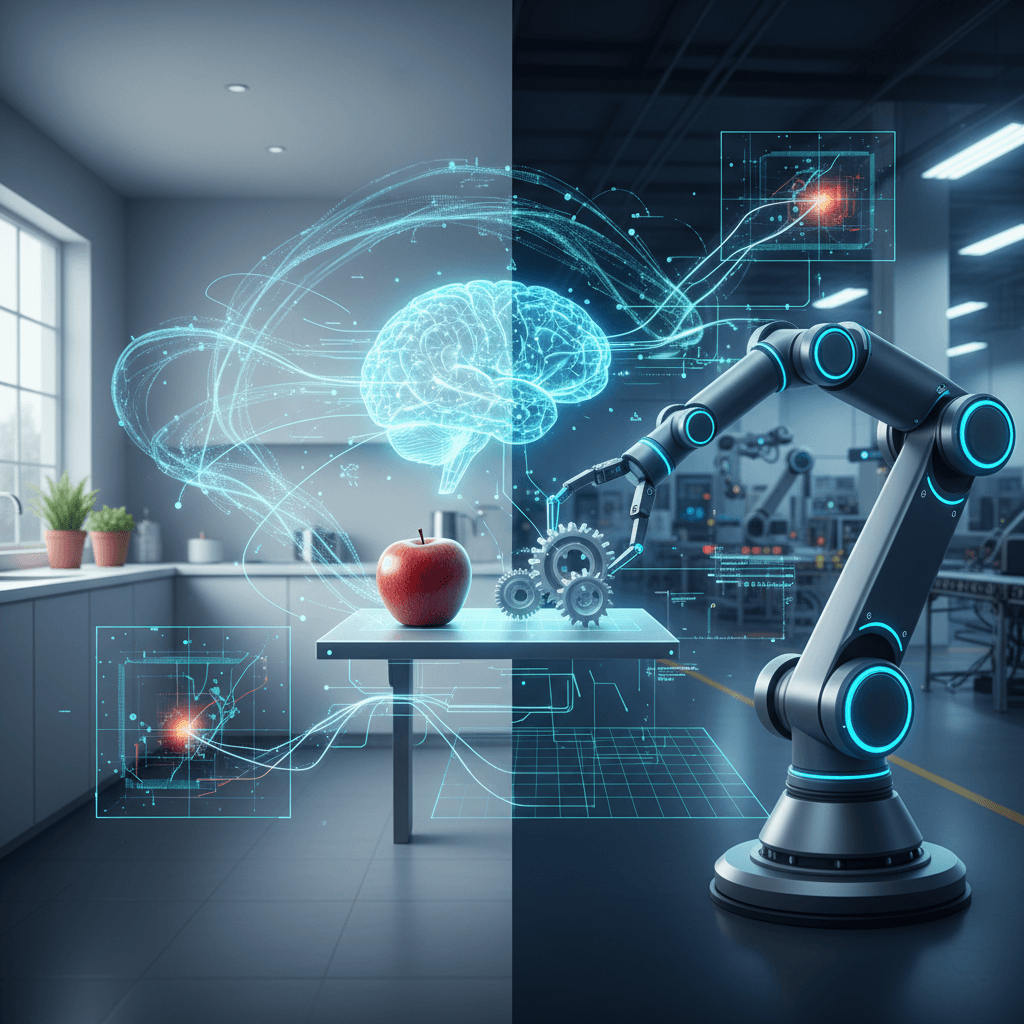
Alibaba Group has officially signaled its intent to move beyond the digital confines of large language models and into the realm of physical reality with the unveiling of RynnBrain, an open-source foundation model designed specifically for robotics.[1][2][3][4][5][6] Developed by the company’s prestigious research arm, DAMO Academy, RynnBrain represents a strategic pivot toward embodied intelligence, a subset of artificial intelligence that empowers machines to perceive, reason, and execute tasks within complex three-dimensional environments.[7] The announcement marks a significant milestone in the global tech landscape, as one of China’s most influential tech titans joins the race to develop the cognitive engines that will drive the next generation of industrial and consumer robots.[1] By making the model open-source, Alibaba is not merely releasing a tool but is actively attempting to establish a new standard for the robotics industry, challenging the proprietary approaches favored by Western competitors such as Tesla, Google, and Nvidia.[1][5]
The technical foundation of RynnBrain is rooted in Alibaba’s advanced vision-language architecture, specifically the Qwen3-VL series.[8][7][3][9][10] Unlike traditional AI models that operate on static datasets or text-based prompts, RynnBrain is engineered for what engineers call vision-language-action integration. This means the model can ingest visual data from a robot’s sensors, interpret natural language commands from a human operator, and translate that information into a series of coordinated motor actions.[1][11][5] To accommodate various hardware needs, Alibaba has released RynnBrain in several configurations, ranging from lightweight 2-billion and 8-billion parameter dense models designed for edge computing on resource-constrained devices, to a high-performance 30-billion parameter mixture-of-experts variant. These models are further specialized into functional branches, including RynnBrain-Plan for manipulation, RynnBrain-Nav for navigation, and RynnBrain-CoP for complex spatial reasoning.[9]
At the core of RynnBrain’s value proposition is its ability to overcome the historical limitations of robotic perception, specifically spatiotemporal memory and physics-aware reasoning. In promotional demonstrations, Alibaba showcased robots utilizing the model to perform domestic tasks that require sophisticated cognitive processing, such as identifying specific fruits among a cluttered selection and placing them in a basket, or fetching a bottle of milk from a refrigerator.[2] While these actions appear simple to humans, they require a robot to maintain an episodic memory of its surroundings, predict the trajectory of its movements to avoid obstacles, and understand the physical properties of objects—such as the fragility of an egg versus the weight of a milk carton. Alibaba claims that RynnBrain has achieved record-breaking results across 16 major industry benchmarks, reportedly outperforming leading Western models like Google DeepMind’s Gemini Robotics-ER 1.5 and Nvidia’s Cosmos-Reason2 in categories such as grounded visual understanding and embodied localization.
The decision to open-source RynnBrain is a calculated strategic move designed to foster a global ecosystem around Alibaba’s technology.[1] By hosting the models on public platforms like GitHub and Hugging Face, Alibaba is inviting researchers, startups, and hardware manufacturers to build and refine their robotic systems using its foundational "brain" at no cost. This approach contrasts sharply with the "black box" development cycles often seen in the United States, where companies like Tesla and Figure AI maintain tight control over their proprietary stacks. Industry analysts suggest that Alibaba’s strategy is intended to lower the barrier to entry for robotics innovation, potentially turning RynnBrain into the "Android" of the robotics world. This democratized access is expected to accelerate innovation cycles, particularly for small-scale manufacturers who lack the massive capital required to develop their own foundation models from scratch.
Beyond the technical rivalry, the emergence of RynnBrain is deeply intertwined with China’s broader economic and demographic realities.[5] The country is currently grappling with an aging population and a shrinking workforce, particularly in labor-intensive sectors like manufacturing, logistics, and agriculture. Official government initiatives, such as the "AI+" plan and various "Robot +" mandates, have set ambitious targets for the integration of intelligent systems across the national economy, with some sectors aiming for 90 percent adoption by 2030.[12] In this context, RynnBrain is more than just a software product; it is a critical piece of infrastructure intended to mitigate labor shortages by enabling machines to work alongside humans in high-precision factory halls or assist the elderly in domestic settings.[5] Alibaba’s recent investment of 144 million dollars in X Square Robot, a manufacturer of humanoid machines, further underscores the company’s commitment to providing both the software and the hardware required for a fully automated future.
The implications for the global AI industry are profound, as the competition for dominance in physical AI becomes a central front in the technological rivalry between the United States and China.[1] While the U.S. continues to lead in core software research and high-end semiconductor design, China has leveraged its unparalleled manufacturing base to become the world's largest market for industrial robots, accounting for over half of all global installations in recent years. By bridging the gap between its domestic manufacturing prowess and advanced AI research, Alibaba is positioning itself as a central player in the shift toward "General Purpose Robotics"—machines that are not limited to a single repetitive task but can learn and adapt to any physical environment. The launch of RynnBrain signals that the era of AI being confined to screens and chat interfaces is ending, as the technology begins to gain the physical agency necessary to reshape the world of atoms and motion.
As RynnBrain gains traction among global developers, the focus will likely shift to how these models perform in unpredictable, high-stakes environments. The transition from controlled laboratory simulations to the messy, "long-tail" scenarios of real-world kitchens and warehouses remains the ultimate test for embodied AI. However, by providing a robust, open-source framework that combines spatial awareness with episodic memory and action planning, Alibaba has provided the tools for the global community to tackle these challenges collectively. Whether RynnBrain becomes the dominant architecture for the next generation of humanoid machines remains to be seen, but its release has undeniably accelerated the timeline for a future where autonomous, thinking machines are an ubiquitous presence in daily life. This launch confirms that the next great frontier for artificial intelligence will not be played out in digital archives, but on the factory floors and in the living rooms of the physical world.