
AI's True Face Emerges: Creative Partner and Coding Powerhouse
Trillions of interactions expose AI's secret life: more roleplay and coding than productivity, challenging its core purpose.
December 9, 2025
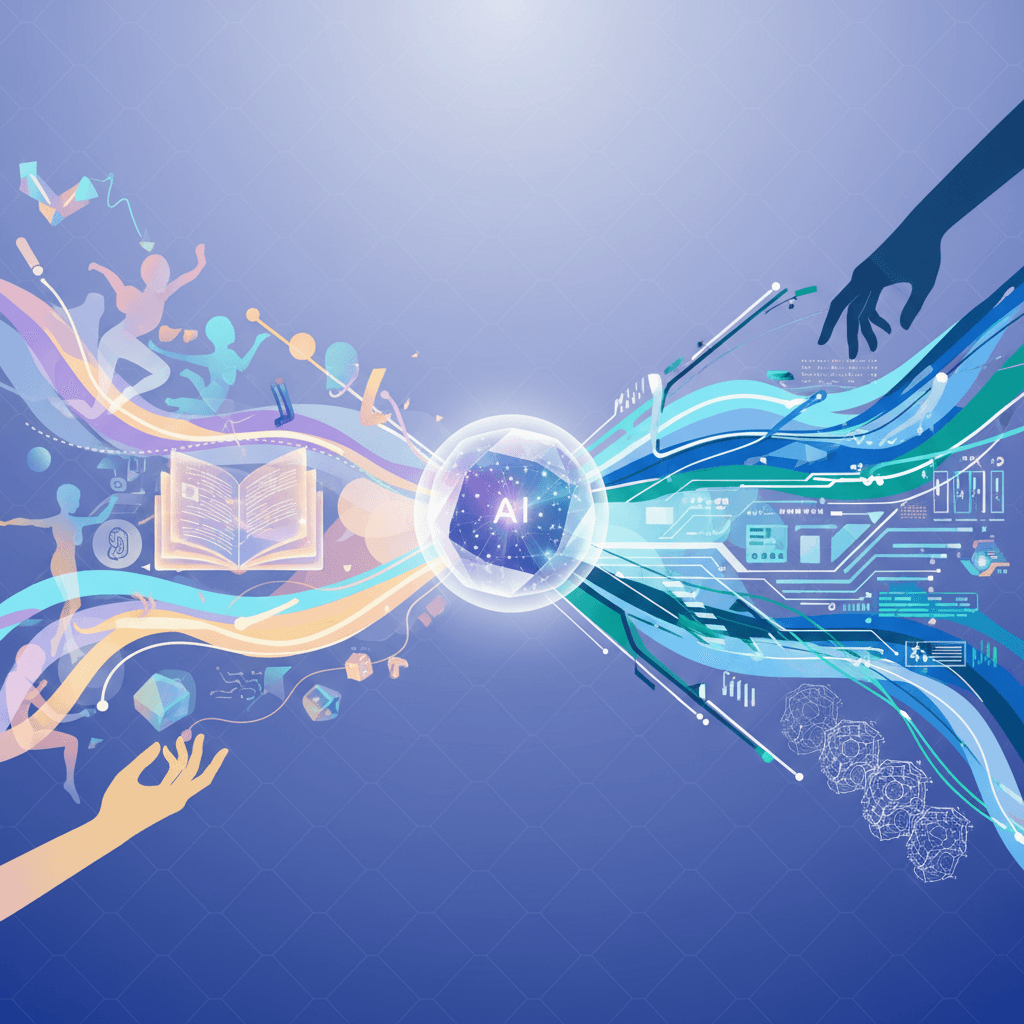
While the prevailing narrative has long painted artificial intelligence as a revolutionary productivity engine for tasks like composing emails and summarizing reports, a landmark analysis of billions of real-world interactions reveals a profoundly different and more complex picture of how humanity is truly engaging with AI. A comprehensive study by OpenRouter, which analyzed over 100 trillion tokens of AI usage, has unveiled that the most dominant applications are not what the industry has led us to believe. The data points to a surprising surge in AI's role as a companion and creative partner, challenging foundational assumptions about its primary utility and signaling a major shift in the human-computer relationship. This extensive, data-driven research uncovers a dual reality where AI is simultaneously becoming an indispensable tool for technical creation and a deeply integrated partner for personal expression and entertainment.
One of the most startling revelations from the OpenRouter analysis is the sheer dominance of roleplaying and creative storytelling in the AI landscape, particularly on open-source models.[1][2][3][4] Contrary to the widespread belief that AI is predominantly a tool for productivity, the data indicates that more than half of all open-source AI model interactions are dedicated to these imaginative pursuits.[2][3][4] This includes a wide spectrum of activities, from engaging in character-driven conversations and interactive fiction to co-writing and participating in gaming scenarios.[1][5][6] This significant use case suggests that a large segment of users is seeking companionship, entertainment, and a platform for creative exploration from AI, rather than simply a means to enhance workplace efficiency.[2] The findings highlight that for many, AI models are functioning as sophisticated roleplaying engines, a use case that has largely been invisible in the mainstream discourse about AI's purpose.[2] This profound inclination towards creative and personal use over purely functional applications suggests a fundamental human need for connection and storytelling is being met by this technology.
In parallel to the explosion of creative applications, the analysis confirms that programming and coding assistance has emerged as another heavyweight contender in AI usage, experiencing meteoric growth across all models.[2][5][6] What was once a relatively niche application has expanded dramatically, with coding-related queries growing from a small fraction of total AI usage to over half by the end of 2025.[2][7] This is not merely about generating simple code snippets; the complexity of these interactions has also escalated significantly. The average length of prompts for programming tasks has seen a fourfold increase, with some requests involving the analysis of entire codebases.[2][7] This indicates a deepening integration of AI into the software development lifecycle, where it is used for a range of sophisticated tasks including debugging, designing system architecture, and refactoring code.[7] The surge in this category underscores AI's powerful capabilities as a technical and logical partner for developers, streamlining complex processes and augmenting their problem-solving abilities.
The implications of these dual trends are far-reaching for the AI industry, challenging developers and investors to rethink their product strategies and market focus. The massive, organic growth of roleplaying and companionship as a primary use case reveals a vast, and perhaps underserved, market for AI applications that cater to human emotion, creativity, and connection.[7] This stands in stark contrast to the heavy industry focus on enterprise and productivity solutions. Furthermore, the rise of open-source models, which now account for approximately one-third of total usage, is a significant trend, particularly as these models are the primary platform for creative AI interactions.[1][2][3] The study also points to a broader shift in how AI is being used, moving from simple prompt-and-response interactions to more complex, multi-step "agentic inference."[8][1][5] This means users are increasingly building workflows where the AI acts in extended sequences, planning and executing tasks more autonomously.[8] This evolution, coupled with the discovery of a "Cinderella's Glass Slipper Effect," where early users who find a model that perfectly fits their needs show remarkably high retention, suggests that the future of AI may lie in specialized, deeply integrated applications rather than one-size-fits-all solutions.[9][5][3]
In conclusion, the comprehensive analysis of trillions of AI interactions provides a crucial and surprising corrective to the prevailing narrative of AI as a purely productivity-focused tool. The reality is that a vast number of people are turning to AI for deeply human reasons: for storytelling, companionship, and creative exploration. At the same time, AI's role as a powerful assistant in complex, technical fields like programming is undeniably solidifying. This bifurcation of use cases suggests that the true revolution of AI is not just in making us more efficient workers, but in providing a versatile tool that adapts to a wide spectrum of human needs, from the logical and technical to the emotional and imaginative. The future of AI development will likely need to embrace this multifaceted reality, creating systems that are not only powerful and productive but also engaging, empathetic, and creatively inspiring. The surprising truth is that people are not just using AI to do things, but to be and to feel.