
AI's Insatiable Power Hunger Threatens U.S. Grid, Jeopardizes Global AI Leadership.
AI's colossal energy appetite is pushing the U.S. power grid to its breaking point, jeopardizing the tech future and national security.
December 8, 2025
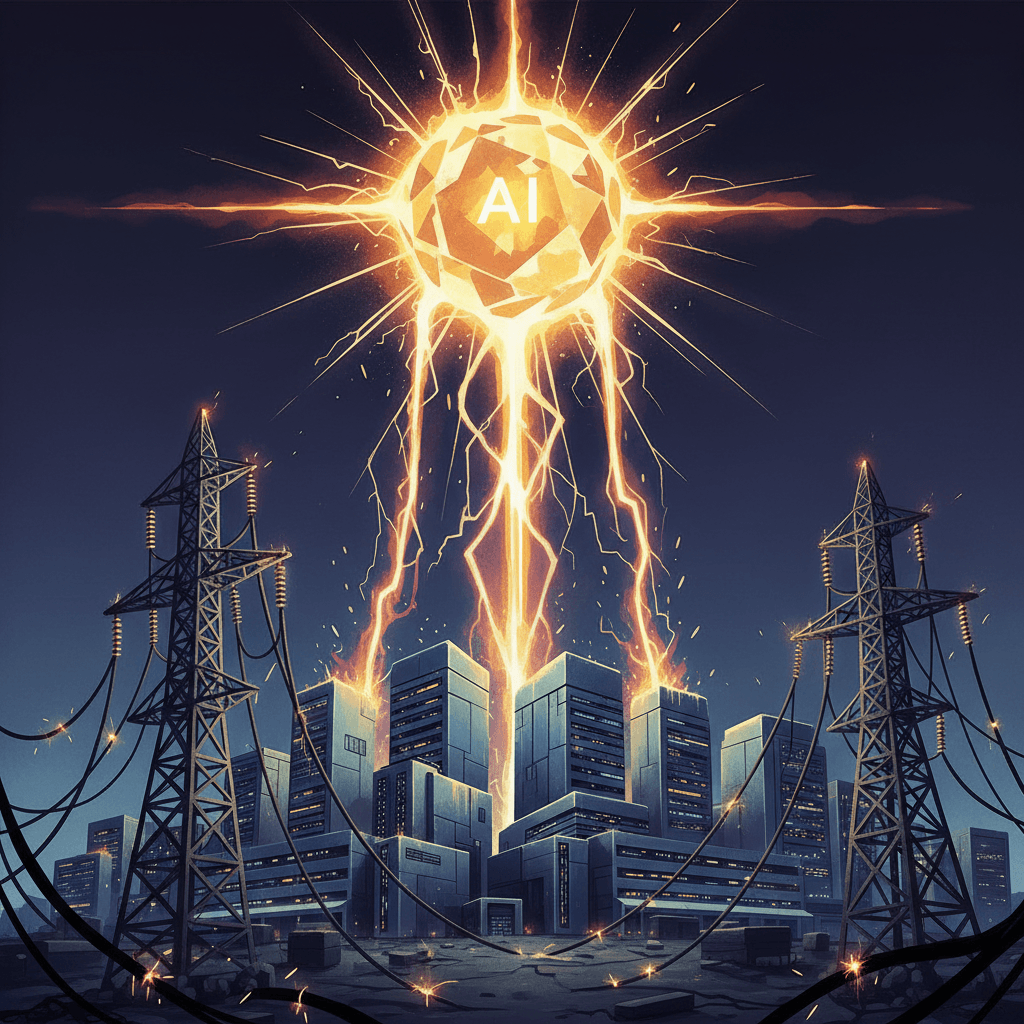
A burgeoning energy crisis, fueled by the voracious power demands of artificial intelligence, is casting a shadow over the ambitious growth plans of tech giants like OpenAI and Microsoft. A new report highlights a growing chasm between the electricity required to power the next generation of AI and the capacity of the United States' aging power grid. This energy gap poses a significant threat not only to the multi-billion dollar supercomputing projects on the horizon but also to the nation's leadership in the global AI race. The scale of the issue is unprecedented, with the planned AI infrastructure requiring energy loads equivalent to entire countries, a demand that the current grid is ill-equipped to handle.
The insatiable energy appetite of AI is driven by the massive data centers required to train and operate complex models. These facilities are becoming exponentially more power-intensive than traditional data centers.[1] Projects like Microsoft and OpenAI's "Stargate" supercomputer, a colossal $100 billion initiative, exemplify this trend.[2] Stargate alone could eventually require up to five gigawatts of power, an amount comparable to the output of a nuclear reactor.[2][3] To put this in perspective, OpenAI's planned data centers, including those under the Stargate initiative, could consume as much electricity as New York City, with a total projected demand of 17 gigawatts.[4] This surge in demand comes after two decades of relatively flat electricity consumption in the U.S., catching many utility providers off guard.[5] Projections indicate that data centers could account for up to 12% of the total electricity use in the U.S. by 2030, a significant jump from the current 4%.[6][7]
This explosion in energy demand is colliding with the stark realities of an outdated and overburdened U.S. power grid. Much of the nation's electrical infrastructure was built in the 20th century and is not designed to handle the concentrated, massive energy loads required by modern data centers.[1] Grid capacity is already constrained, with utilities struggling to keep up with current demands, let alone the projected increases from AI.[5] The process of upgrading the grid is painfully slow, with permitting delays, supply chain bottlenecks, and the high cost of infrastructure improvements creating significant hurdles.[8] The average timeline for new-generation projects to connect to the grid is now over five years, and a staggering 80% of these projects never even reach the construction phase.[5] This gridlock means that even as renewable energy projects are being developed, the transmission infrastructure to deliver that power to where it's needed most is lagging far behind.[9] The result is a growing risk of grid instability, power quality issues, and even blackouts in regions with high concentrations of data centers.[10][11]
The potential consequences of this energy shortfall for the AI industry are severe. OpenAI's CEO, Sam Altman, has described the energy shortage as an existential threat, stating that without enough computing power, the company cannot generate revenue or build models at the required scale.[12][3] The competition for limited power resources is already fierce, with data center vacancy rates in key areas like Northern Virginia plummeting to less than 1%.[13][14] This scarcity drives up costs and can delay or halt the construction of new facilities. The inability to secure reliable power could deflate the AI "bubble," hindering the transformative potential of the technology and impacting the stock values of major tech companies.[3] Moreover, the report frames the energy challenge as a matter of national security. A failure to build the necessary power infrastructure to support the AI arms race could allow other nations, particularly China, to gain a competitive advantage in developing and controlling this critical technology.[15][12]
In response to this looming crisis, tech companies and energy providers are scrambling for solutions. An "all of the above" energy strategy is emerging, incorporating a mix of traditional and innovative power sources.[16] While renewable energy sources like solar and wind are part of the long-term vision, their intermittent nature makes them insufficient for powering data centers that require a constant, 24/7 electricity supply.[17][7] Consequently, companies are exploring a range of options, including behind-the-meter power generation, where dedicated power facilities are built on-site at data centers.[18] There is also a renewed interest in nuclear power, with Microsoft striking a deal to reactivate the Three Mile Island nuclear plant.[12] Smaller, modular nuclear reactors are also being considered as a stable, high-capacity power source.[19] In the interim, natural gas is expected to continue playing a significant role, with OpenAI planning to use natural gas turbines for its Stargate project in Texas.[19][12] These efforts are coupled with innovations in data center efficiency, such as advanced liquid cooling systems, to reduce overall energy consumption.[6][7] However, these solutions require massive investment and coordination between private industry, utility companies, and government regulators to overcome the significant infrastructure and regulatory hurdles that lie ahead.[17]
Sources
[3]
[4]
[6]
[11]
[12]
[14]
[17]
[19]