
AI Digital Lung Twins Revolutionize Respiratory Diagnostics and Surgical Planning
Living, breathing digital lung models, powered by AI from LTTS and NVIDIA, promise precision diagnostics and personalized respiratory care.
December 1, 2025
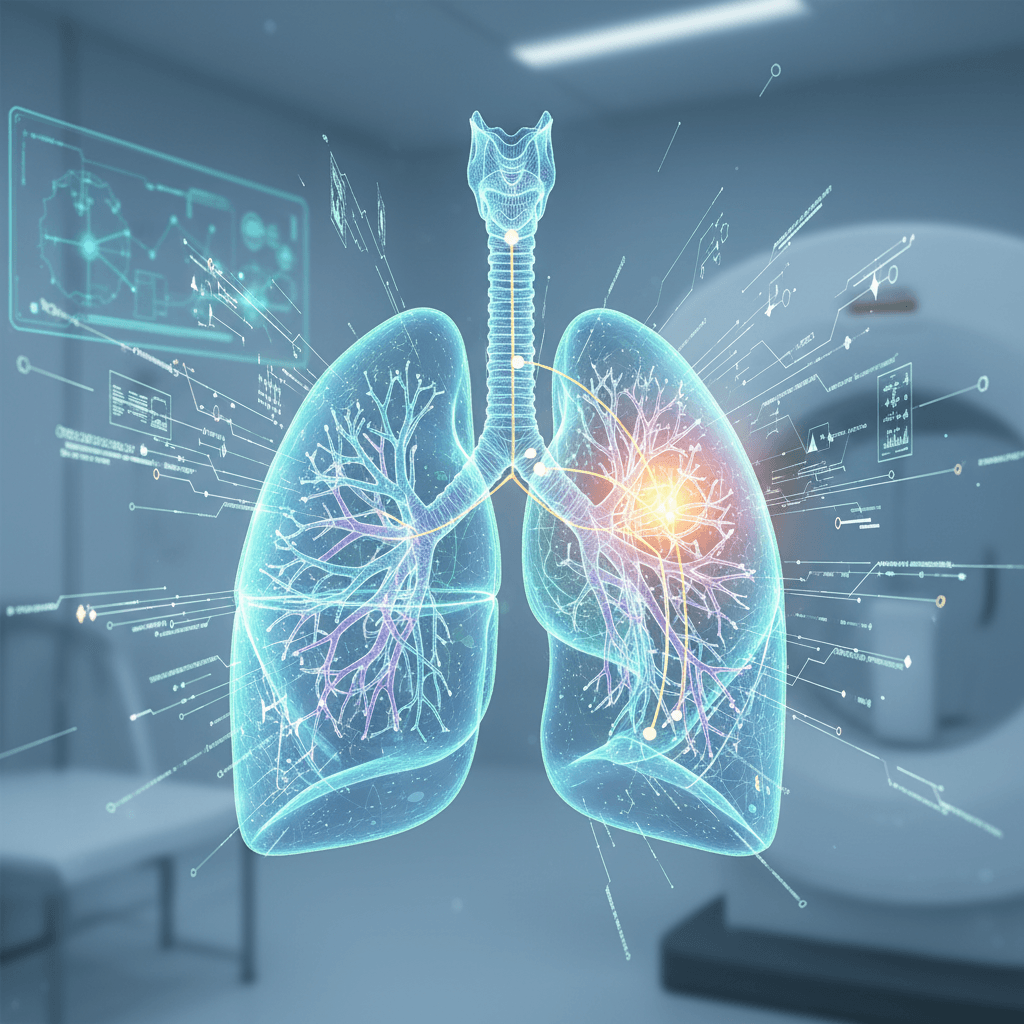
In a significant stride for medical technology, L&T Technology Services has announced the development of an advanced, AI-powered digital twin platform aimed at revolutionizing respiratory diagnostics and lung navigation.[1][2][3] This new system, created in collaboration with NVIDIA, merges LTTS's extensive experience in medical technology and AI-driven diagnostics with NVIDIA's powerful AI infrastructure to offer clinicians a tool of unprecedented precision.[1][2] The platform is designed to provide scalable, low-latency solutions that enhance the accuracy of diagnostics and improve accessibility for healthcare providers around the world.[1][2][4] By creating dynamic, virtual models of a patient's lungs, this technology promises to transform surgical planning and advance the care of serious conditions such as lung cancer, Chronic Obstructive Pulmonary Disease (COPD), and various infectious diseases.[1][5][4] The unveiling of this next-generation solution is anticipated at the Radiological Society of North America (RSNA) 2025 conference, signaling a new era for AI's role in clinical practice.[6][5][2]
The core of this innovation lies in its ability to create a "biological digital twin" of the human respiratory system. The platform integrates with standard CT imaging and employs sophisticated deep learning models to generate a detailed 3D digital replica of a patient's lung anatomy.[1][6][2] This virtual model provides a comprehensive visualization of airways, blood vessels, lung lobes, and any lesions that may be present.[2][3][4] Powering this intricate process is NVIDIA's specialized AI technology; specifically, NVIDIA MONAI is used for the complex task of medical image segmentation, while NVIDIA TensorRT is leveraged for optimized AI inference, ensuring the platform operates with speed and efficiency.[1][5][7] This combination enables interactive visualization, which is crucial for precise path planning and navigational support during complex procedures like bronchoscopy, helping clinicians navigate the intricate bronchial tree with greater confidence and efficiency.[2][3][4] LTTS's deep engineering expertise in medical imaging ensures that these are not merely static snapshots, but "living, breathing models" that can evolve with the patient's data, offering intuitive and clinically meaningful simulations that mirror real-world anatomy.[1][2][8]
The clinical implications of this digital twin platform are profound, offering a significant leap forward in both diagnostic and therapeutic capabilities. For surgeons and pulmonologists, the system acts as an immersive, real-time planning tool, allowing them to simulate procedures and map out the safest and most effective routes for intervention before ever making an incision.[1][9] This capability is particularly vital when treating complex conditions like lung cancer or COPD, where procedural accuracy can dramatically impact patient outcomes.[5][4] By providing a clearer, more detailed view of the patient's unique anatomy and pathology, the platform aims to significantly enhance diagnostic accuracy.[1][9] The technology moves beyond traditional imaging by creating dynamic models that can be updated with new patient data, facilitating ongoing monitoring and personalized treatment strategies.[5] This shift towards personalized medicine, where treatments are tailored to the individual's specific biological makeup, is a central goal of modern healthcare, and AI-driven digital twins are a key enabling technology.[10][11] Ultimately, the platform is designed to improve accessibility to these advanced tools, empowering a wider range of healthcare providers to handle high-risk cases with greater precision.[5]
This venture is a testament to the power of strategic collaboration in driving innovation within the AI and healthcare sectors. The partnership combines LTTS's established expertise in platform engineering, connected health systems, and AI-driven diagnostics with NVIDIA's leadership in accelerated computing and AI infrastructure.[1][2] Alind Saxena, an executive at L&T Technology Services, noted that AI is reshaping what is possible in medical technology and that the collaboration allows them to engineer a platform that enhances both diagnostic accuracy and provides clinicians with an immersive planning tool.[1][9][4] On the other side of the partnership, David Niewolny of NVIDIA stated that the collaboration demonstrates how NVIDIA is empowering the healthcare industry with its technology, enabling transformative solutions that bring real-time AI and biological digital twins into clinical practice.[5][8][9] While the technology represents a significant advancement, its path to widespread clinical use will require navigating regulatory hurdles, including securing necessary approvals from bodies like the FDA.[6] Furthermore, as with any new medical technology, its effectiveness will need to be validated through clinical studies.[6] The successful deployment of such platforms will also increase the demand for robust hospital IT infrastructure, including advanced GPU edge appliances and seamless integration with existing imaging archives like DICOM and PACS.[6]
In conclusion, the development of this AI-powered digital twin platform by L&T Technology Services and NVIDIA marks a pivotal moment for respiratory medicine and the broader AI industry. By creating highly detailed, dynamic virtual replicas of patients' lungs, the technology offers the potential to dramatically improve diagnostic precision, streamline complex surgical planning, and usher in a new age of personalized patient care. It addresses a critical need for more sophisticated, intuitive, and accessible tools for clinicians battling complex respiratory diseases. While the journey through clinical validation and regulatory approval lies ahead, the platform's innovative approach underscores the transformative impact that artificial intelligence and strategic partnerships can have on healthcare, promising a future where medical interventions are more precise, effective, and tailored to the individual than ever before.