
Zuppa and IISc Pioneer Deep AI Drone Tech for India's Autonomous Future
This industry-academia synergy at a new CoE will forge India's self-reliance in advanced, AI-powered autonomous drones.
December 17, 2025
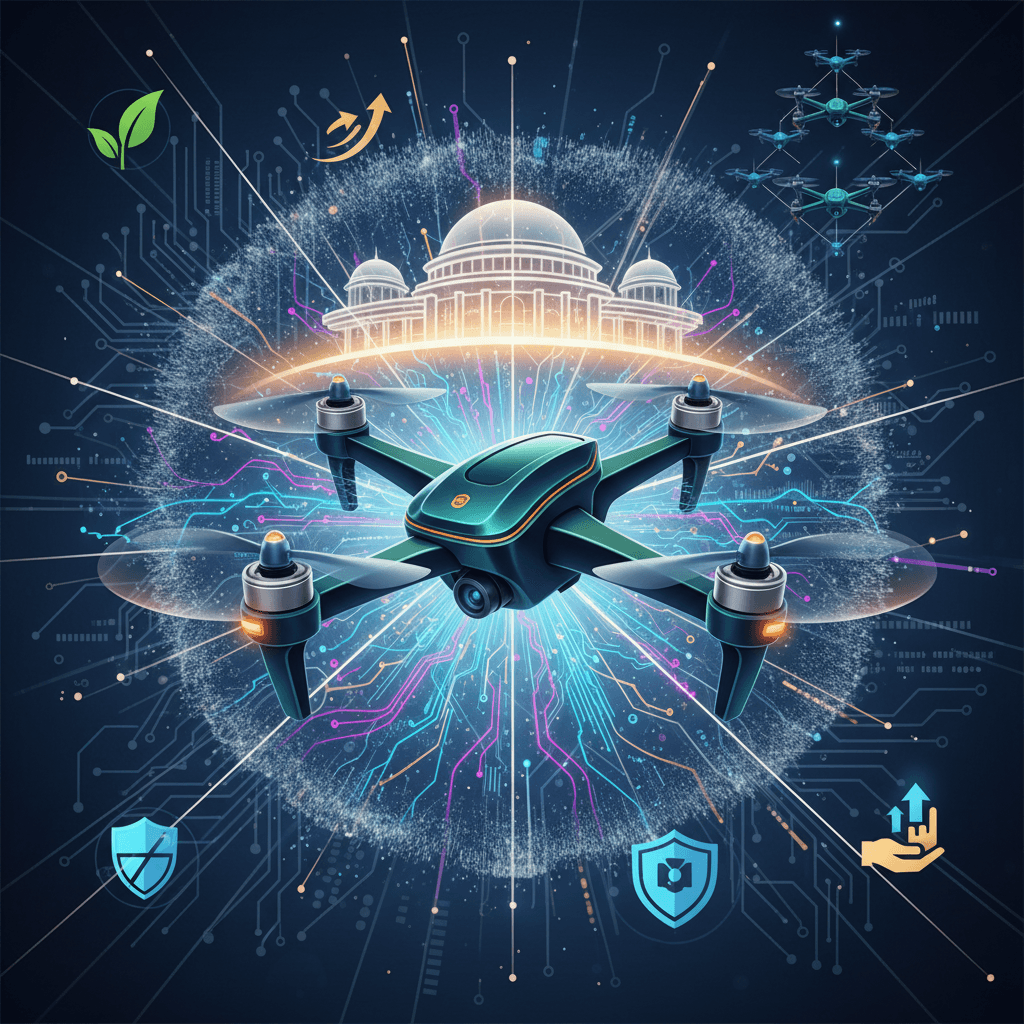
In a significant move to accelerate India's self-reliance in unmanned aerial vehicle (UAV) technology, Chennai-based Zuppa Geo Navigation Technologies has partnered with the prestigious Indian Institute of Science (IISc) in Bengaluru to establish a dedicated Drone Centre of Excellence (CoE).[1][2][3] Located at IISc's Department of Mechanical Engineering, the center will serve as a premier hub for advanced research, design, and testing of next-generation drone systems.[1][2] This collaboration aims to create a powerful synergy between Zuppa's deep-tech expertise in indigenous drone manufacturing and IISc's world-renowned academic and research capabilities in areas crucial to autonomous flight. The CoE will focus on developing autonomous platforms, sophisticated aerial systems, and robust cyber-physical integration, positioning India at the forefront of the rapidly evolving global drone landscape.[1][2][3] The initiative is poised to deliver cutting-edge, domestically developed solutions for a multitude of sectors, including defense, agriculture, logistics, and disaster management, directly aligning with the nation's 'Make in India' and 'Atmanirbhar Bharat' ambitions.[4][1]
At the heart of this collaboration is Zuppa's extensive experience in building a complete, indigenous cyber-physical stack for drones.[4] Unlike many manufacturers that rely on imported components, Zuppa has developed its own hardware and software from the ground up, including motherboards and autopilot systems.[5] A cornerstone of its technological prowess is a patented AI architecture known as the Disseminated Parallel Control Computing (DPCC) system.[5][4] This innovative computing architecture is designed to mimic the parallel processing of the human brain, enabling drones to handle vast amounts of sensory data in real-time and make reflexive, split-second decisions without constant reliance on cloud connectivity.[5] This capability is critical for achieving true autonomy, especially in challenging operational areas. Zuppa's technology facilitates drones that can navigate effectively in GPS-denied environments and withstand electronic warfare, features that have been battle-tested and validated by the Indian Army.[5] By bringing this robust and secure technology stack to the CoE, Zuppa provides the industrial foundation necessary to translate advanced research into market-ready, globally competitive products.[6][7]
The Indian Institute of Science brings to the partnership a legacy of excellence in aerospace, mechanical, and systems engineering. The institute's Department of Aerospace Engineering, which hosts the Guidance, Control and Decision Systems Laboratory (GCDSL), is a leader in robotics research in India.[8][9] The GCDSL's work focuses on intelligent autonomous systems, including swarm robotics, multi-robot systems, and cooperative control—all critical areas for the future of drone applications.[8] Faculty members such as Professors Debasish Ghose and Ashwini Ratnoo have been actively involved in pioneering research projects like 'CORRIDRONE,' which aims to develop frameworks for safe and efficient drone traffic management in urban airspace.[10] This deep well of expertise in aerodynamics, robotics, control systems, and artificial intelligence will fuel the CoE's research endeavors.[1][7] The partnership will provide students and researchers at IISc with invaluable opportunities for hands-on development and interdisciplinary projects, fostering the next generation of engineers and scientists who will propel India's drone ecosystem forward.[7] The CoE's agenda will include UAV design optimization, advanced guidance and control algorithms, and secure system integration, bridging the gap between deep scientific insights and practical industry applications.[7][2]
The establishment of this Centre of Excellence has profound implications for the AI industry in India and beyond. It signals a strategic shift towards developing AI that is deeply embedded within cyber-physical systems, where intelligent software must interact flawlessly and securely with sophisticated hardware. The research focus on GPS-denied navigation is particularly crucial, as it addresses a major vulnerability of current autonomous systems.[11][12][13] Developing AI and machine learning algorithms that can rely on vision-based navigation, sensor fusion, and real-time environmental data processing is a formidable challenge that this CoE is uniquely positioned to tackle.[14][13] Furthermore, the application of Zuppa’s DPCC architecture to complex scenarios like drone swarming—a key research area at IISc—could lead to breakthroughs in decentralized AI, where collective behavior emerges from local interactions without a central controller.[15][16][17] This research could redefine what is possible in coordinated missions for defense, large-scale agricultural monitoring, and complex logistics operations. By creating a vertically integrated ecosystem for design, testing, and manufacturing, the CoE will help establish a secure domestic supply chain for critical drone components, reducing reliance on foreign technology that may carry cybersecurity risks.[6][4]
In conclusion, the partnership between Zuppa Geo Navigation and IISc Bengaluru represents a landmark development in India's technological journey. It is a strategic fusion of industrial innovation and academic rigor, tailored to address the nation's specific economic and security needs. The Drone Centre of Excellence is not merely a research facility; it is an incubator for sovereign capability in a critical future technology. By focusing on the core challenges of autonomy, security, and indigenous manufacturing, this collaboration is set to generate world-class solutions that will enhance India's self-reliance, create high-tech employment, and solidify its position as a global hub for drone technology.[6][1][7] The innovations in AI-powered autonomous systems that emerge from this center will likely find applications far beyond aerial vehicles, influencing advancements in robotics and intelligent systems across the board.
Sources
[1]
[3]
[6]
[9]
[10]
[11]
[12]
[15]
[16]
[17]