
Wisk Aero Flies Autonomous Air Taxi, Targeting Pilotless Commercial Service
Boeing-backed Wisk Aero's pilotless air taxi takes flight, pushing toward FAA certification for autonomous urban mobility.
December 17, 2025
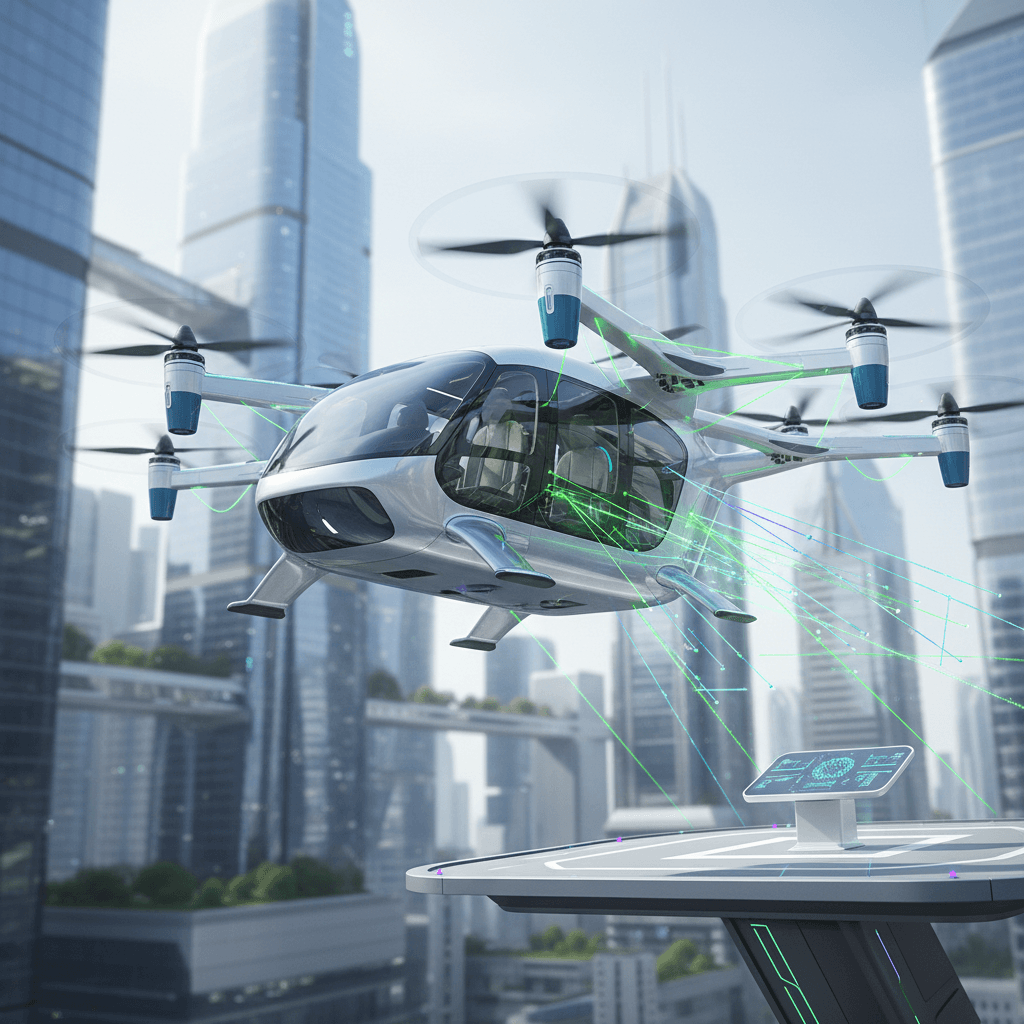
The burgeoning field of autonomous aviation has taken a significant leap forward as Wisk Aero, a company backed by aerospace giant Boeing, successfully completed the first test flight of its all-electric, self-flying air taxi.[1] The flight of the Generation 6 electric vertical takeoff and landing (eVTOL) aircraft took place at Wisk's test facility in Hollister, California, marking a pivotal moment in the quest to develop a certified autonomous passenger vehicle.[2] This achievement is the culmination of extensive development and data collected from over 1,750 test flights across five previous generations of the aircraft.[2] The successful hover and stabilization maneuvers of the full-scale prototype signal the start of a rigorous flight-test program intended to validate the aircraft's design and performance, moving the concept of AI-driven urban air mobility closer to reality.[3]
Wisk's strategic decision to pursue a "straight-to-autonomy" approach distinguishes it from many competitors in the advanced air mobility (AAM) space, who plan to initially operate with pilots on board.[4][5] The company's leadership firmly believes that autonomous flight is not just a future goal but a foundational requirement for creating a safe, scalable, and affordable air taxi service.[6] By removing the pilot from the aircraft, Wisk aims to eliminate the potential for human error, which is cited as a primary cause of most general aviation accidents.[6] This vision is heavily supported by Boeing, which has invested $450 million in Wisk, reconfirming its belief in the company's business model and the critical role of AI-driven autonomous capabilities in the future of aerospace.[4] The autonomous system, which relies on pre-programmed algorithms rather than real-time AI problem-solving, is designed for predictable and deterministic outcomes, with ground-based multi-vehicle supervisors monitoring the flights.[7][8]
The Generation 6 aircraft itself represents a significant advancement in eVTOL design and technology. The four-passenger vehicle features a proprietary 12-propeller configuration, with six tilting front propellers for transition between vertical and forward flight and six fixed rear propellers for improved aerodynamic efficiency during cruise.[9][10] It is designed for a range of up to 90 miles with reserves and can reach cruising speeds of 110-120 knots at an altitude of 2,500 to 4,000 feet.[9][3] The aircraft’s design, which has a wingspan of under 50 feet, prioritizes safety through multiple redundancies and the avoidance of single points of failure.[9] Wisk is targeting safety metrics comparable to commercial airliners.[9] Beyond its technical specifications, the aircraft focuses on passenger experience with panoramic windows, Wi-Fi, and charging ports, and is designed to be accessible to individuals across a wide range of mobility needs.[9][7]
The successful test flight is a crucial step in a long and complex journey toward commercial operation, with the ultimate goal of obtaining type certification from the U.S. Federal Aviation Administration (FAA).[1] Wisk's Generation 6 is the first-ever candidate for FAA certification of an autonomous, passenger-carrying eVTOL, a process the company has already initiated.[2][5] The path to certification will involve extensive testing to validate control laws, structural loads, and aircraft dynamics, starting with low-speed maneuvers and gradually expanding to higher speeds and more complex flight transitions.[8][3] Wisk is collaborating closely with the FAA, NASA, and other partners to mature its autonomy technologies, including detect-and-avoid systems, and to facilitate the integration of these new aircraft into the national airspace.[8][11] The company anticipates launching its commercial service in markets including Houston, Los Angeles, and Miami, where it is already working to assess and develop the necessary vertiport infrastructure.[1][12]
The achievement by Wisk and Boeing has profound implications for the AI industry and the future of transportation. It demonstrates a tangible application of advanced automation and AI-driven systems in a safety-critical sector, pushing the boundaries of what is considered possible. The development of certifiable autonomous flight technology could have wide-ranging applications beyond passenger transport, including cargo logistics and other military and civil uses.[13] Wisk's approach of using high-fidelity simulations and surrogate aircraft to test and refine its autonomous systems before integration into the final airframe showcases a methodical and safety-conscious pathway for developing complex AI.[11] As the company moves forward with its intensive flight test program, the industry will be watching closely, as the successful certification and deployment of an autonomous air taxi network could herald a new era of mobility, significantly reducing urban congestion and offering a faster, cleaner, and more efficient mode of transportation.[4]