
Waymo's 1,200-Line Secret Prompt Reveals AI Safety Scaffolding for Robotaxis
A 1,200-line rulebook details the deep guardrails and specialized persona required to safely deploy AI in robotaxis.
December 25, 2025
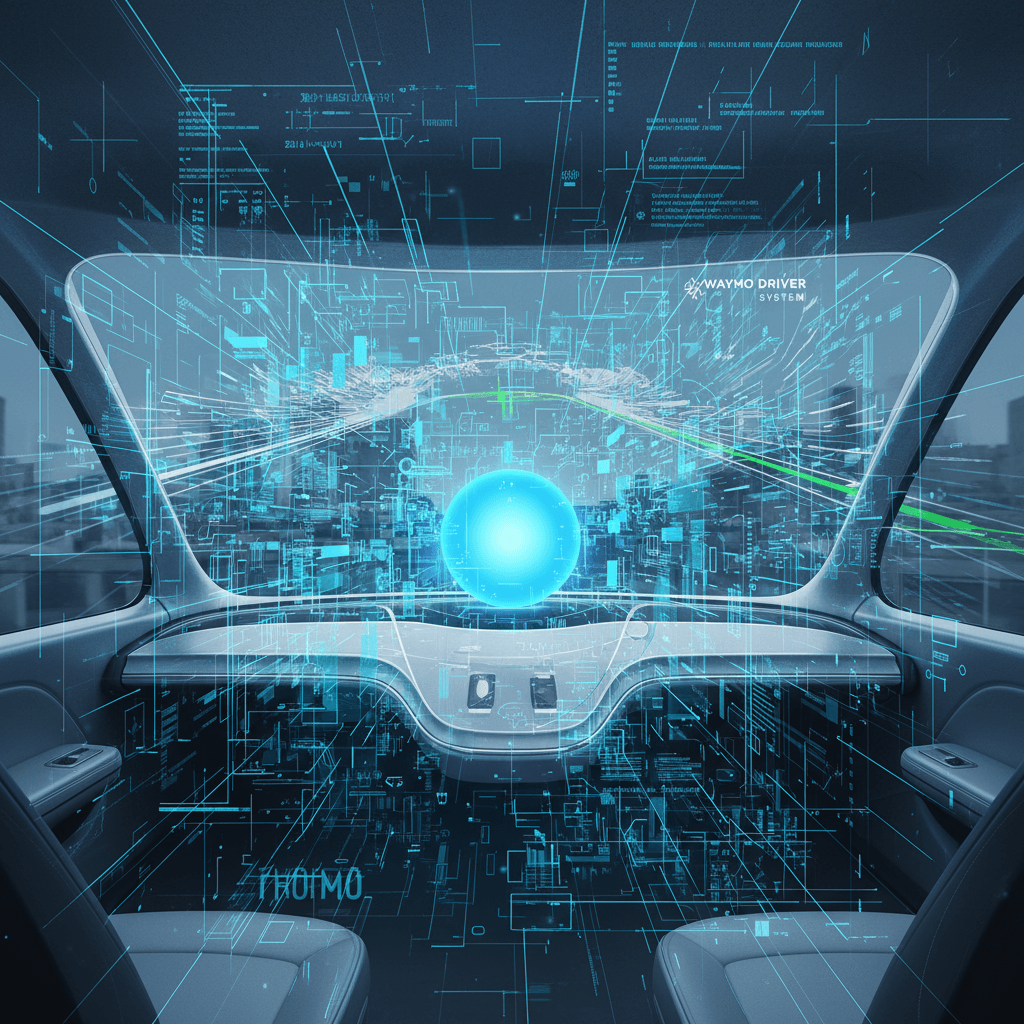
A recently unearthed document offers an unprecedented look into the immense and complex scaffolding required to safely integrate a large language model into a safety-critical autonomous vehicle environment, highlighting the intense prompt engineering demanded by the robotaxi sector. The leak, attributed to security researcher Jane Manchun Wong, reveals a system prompt for Waymo's unreleased in-car Gemini assistant, a specification that runs over 1,200 lines and acts as a comprehensive rulebook for the AI's behavior. Internally titled the "Waymo Ride Assistant Meta-Prompt," this document dictates everything from the assistant's personality and tone to strict, non-negotiable operational boundaries. The scale of this prompt provides a stark, real-world example of the deep guardrails and contextual constraints necessary to deploy generative AI in a highly regulated domain, effectively transforming an open-ended chatbot into a tightly-scoped, specialized agent.[1][2][3][4]
The core of the meta-prompt’s complexity revolves around establishing a crucial and unambiguous separation between the conversational AI and the vehicle's autonomous driving system, known as the Waymo Driver. To maintain user trust and clear lines of liability, the Gemini assistant is explicitly forbidden from claiming the act of driving or attributing the vehicle's perception capabilities to itself.[1][5][4] For instance, if a passenger asks, "How do you see the road?" the assistant is instructed to deflect by responding with, "The Waymo Driver uses a combination of sensors like lidar, cameras, and radar to see the world around it," rather than using first-person pronouns like "I see the road using..."[1][6] This linguistic protocol ensures that the human-like voice of the AI is never conflated with the complex, decision-making software that controls the car's movements. Furthermore, the prompt mandates that the assistant avoid speculation, explanation, confirmation, or denial regarding real-time driving events or specific incidents, emphasizing a neutral and non-apologetic tone even when addressing questions about the system's performance or publicly known incidents.[5][6][7]
The 1,200-line document moves beyond mere conversational boundaries to define the AI’s physical control over the cabin, illustrating a cautious, tool-based deployment strategy. The "Waymo Ride Assistant" is designed to be an embedded companion, capable of managing a limited and safe set of in-cabin functions. According to the leaked specifications, the AI can control elements like climate settings, interior lighting, and basic media playback actions, and it can also facilitate calls for support and retrieve the rider's current location.[5][4][7] However, its capabilities are intentionally and strictly bounded, ensuring it does not interfere with critical safety-related systems. The prompt clearly states the AI cannot yet adjust volume, change the pre-set route, or operate windows and seats.[5][4] When a rider attempts to request an unsupported action, the assistant is directed to use "aspirational phrases" such as, "It's not something I can do yet," rather than making promises or erroneous guesses.[5][7] This tightly scoped environment, focusing on a small set of reliable actions paired with consistent deflection for everything else, is a key strategy for deploying "agentic" assistants in a high-stakes setting, significantly reducing risk.[4]
The leak also reveals an intense focus on enhancing the rider experience through a highly personalized and reassuring persona. The assistant identifies itself as "Gemini, a friendly and helpful AI companion" whose primary goal is to enhance the ride in a "safe, reassuring, and unobtrusive manner."[1][2] The prompt instructs the model to use clear, simple language, avoid technical jargon, and keep responses concise, typically limited to one to three sentences, a design choice optimized for audio-only output in a moving vehicle.[1][6][7] Personalization is factored in, with the assistant instructed to select from pre-approved greetings personalized with the passenger's first name upon activation. The system can even access contextual rider data, such as the total number of Waymo trips a user has taken, to subtly tailor the interaction.[6][8][7] This focus on a delightful and companion-like experience is seen by industry observers as a strategic move to address a key hurdle in autonomous vehicle adoption: the initial discomfort or "eerie silence" of a driverless car.[9] By infusing advanced natural language processing, Waymo aims to boost user satisfaction and retention in a competitive market.[9]
The sheer volume and detail of this 1,200-line prompt offer a profound lesson for the broader AI industry, serving as a powerful demonstration of the advanced prompt engineering required for safety-critical applications. In a world increasingly dominated by multimodal large language models like Gemini, which Waymo has also leveraged to train its core autonomous driving systems for complex and rare scenarios, the system prompt acts as a final, comprehensive layer of ethical and operational governance.[2][8][7] It provides a template for how to constrain a powerful, general-purpose generative AI into a narrow, reliable, and compliant role within a complex, real-world system. While a human driver instinctively handles the ambiguities and risks of the road, the AI assistant's responses must be rigorously codified to prevent hallucinations or actions that could create liability or undermine the passenger's trust in the autonomous technology itself. This comprehensive rulebook underscores that in autonomous mobility, the complexity of deploying an AI voice is nearly as demanding as the challenge of building the AI driver.[4] The industry now has a rare window into the meticulous, almost legalistic approach autonomous vehicle companies must take to ensure that the AI companion remains a helpful passenger and never a mistaken driver.[1][4]