
UK Courts Anthropic as Pentagon Blacklists AI Lab for Refusing to Remove Safety Guardrails
Anthropic’s refusal to abandon safety guardrails for the Pentagon triggers a US blacklist and a strategic pivot toward London.
April 7, 2026
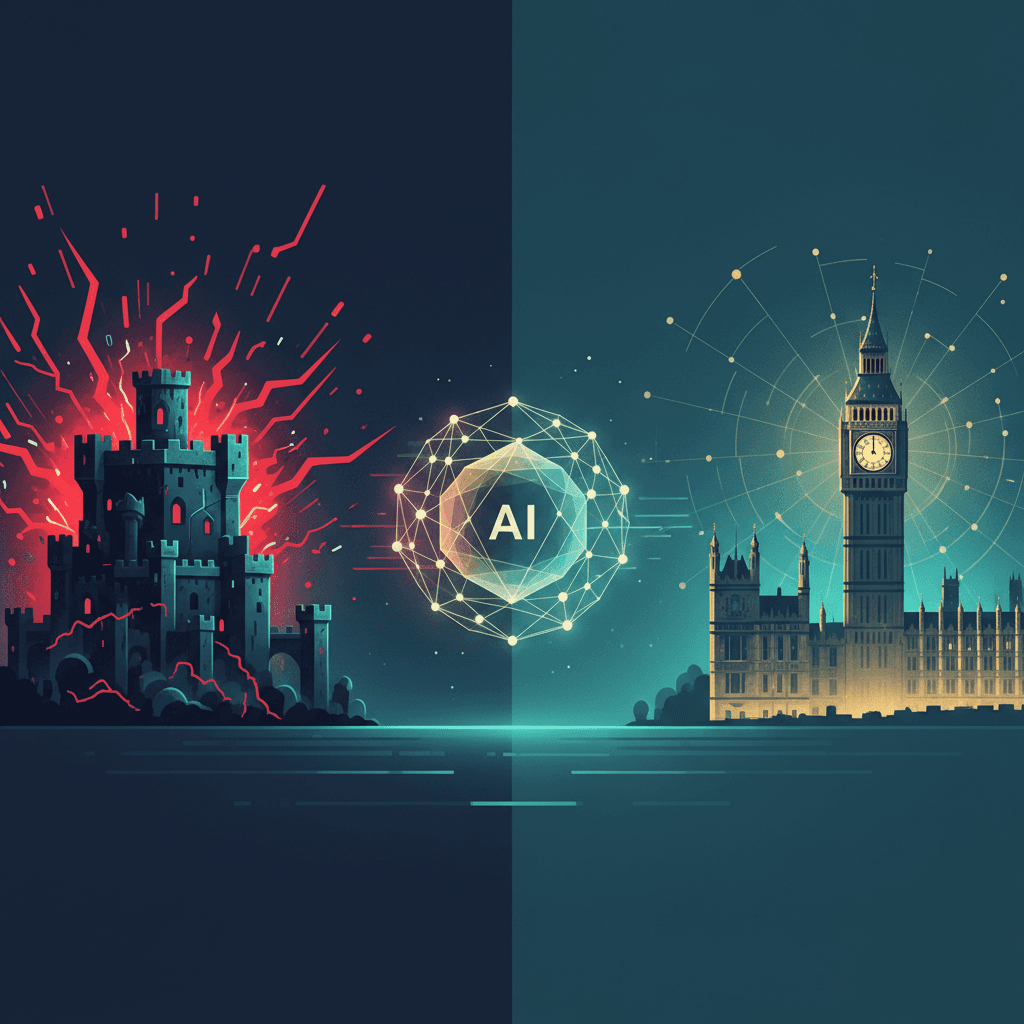
The escalating tension between Silicon Valley’s most prominent safety-focused artificial intelligence laboratory and the United States government has reached a breaking point, triggering a significant geopolitical shift that favors the United Kingdom’s tech sector. At the heart of this disruption is a fundamental disagreement over the ethical boundaries of generative models, specifically regarding their application in lethal autonomous weaponry and mass surveillance.[1][2][3] As the United States military moves to consolidate control over frontier AI systems, Anthropic’s steadfast refusal to compromise its core safety guardrails has turned a domestic regulatory dispute into a strategic windfall for London.
The confrontation began in earnest when United States Defense Secretary Pete Hegseth issued a blunt ultimatum to Anthropic CEO Dario Amodei.[2][4][5][6] In a high-stakes meeting, Hegseth demanded that the company remove the safety guardrails from its Claude large language models to facilitate unrestricted military use. These demands specifically targeted the protocols that prevent the AI from being used for fully autonomous weapons systems and the large-scale domestic surveillance of citizens.[7][8] The Pentagon’s position was rooted in a belief that AI companies operating within the national security framework should adhere strictly to federal law rather than self-imposed corporate ethical guidelines.[4] Amodei, however, refused to comply, arguing that granting such unfettered access would violate the company’s "Constitutional AI" framework and potentially undermine democratic values.
The response from Washington was swift and punitive.[8] Following the refusal, the United States government designated Anthropic a "supply chain risk," a label traditionally reserved for hostile foreign entities and telecommunications giants like Huawei. This designation effectively prohibited any company with federal ties from conducting commercial activity with the startup, essentially blacklisting it from the American defense industrial complex.[4] Simultaneously, a multi-million-dollar Pentagon contract was terminated, and federal agencies were directed to cease all use of Anthropic’s technology.[8][1] This aggressive posture was framed by administration officials as a necessary step to purge "woke AI" from the national security apparatus, signaling a move toward a more aggressive, state-integrated model of AI development.
Observing the fallout from across the Atlantic, the United Kingdom’s Department for Science, Innovation and Technology recognized a rare opportunity to position the country as a global sanctuary for principled technology firms. London has long sought to establish itself as the premier hub for AI safety, a goal underscored by the landmark Bletchley Park summit and the subsequent creation of the AI Safety Institute. While the United States began treating Anthropic’s safety-first philosophy as a liability, the British government viewed it as a competitive advantage. Proposals currently under discussion in the halls of Westminster include a dual stock listing on the London Stock Exchange and a massive expansion of Anthropic’s existing London headquarters. This courtship is backed by the highest levels of the British government, with Prime Minister Keir Starmer’s office signaling full support for a strategic partnership that emphasizes responsible innovation.
The UK’s pitch to Anthropic is not merely about providing a more hospitable regulatory environment; it is about ideological alignment.[9] Unlike the Pentagon’s demand for "unfettered access" to model weights and the removal of guardrails, the British approach focuses on collaborative safety testing through its AI Safety Institute. Anthropic already maintains a deep working relationship with the institute, allowing researchers to evaluate Claude’s capabilities and vulnerabilities in a transparent, non-combative setting. Furthermore, the company has already integrated its technology into the UK’s public infrastructure, recently launching an AI-powered assistant for the official GOV.UK portal. This integration demonstrates a starkly different use case for frontier models—one that prioritizes public service and citizen engagement over kinetic warfare and surveillance.
This divergence marks a significant schism in the global AI industry, splitting the market into two distinct camps. On one side are the "defense-aligned" firms that have fully embraced the military-industrial complex, often at the cost of public transparency and ethical constraints. On the other are "principled" labs that view safety not as a hindrance to performance, but as a prerequisite for societal trust. The UK is betting that by siding with the latter, it can attract the world’s most elite AI researchers who are increasingly wary of building tools for autonomous warfare. Industry experts suggest that a "brain drain" is already beginning, with safety-conscious engineers looking toward London as a viable alternative to a Silicon Valley increasingly dominated by defense priorities and political pressure.
The implications of this shift extend far beyond corporate profits and office locations.[9] It represents a challenge to the traditional "Special Relationship" between the United States and the United Kingdom. By providing a refuge for a company that the Pentagon has labeled a security risk, London is effectively asserting its own technological sovereignty. This "third way" positioning allows the UK to navigate the space between the American model of rapid, militarily-focused development and the European Union’s more restrictive, regulation-heavy approach. The goal is to create a ecosystem where high-performance AI can flourish without being coerced into state-sponsored surveillance programs.
For Anthropic, the expansion into the UK offers a crucial lifeline and a chance to decouple its future from the volatile political climate in Washington. While losing access to the massive US federal market is a significant blow, the company’s valuation remains high, and its enterprise business continues to grow among commercial clients who value the very guardrails the Pentagon sought to remove. The ability to operate in a jurisdiction that views "Constitutional AI" as a strength rather than a weakness provides the company with the stability needed to continue its long-term research goals.
As the global race for artificial intelligence intensifies, the standoff between Anthropic and the Pentagon serves as a harbinger of a new era of tech-nationalism. The outcome suggests that the future of the industry will not be determined solely by compute power or data sets, but by the values encoded into the systems themselves. By opening its doors to a "blacklisted" firm, the United Kingdom is making a bold claim: that in the coming age of intelligence, the most valuable commodity a nation can offer is not just infrastructure or capital, but the freedom to have a conscience. Whether this strategy will lead to London becoming the "world capital of AI safety" remains to be seen, but the movement of one of the world's most advanced AI labs suggests the momentum is shifting across the Atlantic.