
Tech Giants Issue Urgent Warning: Visa Delays Threaten US AI Workforce.
Intensified U.S. security vetting has created year-long visa backlogs, threatening America’s lead in artificial intelligence.
December 22, 2025
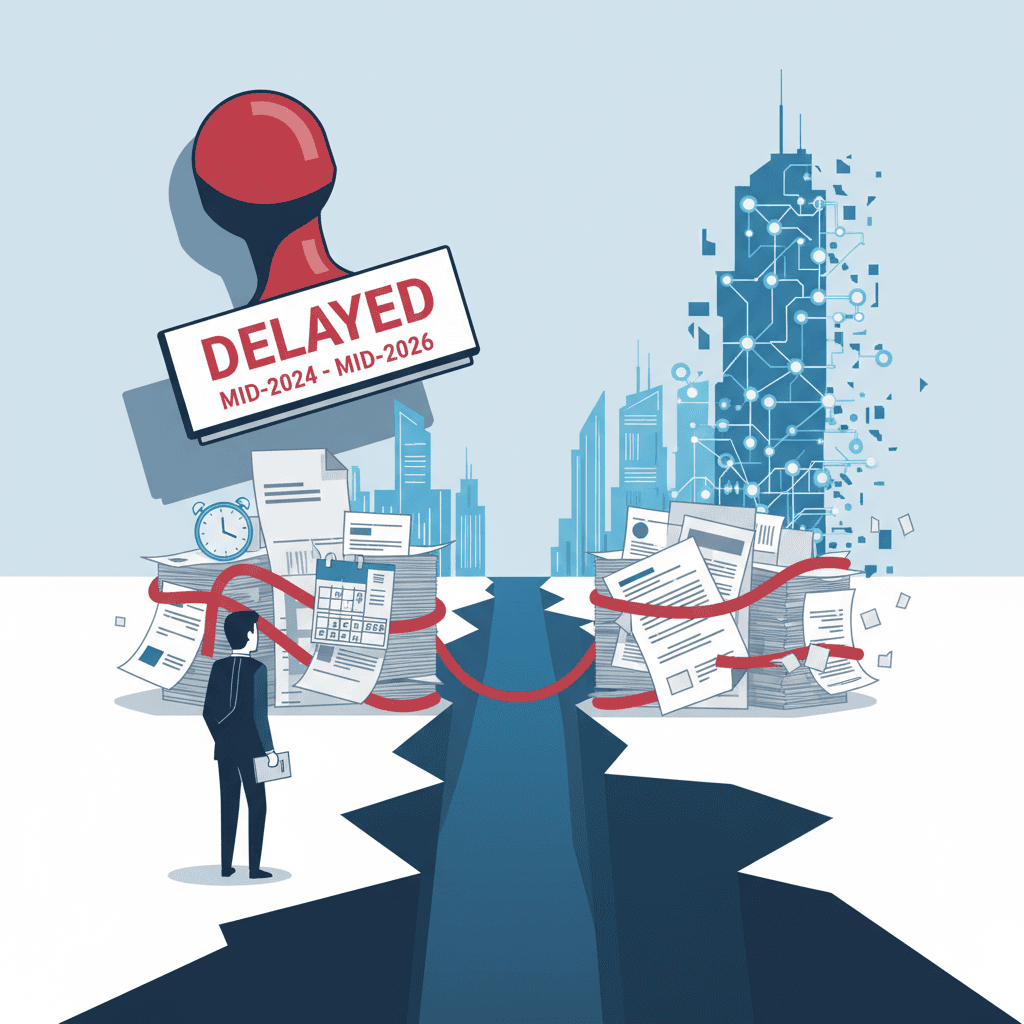
The United States’ premier technology companies, including Google, Apple, and Microsoft, have issued urgent and strongly worded advisories to their employees holding H-1B specialty occupation visas, cautioning them against all non-essential international travel due to unprecedented delays in visa re-entry processing[1][2]. This extraordinary warning from Silicon Valley’s largest employers stems from significant backlogs and appointment rescheduling at U.S. embassies and consulates globally, a situation that risks leaving thousands of highly skilled workers stranded abroad for prolonged periods[1][3]. For an industry increasingly reliant on international talent, particularly in the competitive fields of artificial intelligence and advanced computing, the travel restrictions translate directly into stalled projects, workforce instability, and a potential long-term threat to America’s technological leadership[4][5][6].
The core of the crisis lies in the visa stamping process, which H-1B holders must complete at a U.S. consulate outside the United States—typically in their home country—to re-enter the U.S. after travel[7][8]. Internal memos circulated by the companies’ immigration law firms, such as BAL Immigration Law for Google and Fragomen for Apple, have explicitly warned that appointment delays for new visa stamps are stretching up to 12 months in some jurisdictions[1][9][10]. Microsoft’s associate general counsel for immigration communicated to staff that rescheduling notifications, particularly concentrated at U.S. consulates in high-volume locations like Chennai and Hyderabad, India, have pushed new appointment dates as far out as mid-2026[11][12]. Given that Indian nationals account for over 70% of all H-1B approvals, the disruption in this region is acutely felt across the entire U.S. tech ecosystem[10][2][13]. The warnings apply not only to the primary H-1B workers but also to their dependents on H-4 visas, impacting family and work-life stability[11][9][7].
The source of the prolonged delays is attributed primarily to an intensified and expanded security vetting regime implemented by the U.S. Department of State, which includes "online presence reviews" and social media screening for applicants[1][11][12][10]. The State Department has confirmed that its consular teams are now "prioritizing thoroughly vetting each visa case above all else," shifting away from earlier efforts to rapidly reduce processing queues[10][13]. This increased scrutiny has added significant time to the overall process, leading to a massive appointment backlog[13]. The ripple effects are profound: employees who traveled abroad for holiday or personal emergencies—often combining the trip with their required visa renewal—have found their scheduled interviews canceled without warning, leaving them unable to return to their jobs in the United States[11][12][8]. Companies have advised those stranded to coordinate with managers, acknowledging that work-from-anywhere policies may not sustain an employee for a year or more[1].
The most critical impact of this immigration bottleneck is on the momentum of high-stakes, time-sensitive innovation, especially in the Artificial Intelligence sector[4][6]. H-1B visa holders disproportionately fill specialized roles in AI, machine learning, data science, and cloud computing—fields where the U.S. faces a growing domestic talent gap[4][6]. Tech giants depend on this program to recruit and retain the global experts necessary to maintain their competitive edge[6]. For example, in a recent fiscal year, Google and Apple collectively filed over 9,400 H-1B applications, illustrating the scale of their reliance on this talent pipeline[10][2]. When a top AI engineer or research scientist is stuck in a foreign country for up to a year, mission-critical projects suffer delays[4]. This loss of human capital and the ensuing operational disruption create a compelling incentive for U.S. firms to consider shifting vital R&D operations and jobs to countries with more predictable and flexible immigration policies, such as Canada or the United Kingdom, potentially accelerating a trend of offshoring American tech innovation[4][5][6].
The predicament of H-1B workers being marooned also creates immense personal and professional stress, with careers on hold and families separated for uncertain periods[8]. While some companies are attempting to facilitate remote work from abroad or secure expedited appointments, immigration experts caution that the latter is "highly unlikely" for those who have already traveled and had their appointments canceled[11][12][8]. The broader effect is one of chronic instability and a dampening of interest among high-skilled foreign professionals who might otherwise choose the U.S. for their careers[4][5]. The industry’s heavy reliance on the H-1B system, which is intended to supplement the domestic workforce in specialized fields, means that the current policy-driven delays are now imposing a heavy, self-inflicted cost on the American innovation engine[4][5]. This unfolding talent crisis requires a policy resolution that balances national security imperatives with the critical need for a stable, highly skilled workforce to ensure U.S. dominance in the global technology and AI race.