
Roblox Supercharges Creation with AI, Opening Game Development to Everyone
AI-powered tools are fundamentally transforming Roblox creation, accelerating development and empowering millions to build immersive 3D worlds.
December 17, 2025
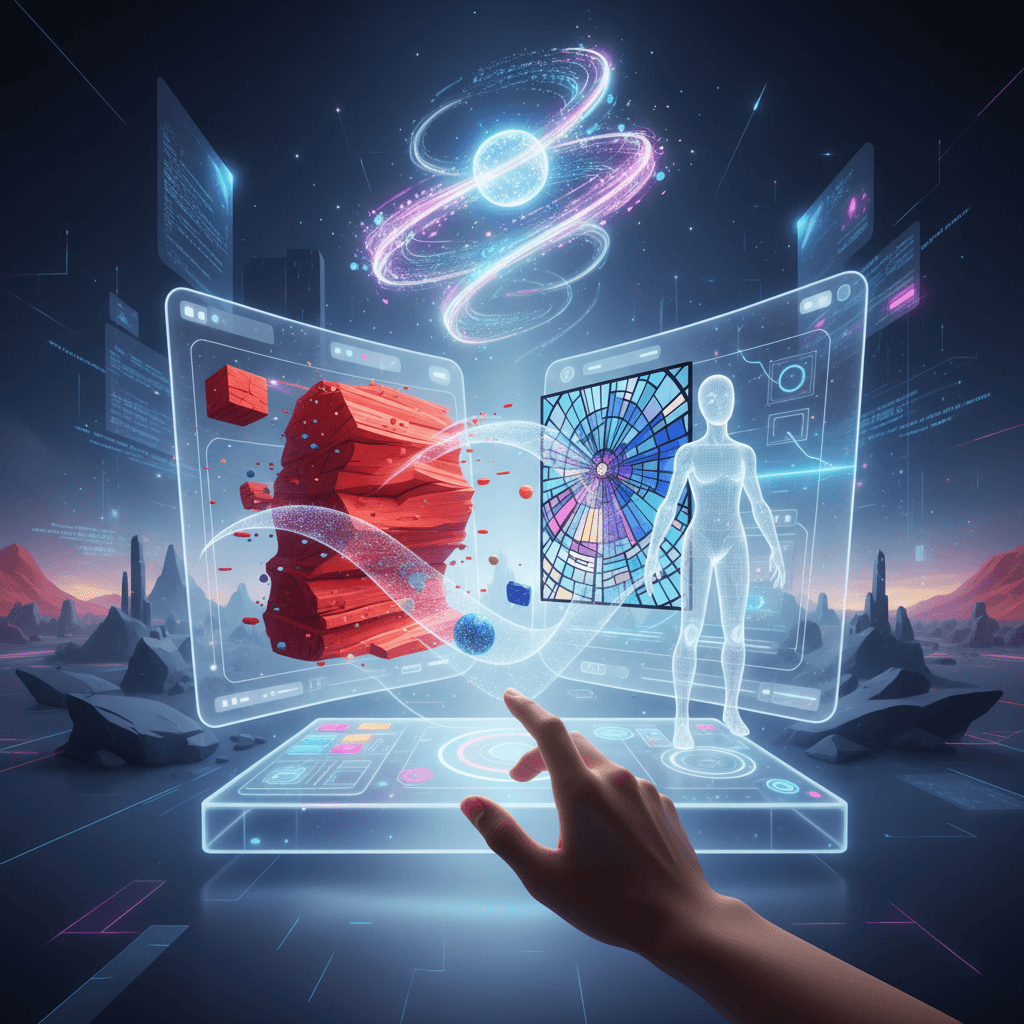
Roblox is aggressively weaving artificial intelligence into the fabric of its creation tools, fundamentally altering the landscape for the millions of developers building experiences on its platform. In a strategic push to accelerate game development and lower the barrier to entry, the company has embedded a suite of generative AI features directly into Roblox Studio. These tools are designed to automate repetitive and time-consuming tasks, allowing creators, from solo developers to larger teams, to focus more on the creative aspects of game design and narrative. The integration aims to solve persistent production bottlenecks and streamline the workflow between different tools, positioning Roblox not just as a gaming platform but as an increasingly sophisticated and accessible production studio. The company's recent updates signal a clear vision: to empower every user to become a creator by making the process of building immersive 3D worlds faster, more intuitive, and less dependent on deep technical expertise.
At the forefront of this AI-powered evolution is the Roblox Assistant, a conversational AI designed to be an integral part of the development process.[1][2] Embedded directly within the Studio environment, the Assistant allows creators to use natural language prompts to generate code, create or edit 3D models, and learn about the platform's functionalities.[3][1][2] This tool expands on earlier features like Code Assist, which helps automate basic coding tasks by generating functional Luau code snippets from text descriptions.[4][5] While Roblox cautions that the code may not always be perfect and requires developer oversight, the goal is to significantly reduce the time spent on mundane scripting and debugging.[4][5] The Assistant is becoming more context-aware, capable of executing complex, multi-step tasks with a deeper understanding of the creator's specific project.[6] By interpreting plain language to build, texture, and script, the Assistant serves as a collaborative partner, aiming to turn abstract ideas into tangible, playable elements with unprecedented speed.[7][6]
Beyond coding and general assistance, Roblox has introduced a powerful set of AI tools specifically for asset creation, a traditionally labor-intensive part of game development. The Material Generator and the newer Texture Generator allow creators to produce realistic and custom textures for objects simply by typing a description.[4][8][9] For instance, a developer can request a "bright red rock canyon" or "stained glass" texture and have the AI generate it, complete with the appropriate visual properties.[4] The Texture Generator, specifically, can create bespoke 1024x1024 textures for 3D models, intelligently understanding the geometry to apply textures in a logical way.[8][9] Complementing this is the Avatar Auto Setup tool, which automates the complex process of rigging, caging, and skinning a 3D model to turn it into a fully animated avatar, a task that could previously take hours or days of manual work.[8][9] Further advancing 3D creation, Roblox is developing its Cube 3D foundation model, which can generate detailed 3D models and environments directly from text prompts, moving beyond image-based reconstruction to create assets native to a 3D environment.[10][11]
The overarching ambition behind these AI integrations is the democratization of game creation. By removing technical hurdles that once blocked aspiring creators, Roblox aims to vastly expand its developer base.[5][7] The company envisions a future where anyone with a great idea can bring it to life, regardless of their programming background.[5][12] This strategy mirrors historical shifts in game development, such as the introduction of visual scripting tools like Unreal Engine's Blueprints, which opened up creation to non-programmers.[7] For the existing developer community, these tools offer a significant competitive edge, enabling faster prototyping, iteration, and the ability to produce more content with fewer resources.[12][13] This acceleration of the development cycle is tied directly to the platform's economics; by helping creators build and publish more efficiently, Roblox supports their ability to monetize their experiences and earn revenue through the Developer Exchange program.[3][14] The company explicitly links these AI upgrades to creator earnings, reinforcing the idea that improved productivity leads to greater financial success.[3]
In conclusion, Roblox's integration of generative AI into its Studio platform represents a pivotal shift for its creator community and the broader user-generated content landscape. By embedding tools like the Assistant, texture generators, and automated avatar setup directly into the development environment, the company is systematically dismantling the technical barriers that have historically limited who can create 3D interactive experiences. This focus on streamlining workflows and automating laborious tasks is not merely an incremental improvement but a foundational change designed to accelerate content creation at scale. The implications are significant, promising to empower a new wave of developers and provide existing creators with the means to realize their visions more quickly and efficiently. As these AI tools continue to evolve and become more sophisticated, they are set to redefine the creative process on the platform, fostering a more dynamic, diverse, and accessible metaverse built by an ever-expanding community of creators.