
Reliance commits ₹7 lakh crore to build world’s largest green AI data center.
Jamnagar links a three-gigawatt AI-ready data centre with a dedicated, world-scale green energy ecosystem.
January 12, 2026
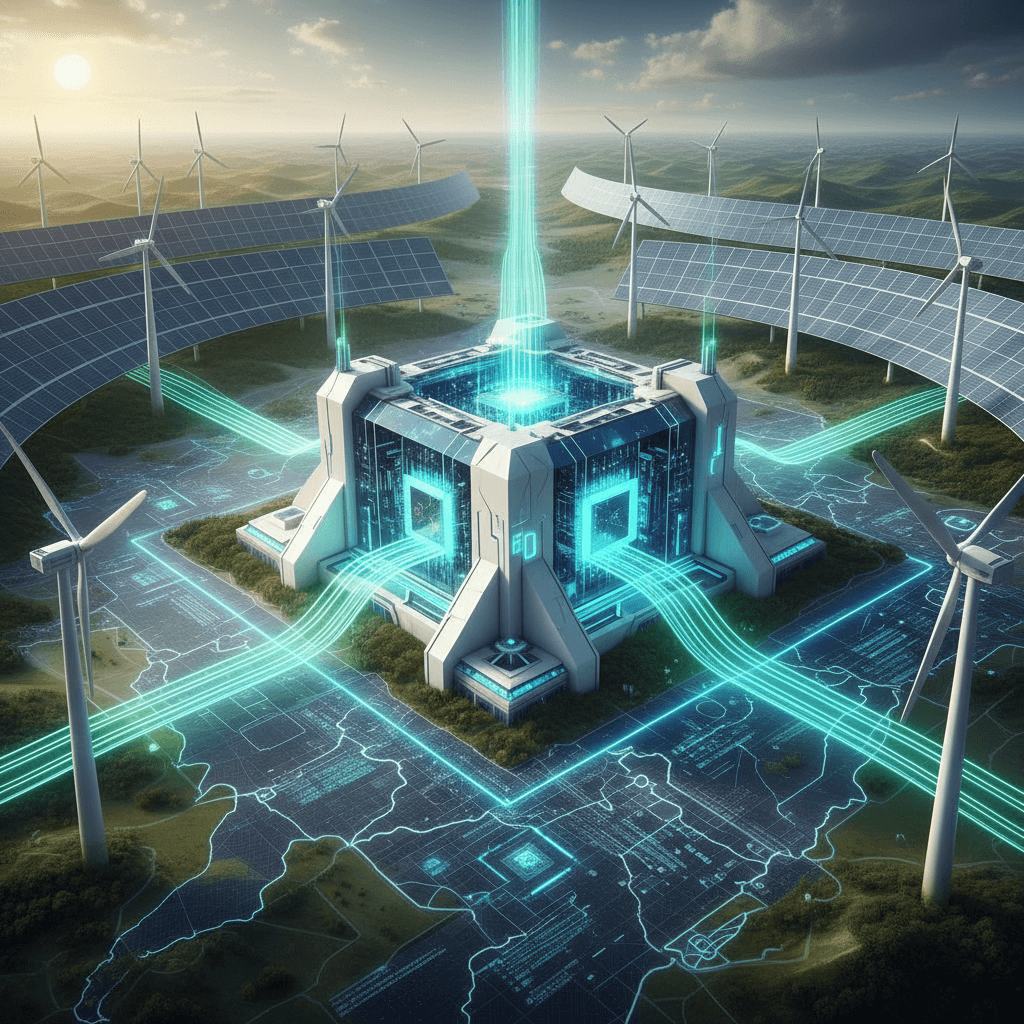
The Indian industrial landscape is set for a profound, multi-sectoral transformation following the announcement that Reliance Industries Limited will invest a staggering ₹7 lakh crore in Gujarat over the next five years, doubling its commitment to the state. This colossal pledge, made by Chairman Mukesh Ambani, represents one of the largest corporate capital expenditure announcements in India's history and is primarily focused on two critical areas: establishing a global-scale integrated clean energy ecosystem and building what is slated to be India's, and potentially the world's, largest AI-ready data centre in Jamnagar. The sheer magnitude of this investment—which follows a previous five-year outlay of over ₹3.5 lakh crore in Gujarat—underscores a strategic pivot for the conglomerate, transitioning its core operations from a traditional fossil fuel powerhouse to a global leader in deep-tech and sustainable energy, with immense implications for India's digital future and its quest for technological self-reliance.[1][2][3][4][5][6][7]
A cornerstone of this ambitious new commitment is the development of a colossal AI-ready data centre in Jamnagar, the same city that houses Reliance's world-class hydrocarbon complex.[1][3][4][6] This new facility is being engineered with the explicit goal of democratising artificial intelligence by making it affordable and accessible to every Indian citizen.[1][4][5] While initial reports on the data centre's capacity have varied, the project is envisioned at a multi-gigawatt scale, with some sources citing an enormous capacity target of three gigawatts (3 GW), a figure which would be triple the existing total data centre capacity across India and potentially make it the largest such facility globally.[8][9][10][11][12] The estimated investment for the data centre infrastructure alone is reported to range between $20 billion and $30 billion for the 3 GW capacity, a figure that highlights the unprecedented commitment to high-performance computing infrastructure within the country.[8][10][11][12]
To power this future-forward computational engine, Reliance has forged a critical strategic partnership with global semiconductor giant Nvidia.[13][8][10][14] This collaboration ensures the Jamnagar data centre will be equipped with cutting-edge hardware, including Nvidia's advanced Blackwell AI processors, which are essential for the high-intensity computing required for training and inferencing large language models (LLMs) and other complex AI applications.[13][15][12][14] Reliance Jio, the conglomerate's telecom arm, is set to leverage this colossal infrastructure to launch a "people-first intelligence platform."[1][2][3][4][5][16] This platform is designed to be built in India, for India and the world, with the specific intent of enabling citizens, beginning in Gujarat, to access sophisticated AI services in their own local language, on their own devices, thereby dramatically boosting efficiency and productivity nationwide.[2][4][5][6] This focus on indigenous, language-agnostic AI is seen as a key step in bridging the digital divide and securing "AI sovereignty" for the country.[10][14][17]
Crucially, the massive AI data centre is intricately linked to the other major component of the ₹7 lakh crore investment: the development of the world's largest integrated clean energy ecosystem, also centered in Jamnagar.[1][3][4][6] Recognizing the immense power demands of an AI-ready facility of this scale, the data centre is planned to run entirely on green energy, sourced from nearby solar, wind, and green hydrogen projects under development.[15][10][12] Reliance's New Energy initiative includes a multi-gigawatt, utility-scale solar power project and the construction of massive Giga Factories.[1][3][4][16][6] The company is targeting an ambitious 100 GW of renewable energy capacity by 2030, which is approximately 20% of India's national clean energy target.[16] The ecosystem includes factories for solar photovoltaic modules, advanced battery energy storage systems—with a battery production facility scaling up to 100 GWh per year—and an electrolyzer Giga Factory for green hydrogen production, all aimed at achieving net-zero carbon emissions by 2035.[4][16][6] This "sand-to-electrons-to-green-molecules" framework aims to not only power the domestic AI and industrial infrastructure but also to transform Jamnagar into a global hub for the export of green energy and green materials, replacing its historical role as a major exporter of hydrocarbon energy.[1][3][4][16][6]
The strategic implications of this twin investment in AI and green energy are profound for India's digital economy. The creation of such extensive high-performance computing infrastructure will provide Indian startups, research institutions, and enterprises with the domestic resources needed to train and deploy complex generative AI models without the necessity of exporting massive volumes of data for processing abroad.[9][10][11][14] This domestic AI capacity is a vital catalyst for the nation, with industry reports estimating that AI could contribute $500 billion to India's Gross Domestic Product by the middle of the decade.[11] Moreover, the integration of the AI data centre with a massive, dedicated green energy supply offers a critical advantage, positioning the facility as one of the world's most sustainable super-computing centres at a time when energy consumption by AI infrastructure is a growing global concern. By aligning the development of next-generation digital infrastructure with large-scale clean energy production, Reliance's ₹7 lakh crore investment seeks to solidify Gujarat's position as a twin-pillar global hub for both advanced technology and sustainable industrial innovation, fundamentally reshaping India's economic and technological trajectory for the coming decades.[15][3][10][16]
Sources
[2]
[4]
[5]
[7]
[10]
[11]
[13]
[15]
[16]
[17]