
OpenAI's AI Builds Top-Ranked App With Four Engineers in 28 Days
Four engineers and a GPT-powered AI "co-worker" built Sora Android in 28 days, reimagining software development's future.
December 13, 2025
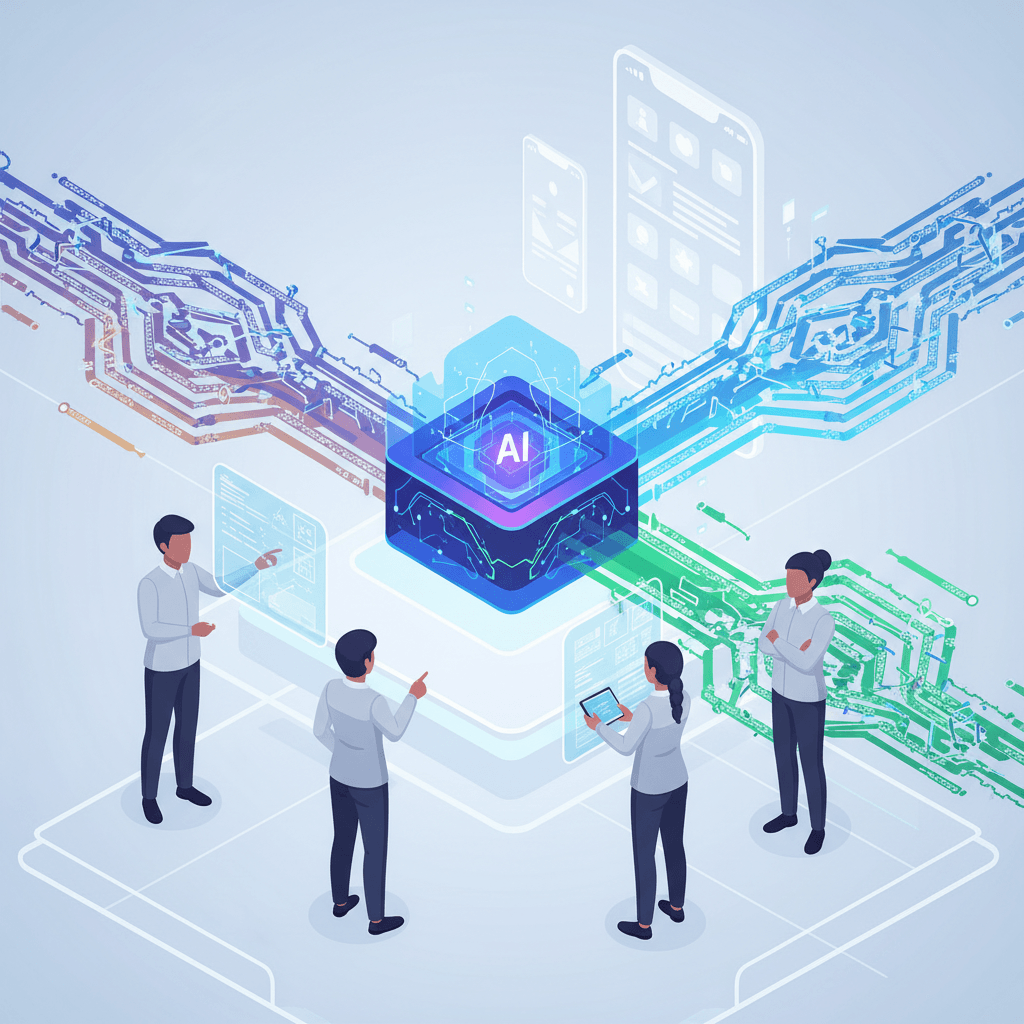
OpenAI has made a bold claim that signals a potential paradigm shift in software development, stating that a small team of just four engineers successfully built the production version of its popular Sora Android app in a mere 28 days.[1][2] This rapid development timeline, for an application that achieved a 99.9 percent crash-free rate and hit number one on the Play Store upon launch, was reportedly made possible by leveraging the company's own advanced code-generation AI, Codex.[3][1][2] The project, which ran from October 8 to November 5, 2025, saw the engineering team work in close collaboration with an early version of the GPT-5.1 Codex model, consuming approximately five billion tokens to bring the text-to-video application from a prototype to a global release.[3][2] This achievement is being presented not just as a company milestone, but as a significant real-world case study on the transformative power of generative AI in modern software engineering.[4][5]
The core of this accelerated development process was a fundamental redefinition of the roles between human engineers and their AI counterpart. According to a report by OpenAI employees, the AI handled the vast majority of the direct code writing.[3][1] One of its most crucial tasks was translating the existing Sora application logic from the iOS version, written in Swift, into the Android-compatible Kotlin language.[1][2] This capability allowed the human developers to offload the tedious and time-consuming work of line-by-line coding and instead elevate their focus to higher-level strategic tasks.[3][1] The engineers concentrated on system architecture, meticulous planning, and the critical verification of the AI-generated code, ensuring it met their high standards for quality and maintainability.[3][2] The team described their interaction with Codex as collaborating with a new, highly experienced colleague who simply required clear and precise instructions to execute complex tasks.[3][1] This dynamic represents a significant evolution from AI acting as a simple code-completion tool to a more autonomous "co-worker" capable of handling substantial engineering workflows.[6][7]
The methodology employed by the OpenAI team highlights a new form of human-AI collaboration. Rather than simply prompting the AI with vague commands, the engineers invested heavily in upfront planning. They discovered that providing Codex with detailed context and a clear plan before asking it to write code produced far superior results.[2] A major advantage was the pre-existing iOS application. The team frequently directed Codex to the iOS and backend codebases to help it understand essential requirements and constraints, effectively using the AI as a cross-platform development framework.[2] While the underlying programming languages were different, the core application logic—such as data models, network calls, and validation rules—remained the same, a principle Codex was able to grasp and apply.[2] This approach of leveraging an existing, well-structured codebase as a blueprint for a new platform proved to be a powerful strategy, dramatically reducing the ambiguity and potential for error in the AI's output. The small team size was a deliberate choice, embracing the principle of Brooks' Law, which posits that adding more people to a late software project can actually slow it down due to increased communication overhead.[2] By equipping a lean, highly-skilled team with a powerful AI agent, they were able to maximize individual impact and maintain agility.[2]
The implications of this achievement extend far beyond the walls of OpenAI, offering a glimpse into the future of the software development industry. The ability to build a high-quality, scalable application in under a month with a skeleton crew could democratize software creation, enabling smaller teams and startups to compete with large corporations by bringing products to market at an unprecedented speed.[8][4] This shift is part of a broader trend where generative AI is increasingly integrated into every stage of the app development lifecycle, from prototyping and UI design to testing and debugging.[9][10][11] As AI models like Codex become more capable, the role of a software engineer is expected to evolve from a writer of code to an architect and overseer of AI-driven development processes.[12] While human expertise in ensuring code quality, security, and ethical considerations remains indispensable, AI is poised to handle a growing share of the implementation details.[5] The success of the Sora Android app serves as compelling evidence that the era of AI-accelerated development is not a distant concept, but a present-day reality with the potential to radically enhance productivity and innovation across the tech landscape.[9]