
OpenAI’s $1.5 Million Employee Payouts Set Extreme New Benchmark for AI Talent War
The $1.5M average equity package is an aggressive talent survival tactic, resetting financial benchmarks for the industry.
December 31, 2025
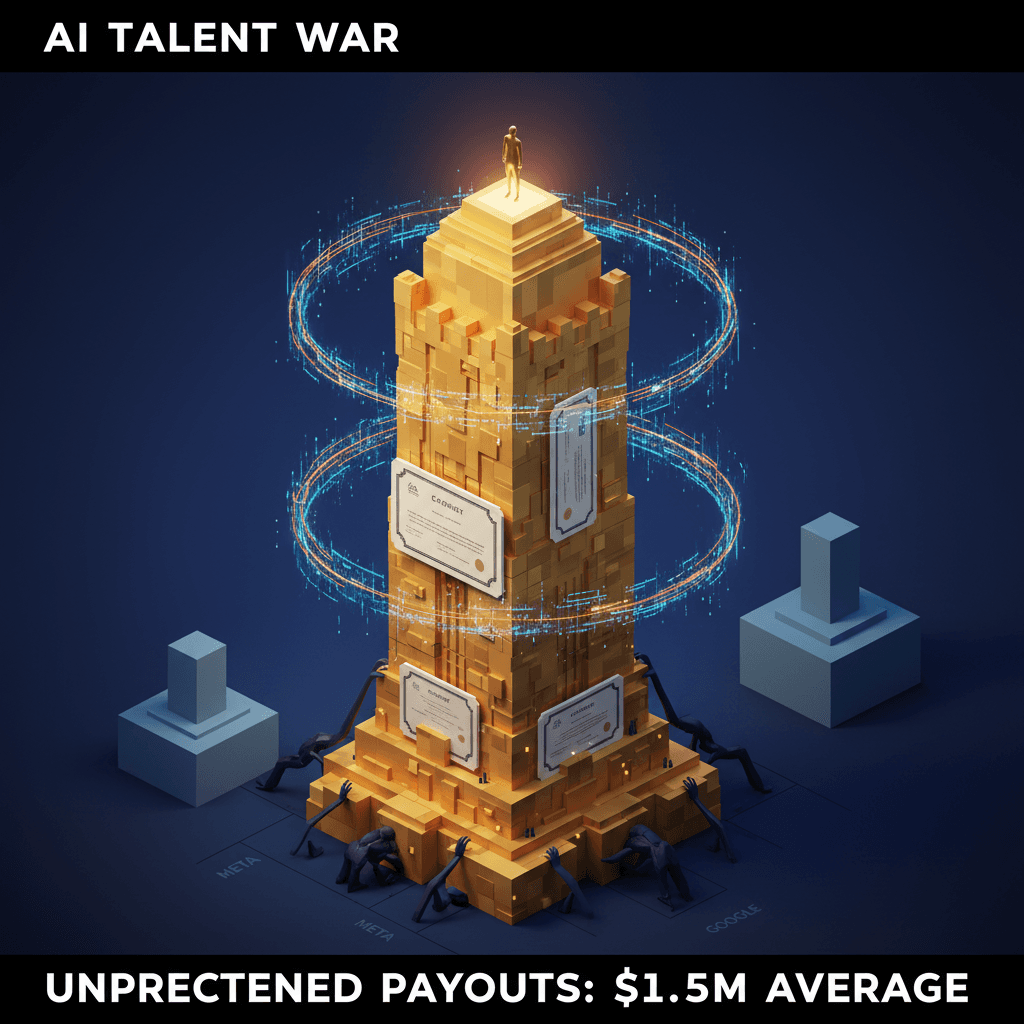
The internal financial disclosures of OpenAI reveal a stock-based compensation strategy that has reset the financial benchmarks for the entire technology industry, offering an average of $1.5 million in equity per employee. This figure is not merely a sign of a successful startup but represents a generational shift in wealth creation and talent acquisition, dwarfing historical precedents set by past Silicon Valley giants before their public market debuts. According to an analysis of Equilar data, this average payout is approximately 34 times higher than the compensation awarded by 18 major technology companies in the year prior to their Initial Public Offerings over the last quarter-century.[1][2][3] The extraordinary expense underscores a hyper-aggressive defense strategy in the burgeoning, winner-take-all race for the world’s most elite artificial intelligence talent.
The sheer scale of the compensation package places OpenAI’s roughly 4,000 employees in an unprecedented financial position for a private company.[4][2] To put the figure into historical context, the $1.5 million average is more than seven times the stock-based pay Google disclosed in 2003, the year before its landmark IPO, after adjusting for inflation to reflect modern dollars.[5][3] The high-stakes compensation is not simply a bonus but a fundamental component of the company’s operating model, which will have lasting effects on its financial statements. Financial disclosures shared with investors indicate that by 2025, the company's stock-based compensation is projected to account for a startling 46% of its total revenue.[4][2][6] This ratio far exceeds the historical norm, as stock-based compensation accounted for only 15% of revenue for Google and a mere 6% for Facebook in the year preceding their public offerings, and an average of just 6% for the wider group of 18 major tech firms studied.[1][2] This unprecedented allocation of equity to the workforce reveals the criticality of human capital in the frontier AI sector, positioning the cost of retaining top researchers as nearly half of the company's financial output.
The principal driver of this historic compensation spending is the escalating, zero-sum war for the world’s leading AI researchers and engineers. The scarcity of individuals capable of making foundational breakthroughs in large language models has created a bidding environment unlike any seen in prior tech booms, forcing companies to deploy financial measures that amount to an economic moat around their talent pool. Competitive pressure intensified significantly last summer following a determined "recruiting blitz" by rival tech behemoths, most notably Meta, which reportedly offered select researchers and executives pay packages that, in rare instances, soared into the hundreds of millions, with some compensation figures even approaching $1 billion.[5][4][7][8] This offensive successfully lured away over 20 OpenAI personnel, including one of the co-creators of its flagship product, ChatGPT.[4][8] OpenAI’s response has been a massive counter-offensive of financial incentives, including one-time bonuses in the millions for certain research and engineering staff, alongside the aforementioned average equity package.[5][7] This environment positions the lavish compensation not as an overly generous benefit, but as an essential "survival tactic" to prevent a catastrophic talent exodus.[7]
Beyond the raw value, OpenAI has also strategically altered the underlying mechanics of its compensation to maximize its immediate recruitment and retention impact, breaking with decades of Silicon Valley compensation tradition. In a key policy change, the company has eliminated the six-month vesting cliff that historically required new employees to remain with the company for a minimum period before their equity began to accrue.[7][2] By allowing stock to vest immediately, OpenAI reduces the financial risk for new hires and maximizes the instantaneous value of their compensation package, creating a powerful incentive for top talent to choose the company over competitors. Furthermore, financial documents project that the company’s stock-based compensation expenses will continue their upward trajectory, with an expected annual increase of $3 billion through 2030, cementing the commitment to a perpetually high-cost talent model.[1][2][6] Employees are granted Profit Participation Units, or PPUs, which function much like stock and are periodically offered liquidity through large-scale tender offers. One such recent tender offer valued the company as high as $500 billion, allowing employees to realize significant cash gains on their equity, instantly generating immense wealth for key personnel.[9][10]
The decision to allocate capital in this unprecedented manner, prioritizing human expertise above all else, carries significant financial and industrial ramifications. The high payout is contributing to soaring operating losses and leading to a rapid dilution of existing shareholder value.[2][11] While major investors like Microsoft, SoftBank, and Thrive Capital recognize the necessity of these payouts to secure the company’s competitive edge, the ongoing debate centers on the long-term financial sustainability of a model where employee compensation constitutes such a substantial portion of revenue. For the broader AI industry, OpenAI's strategy has created a new, possibly unachievable, benchmark for talent acquisition. Companies and labs vying for top-tier researchers now face a marketplace where the cost of entry is astronomical, driving up salaries across the entire sector and potentially locking out smaller, less capitalized innovators from the most critical technological developments. Ultimately, OpenAI is not just developing frontier models in artificial intelligence; it is pioneering a frontier model for capital deployment and employee wealth creation, irrevocably changing the economic landscape of high-technology startups.