
OpenAI Targets $100 Billion Funding, Cementing $750 Billion AI Valuation
OpenAI seeks $100 billion to secure compute dominance and accelerate its path toward a $1 trillion IPO.
December 18, 2025
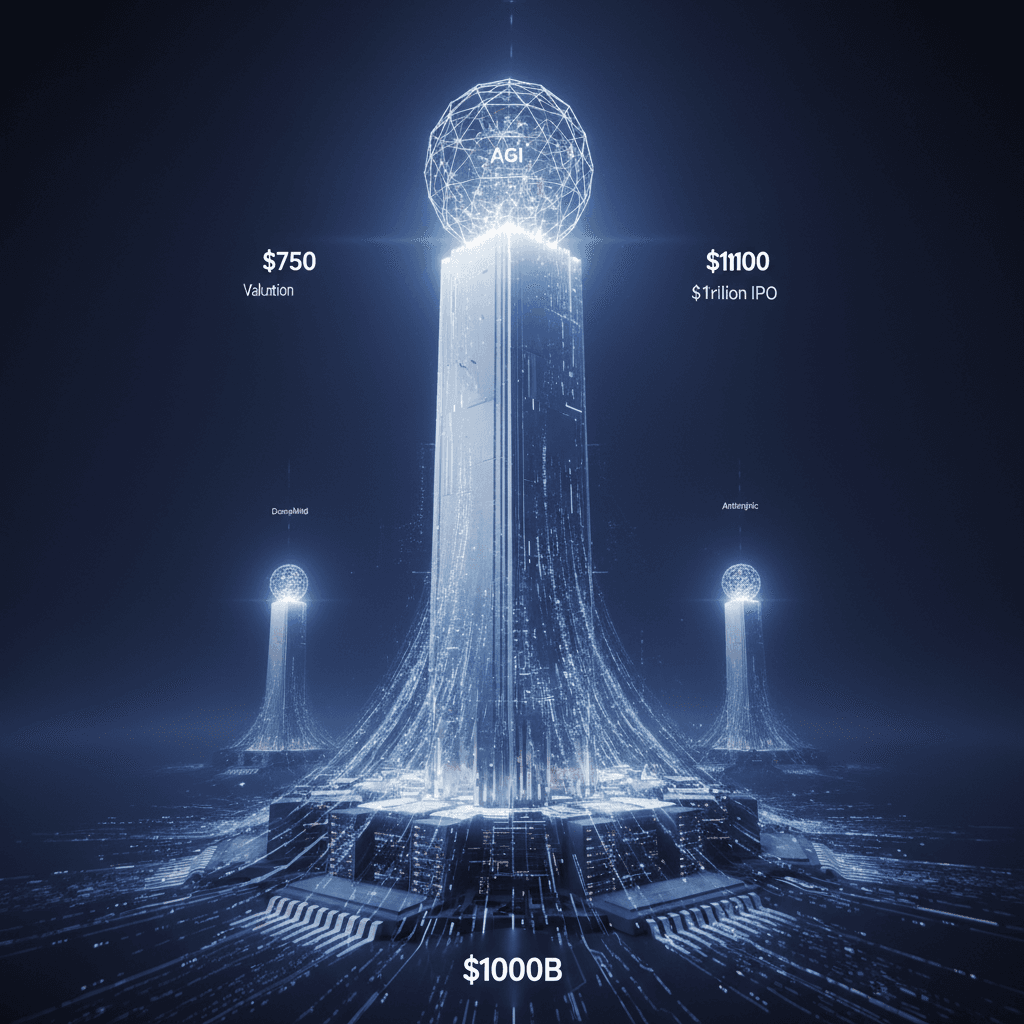
The generative artificial intelligence powerhouse OpenAI is reportedly engaged in preliminary discussions with global investors regarding a monumental new funding round that could see the company secure tens of billions of dollars, potentially reaching an unprecedented $100 billion. This capital injection, if finalized, would cement the startup's position at the forefront of the AI arms race, propelling its valuation to a staggering $750 billion, according to sources familiar with the matter. The sheer scale of the proposed fundraising is a clear signal of the immense investor confidence in the commercial and technological trajectory of the company that launched the widespread public adoption of generative AI with ChatGPT.
The targeted valuation represents a nearly 50 percent leap from the company's $500 billion valuation reached in October following a tender offer where current and former employees sold approximately $6.6 billion worth of shares. This rapid appreciation underscores the explosive and often volatile nature of the artificial intelligence sector, where valuations are escalating at a speed rarely seen in modern technology markets. Investors participating in the previous share sale included major financial heavyweights like Thrive Capital, SoftBank Group, Dragoneer Investment Group, and T. Rowe Price, highlighting the deep pool of institutional capital betting on OpenAI's future dominance. Despite its high valuation and massive revenue, the company is not yet profitable, facing a prodigious cash burn that funds its ambitious research and development. The firm's annual revenue run rate is reportedly at $19 billion, placing it on track to meet its $20 billion revenue target by the end of the year, with ambitious projections pointing toward $30 billion the following year and an eye-watering $200 billion by 2030. This growth, however, is being fueled by enormous expenditure, with the cash burn for this year and the next projected to be around $26 billion, necessitating the colossal fundraising efforts.[1][2][3][4][5]
The vast capital sought is directly tied to the ever-increasing need for computing power and proprietary infrastructure, which are the fundamental building blocks of next-generation AI models. Chief Executive Officer Sam Altman has previously alluded to the possibility of needing to invest trillions of dollars over time to meet the escalating demand for advanced AI capabilities. The proposed funding round is a crucial step in financing the massive infrastructure commitments the company has already undertaken, including multibillion-dollar deals with leading chip and hardware manufacturers such as Nvidia, AMD, and Broadcom. Furthermore, the company is expanding its strategic alliances beyond its primary partner, Microsoft, which has invested over $13 billion since 2019. Ongoing discussions with Amazon are exploring a potential investment of at least $10 billion in exchange for OpenAI's adoption of Amazon’s in-house Trainium AI chips and an agreement for cloud capacity from Amazon Web Services (AWS), which could include a massive $38 billion commitment over a number of years.[3][6][5] Such a deal would signal a strategic diversification of the company’s compute resources, crucial for maintaining its edge in model training and deployment. The financial strategy is not merely about surviving the present high-cost environment but about establishing a seemingly unassailable lead in the global technology landscape by ensuring a sufficient supply of specialized hardware necessary for frontier AI development.[4][5]
Beyond securing its immediate infrastructure needs, the funding round is inextricably linked to OpenAI’s overarching goal: the development of Artificial General Intelligence, or AGI, defined as highly autonomous systems that outperform humans at most economically valuable work. The enormous capital is viewed by investors as a necessary lubricant for the research and engineering effort required to build systems that can truly match or exceed human capabilities across a broad range of tasks. This ambition sets the stage for a prolonged and intensely capitalized AI arms race. OpenAI's competitors, notably Google DeepMind and Anthropic, are also securing massive investments, reflecting the industry-wide consensus that the pursuit of AGI will require resources measured in the hundreds of billions. Google, in particular, is an aggressive rival, constantly pushing the boundaries of its Gemini models, while Anthropic, backed by Amazon, has emerged as a formidable challenger.[2][7][5] The $750 billion valuation and $100 billion target raise the stakes for the entire sector, placing pressure on competitors to justify equally aggressive spending and expansion plans to avoid being marginalized by the sheer scale of OpenAI’s war chest.
The financial maneuverings are also laying the foundation for what is anticipated to be one of the largest public offerings in history. With the massive private funding round securing the company’s near-term operational needs, reports suggest OpenAI is quietly preparing the groundwork for a potential initial public offering, with discussions reportedly targeting a valuation that could approach $1 trillion. While a firm timeline has not been set, analysts speculate a public listing could occur as early as the second half of 2026. This trajectory from a non-profit research lab to a trillion-dollar-potential public entity in less than a decade captures the hyper-speed evolution of the generative AI market and its profound impact on global finance and technology. The successful completion of a $100 billion funding round would not only fund the next leap in AI technology but would also be a critical de-risking event for the future IPO, demonstrating unparalleled private market confidence in the company’s path to AGI and its long-term commercial viability.[2][6][4][5] The investment community’s willingness to value a still-unprofitable company at such an extraordinary level signals a transformative moment for the global economy, where the future utility of artificial intelligence is now being priced at a scale once reserved only for the most established and profitable technology titans.