
OpenAI pulls GPT-5 router; users demand speed over AI quality.
GPT-5 router rollback reveals users prioritize speed, forcing the AI industry to educate about quality's true cost in time.
December 17, 2025
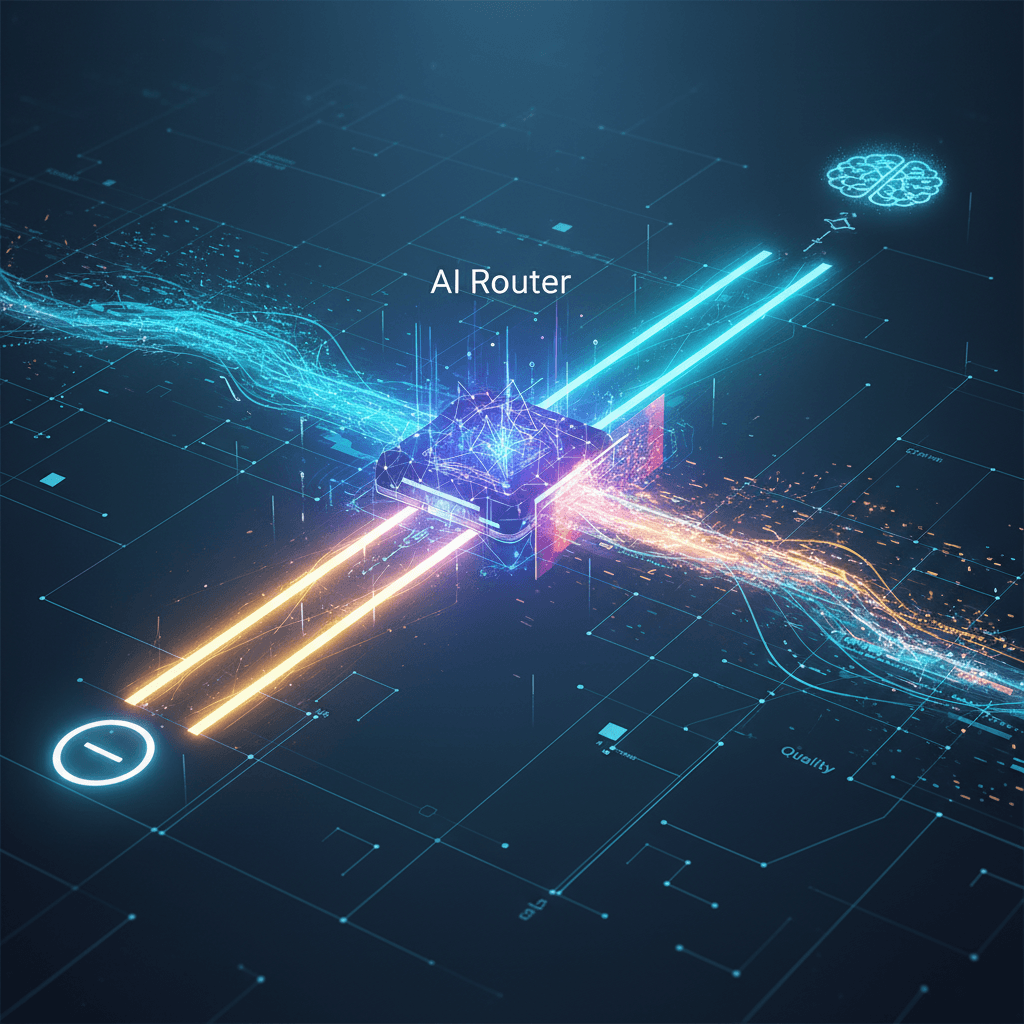
In a move that has sent ripples through the artificial intelligence community, OpenAI has reportedly rolled back a key feature of its latest model series, a sophisticated system known as the GPT-5 router. This routing mechanism was designed to intelligently direct user queries to the most suitable AI model on the back end, promising an optimal balance of speed, cost, and analytical power. However, the decision to retract this feature for many users highlights a fundamental disconnect between the ingrained expectations of technology users and the operational realities of advanced AI. Decades of conventional computing have conditioned users to believe that faster is unequivocally better. The GPT-5 router's troubled debut and subsequent recall serve as a powerful lesson for the entire industry: when it comes to AI, the old rules no longer apply, and the rush for instantaneous answers can often come at the cost of quality and accuracy. The situation underscores a pressing need not just for better technology, but for better user education.
The concept of an AI model router is an elegant solution to a complex problem.[1][2][3] Instead of relying on a single, monolithic AI that is either too powerful and expensive for simple tasks or not capable enough for complex ones, a router acts as a smart traffic cop.[1][2] It analyzes an incoming prompt and directs it to the best model for the job—a smaller, faster model for a quick factual lookup, or a more powerful, slower reasoning model for a nuanced analytical request.[4][2] OpenAI’s implementation with GPT-5 was intended to streamline the user experience, eliminating the need for users to manually select from an increasingly confusing menu of models.[4][5] The goal was to provide the best possible response in the most efficient manner, optimizing resource use and theoretically saving on immense computational costs.[4][2] This approach represents an industry-wide trend towards using a network of specialized "expert" models rather than a one-size-fits-all solution.[6][7]
The rollback, however, was prompted by significant user backlash that revealed a deep-seated psychological tension.[7][8][9] Users, particularly those on free and lower-tier plans who were defaulted to the router system, reported frustrating experiences with slow response times and perceived drops in accuracy.[4][8] For complex queries that the router sent to more capable but slower models, the delay was palpable and jarring.[4] This friction exposed the public’s deeply ingrained expectation that technology should be instantaneous. The negative feedback suggests that many users, when faced with a choice, prioritize speed over the less immediately obvious benefit of a more thoughtful, accurate, and well-reasoned response.[4][10] This preference for speed is a legacy of a bygone era of computing, where processing power directly correlated with performance. With sophisticated generative AI, however, quality often requires time for computation, a trade-off that many users were apparently unwilling to make.[10] The incident forced OpenAI to revert to making its faster models the default for many, effectively sacrificing the router's nuance for the sake of user satisfaction.[4][8][9]
This episode serves as a critical case study for the broader AI industry on the perils of mismanaging user expectations. The technical logic behind model routing is sound, yet its implementation failed to account for the human factor.[7][11] The controversy demonstrates that releasing powerful new technology is not enough; companies must also invest in educating their user base about how this technology works and why it behaves the way it does.[12] Without this educational component, users are left to apply outdated mental models to a new technological paradigm, leading to frustration and a rejection of genuinely innovative features.[13][14] The challenge is not just to build smarter AI, but to cultivate smarter users who understand that a three-second pause might be the necessary price for a genuinely insightful answer, distinguishing a powerful reasoning engine from a simple search query. The failure was not just in the router's performance, but in the failure to communicate its value and manage the inherent trade-offs between speed and quality.[10][12]
Ultimately, the GPT-5 router rollback is a cautionary tale about the necessity of unlearning old habits in the age of artificial intelligence. It signals a maturation point for the industry, moving beyond the simple pursuit of bigger and faster models to a more nuanced understanding of the human-computer interface. For AI to be truly effective and beneficial, its developers must take on the role of educators, guiding users toward a new understanding of what constitutes a "better" technological experience. It is a paradigm where the value of a response is not measured in milliseconds, but in its depth, accuracy, and relevance. The path forward for companies like OpenAI involves not just refining their complex systems, but also clearly communicating the "why" behind their design choices. Fostering a user base that appreciates the difference between a quick answer and the right answer will be just as crucial as developing the next generation of powerful AI models.
Sources
[1]
[2]
[3]
[5]
[6]
[7]
[9]
[10]
[11]
[12]