
OpenAI Brings Frontier AI to India's Grassroots for Massive Social Impact
OpenAI is training non-profits to integrate frontier AI workflows for tangible, scaled social change across India.
January 15, 2026
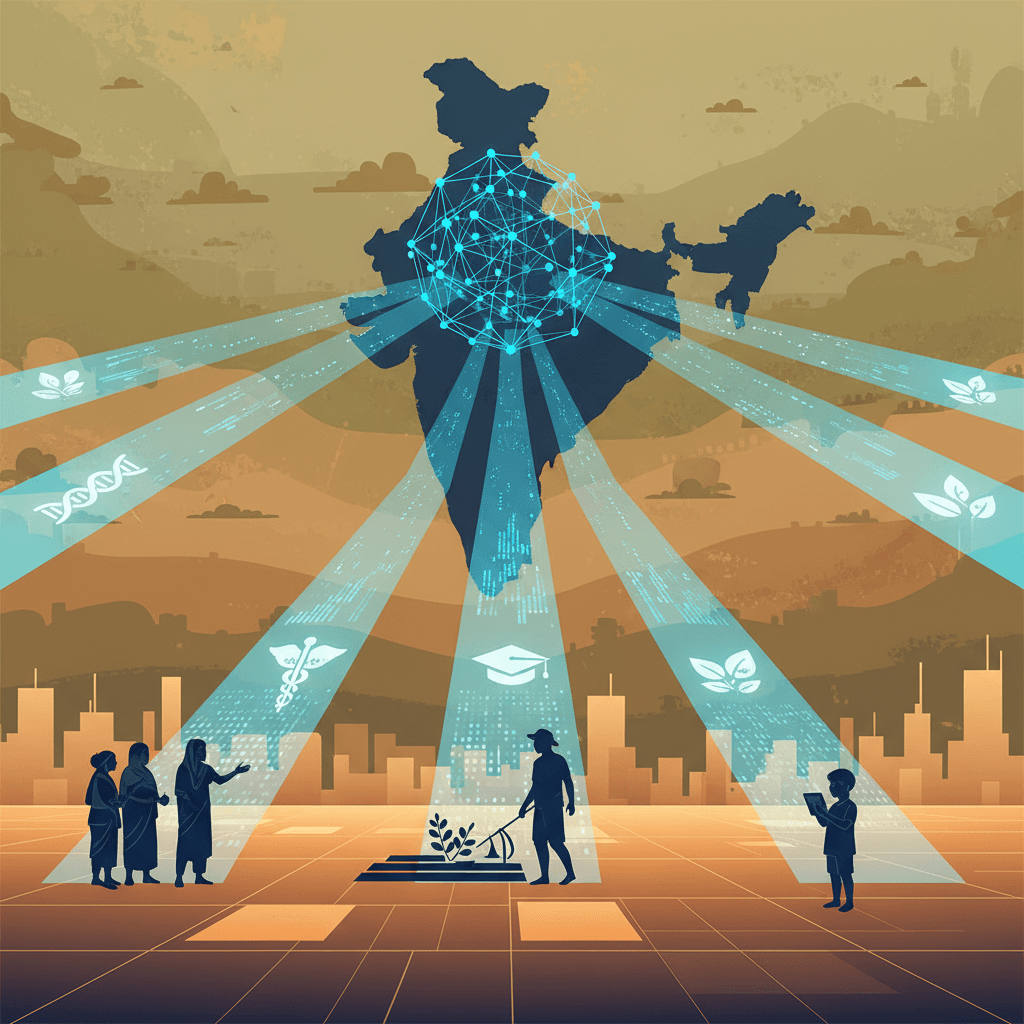
OpenAI’s recent ‘Nonprofit AI Jam’ in Bengaluru served as a crucial step in translating the promise of frontier artificial intelligence into tangible social change on the ground in India, one of the world’s most consequential markets for AI development and adoption. The hands-on, multi-city workshop series, which began in the Silicon Valley of India, was explicitly designed to help non-profit organizations transcend the pilot phase and integrate AI-powered workflows directly into their large-scale operations across critical sectors like education, public health, skilling, climate action, and gender inclusion[1]. This initiative represents a strategic shift by a leading global AI developer to democratize its most advanced tools, moving the technology from the laboratories of the Global North into the hands of grassroots organizations that serve millions in underserved communities[2][3].
The Bengaluru session, which is part of a larger four-city Indian rollout in partnership with the non-profit Karya and supported by Wadhwani AI, focused on moving from abstract discussion to practical deployment[1]. Participants, representing a diverse cross-section of India’s non-profit landscape, were tasked with building at least one reusable AI workflow that could be immediately applied to their organization’s daily work[4]. The core workflows demonstrated included creating a Knowledge Assistant capable of answering common questions from organizational documents and providing instant translations in local languages; transforming vast program data into actionable insights for strategic decision-making; and generating Outreach Campaign Kits to improve community engagement and fundraising efficiency[4]. This focus on streamlining operational bottlenecks, such as reducing the time spent on administrative tasks or generating content for diverse stakeholders, is central to the goal of scaling social impact without proportionally increasing human capital[5][6].
The workshop is an extension of the broader OpenAI Academy and ‘AI for Impact Accelerator’ program in India, which has provided substantial support, including $150,000 in API credits, to a cohort of 11 Indian non-profit organisations[7][8]. The impact demonstrated by these grant recipients highlights the practical application of generative AI in solving complex, large-scale national challenges[9]. In the field of public health, for example, non-profits like Noora Health have leveraged AI to automate elements of caregiver engagement, drastically reducing the message review workload for nurses and increasing the scale of families they can reach, impacting hundreds of thousands of caregivers[7][9]. Similarly, the reproductive health platform Pinky Promise uses an AI-powered chatbot to help a small team of doctors manage care for thousands of patients, achieving a medication adherence rate as high as 92%[7].
The accelerator’s portfolio illustrates the direct application of large language models to overcome the digital divide and linguistic diversity challenges inherent in the Indian context[10]. Organizations like Rocket Learning use generative AI delivered via ubiquitous platforms like WhatsApp to disseminate personalized early childhood education content, impacting four million children across 11 states[7][9]. Furthermore, efforts to address gender inequality are evident through organizations like Educate Girls, which employs AI to identify and re-integrate out-of-school girls in rural India, and Myna Mahila Foundation, which utilized AI to build a hyper-local, culturally sensitive chatbot for 24/7 reproductive health guidance, reaching hundreds of thousands of women with personalized, stigma-free support in local languages[7][8]. On the skilling and digital inclusion front, I-Stem has utilized AI to convert over a million and a half web pages into accessible formats, making digital content available to visually impaired users[7]. While projects explicitly focused on pure climate action were less numerous in the initial cohort, the inclusion of organizations like Digital Green and Precision Development, which focus on agriculture—a sector deeply intertwined with climate resilience—show a pathway for AI application in crop advice, peer learning insights for farmers, and water security[11][9]. These applications, which automate insights and extend the reach of expert knowledge to smallholder farmers, are crucial for adapting to the changing environmental conditions[10][11].
For the AI industry, this pivot to high-impact, grassroots partnerships in India holds significant strategic importance beyond corporate social responsibility[3]. It positions the company as a credible partner in the nation's ambitious 'IndiaAI Mission,' which seeks to democratize AI access and develop technology tailored to India's unique socio-economic context[7][12]. By engaging with Indian non-profits, OpenAI not only roots its technology in practical, real-world scenarios but also gains invaluable feedback on how its models perform and need to be adapted for multilingual, resource-constrained environments—a crucial knowledge base for the global scale-up of AI[8]. The initiative exemplifies a global AI leader collaborating directly with organizations in the Global South to ensure that frontier technology is shaped by and in service of real communities, thereby expanding the definition of responsible and inclusive AI innovation[3]. This commitment to *building with the world*, rather than simply *for the world*, is seen as a key to establishing credibility and navigating the complexities of domestic AI ambitions, which, as the rise of local open-source foundation models indicates, are rapidly accelerating in India[13]. The workshops and grants signal a long-term investment in shaping the ethical deployment and widespread utility of generative AI on a population scale[14][12].