
Ola Democratizes 4680 Battery Tech, Turbocharging India's Robotics and AI Startups.
Ola opens the 4680 Bharat Cell, establishing a unified domestic energy backbone for India’s AI and deep-tech revolution.
January 15, 2026
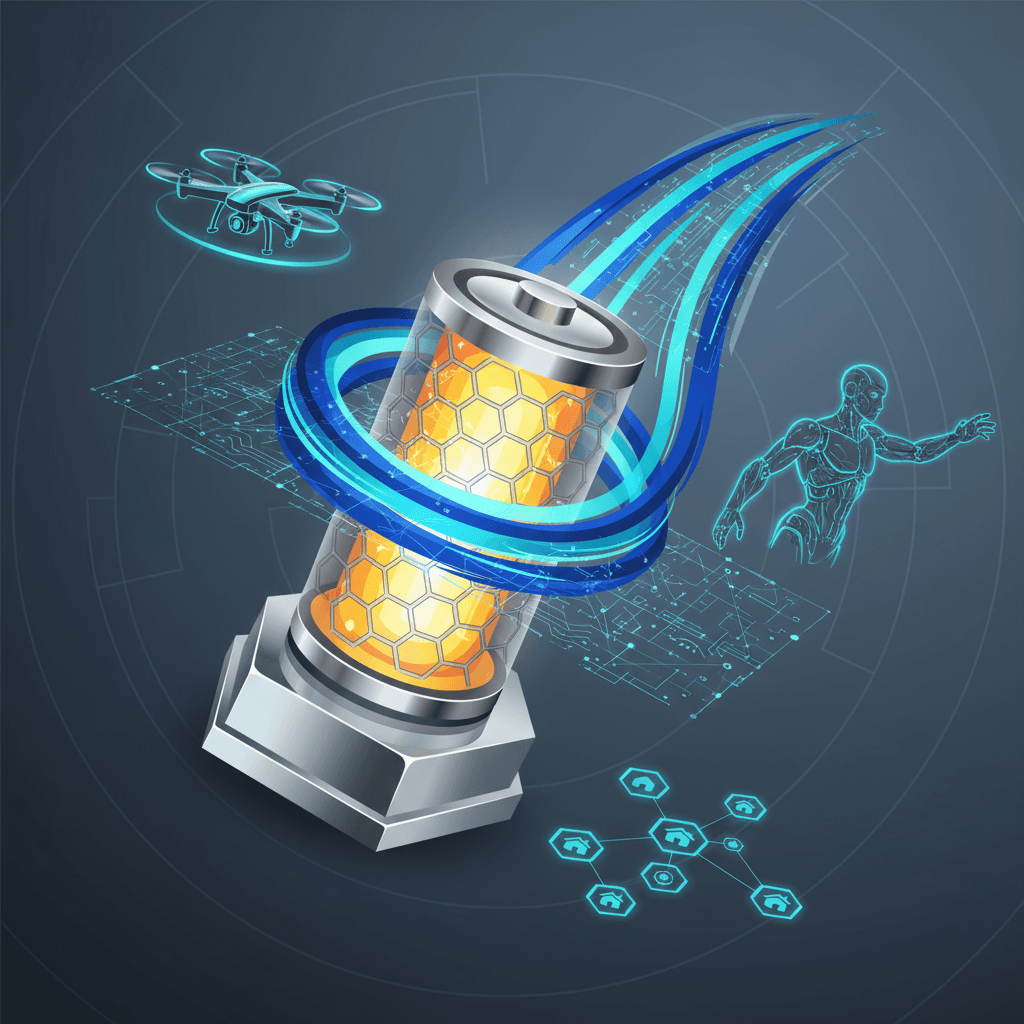
Ola Electric’s announcement to extend its advanced 4680 Bharat Cell platform to Indian startups and third-party businesses marks a pivotal moment in the nation's push for energy independence and deep-tech innovation.[1][2][3] By opening up its core, indigenously developed cell and battery pack technology, the company is attempting to establish a unified, domestic energy backbone that spans far beyond its electric vehicle (EV) origins.[4][5][6] The move allows enterprises to directly purchase the 4680 Bharat Cells or the 1.5kWh battery pack for a diverse range of applications, including automotive, drones, humanoids, and portable medical equipment, fundamentally altering the calculus for hardware startups across India.[1][2][7]
The core technology powering this expansion is the 4680 Bharat Cell, a large-format cylindrical lithium-ion cell, which is the product of Ola’s substantial investment in its Battery Innovation Centre (BIC) and its Gigafactory located in Krishnagiri, Tamil Nadu.[8][9][10] This vertical integration and domestic manufacturing capacity is crucial, as it provides Indian startups with a reliable, high-performance, and *Made in India* energy source, bypassing the complexities, costs, and supply chain vulnerabilities associated with foreign imports, which have historically hampered the hardware ecosystem.[3][11][12] Ola has ambitious plans to scale its cell manufacturing capacity to 5.9 GWh by March 2026 and further to 20 GWh by the second half of 2027, ensuring the supply chain can meet the anticipated demand from a rapidly innovating domestic market.[3] The strategic decision to standardize on one cell, one platform, and one portfolio enables a unified energy architecture that promises to streamline product development and reduce time-to-market for third-party innovators.[4][13]
The implications of this open platform are particularly profound for India's burgeoning AI and robotics sectors.[7][14] Humanoid and robotics startups, which require dense, reliable, and high-power energy packs for complex movement and onboard processing, have traditionally struggled with sourcing or custom-developing suitable battery systems.[15] With direct access to the 4680 Bharat Cell and its pre-packaged 1.5kWh modules, companies can now dedicate their limited resources to their core competency—the development of advanced AI algorithms, mechanical design, and system integration—rather than expending capital and time on fundamental battery R&D and manufacturing.[14][15][16] The same principle applies to the drone industry, which is experiencing a boom with applications in defense, agriculture, and logistics.[17] Standardized, high-energy-density packs are essential for increasing flight endurance and payload capacity, which directly correlate with the utility and data-gathering efficiency of AI-powered aerial systems.[17] The availability of a domestic cell also de-risks the supply chain for sensitive applications in the defense sector, an area where AI-driven autonomous systems are increasingly critical.[16][12]
Beyond mobility and robotics, the technology transfer is also manifesting in the distributed energy market with the commercial launch of Ola Shakti, the company’s residential Battery Energy Storage System (BESS).[13] Ola Shakti, available in configurations up to 6kW/9.1kWh, represents a significant leap from conventional inverters and diesel generators.[4][10] Crucially, the system is described as an *intelligent* energy storage solution, a feature underpinned by AI-driven software.[10] The system integrates advanced features such as real-time control over battery status and energy flow via a dedicated mobile application.[18][19] More importantly, it uses software to offer smart capabilities like Time-of-Day charge/discharge scheduling, intelligent backup prioritisation, and automated optimisation based on learned usage patterns, all of which fall squarely into the domain of energy AI and machine learning.[20][21][19] This data-driven, intelligent BESS not only enhances grid stability at a residential level but also creates a new market for energy software and AI startups to build services on top of a standardized hardware platform. For example, remote diagnostics and over-the-air (OTA) updates, mentioned as key features, rely on continuous data collection and predictive maintenance algorithms, a burgeoning field for AI developers.[20][21]
In effect, Ola Electric is pivoting from being merely a leading EV manufacturer to becoming a foundational technology provider, creating a common platform for energy hardware in India.[11][5] By externalizing its battery technology, the company is fostering an ecosystem that can collectively accelerate India’s technological self-reliance, or *Aatmanirbharta*, across multiple sectors—from advanced robotics and autonomous systems to decentralised, smart home energy management.[3][6] This democratisation of high-quality, domestically manufactured battery technology is expected to dramatically reduce the barrier to entry for deep-tech innovators, potentially igniting a wave of new product development that leverages AI for efficiency, safety, and performance, ultimately positioning India as a global leader in the integrated energy and hardware space.[1][2]
Sources
[2]
[3]
[11]
[12]
[13]
[14]
[15]
[16]
[17]
[19]
[21]