
Modi names AI startups ‘co-architects’ of India’s $1.2B tech future.
Subsidized compute and sovereign data platforms anchor India's $1.2 billion push for ethical, localized AI innovation.
January 8, 2026
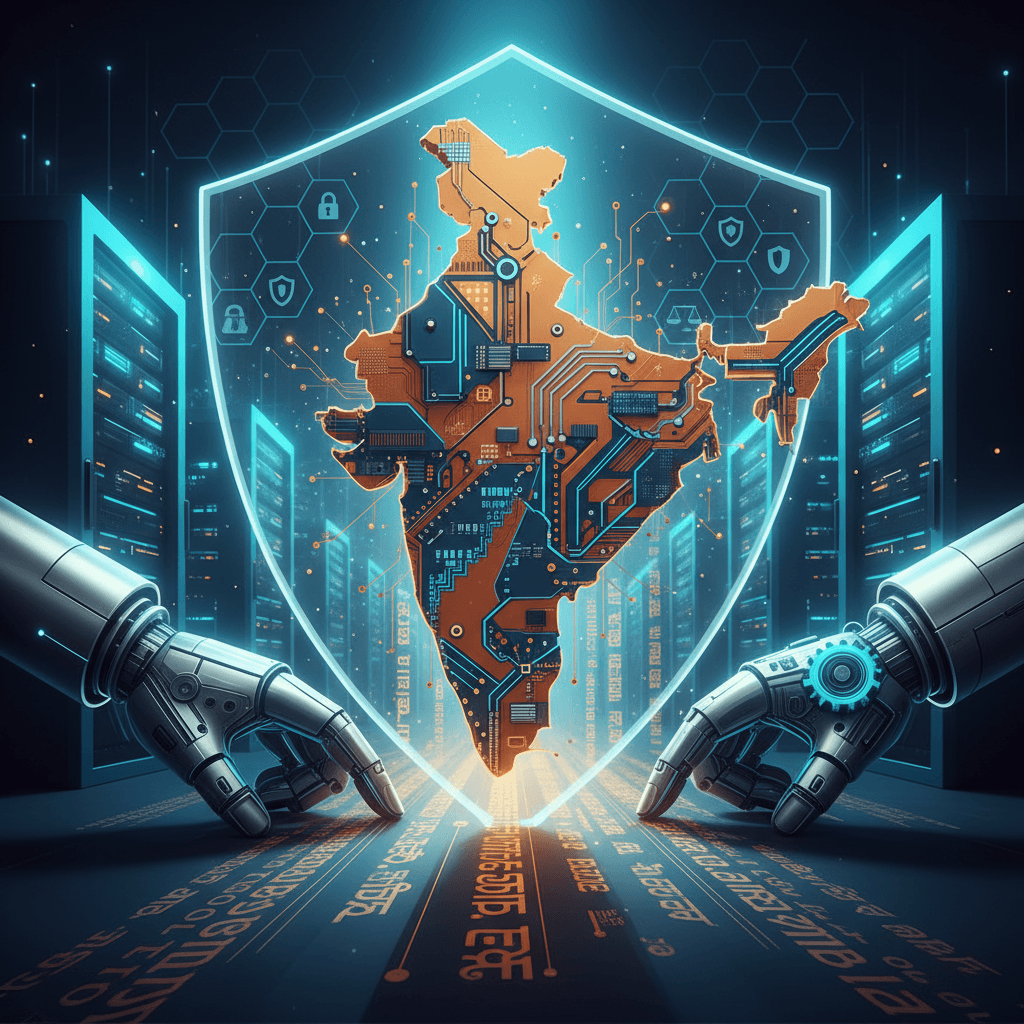
The nation’s nascent artificial intelligence ecosystem received a powerful endorsement from the highest political authority during a recent high-level roundtable, where Prime Minister Modi hailed the participating entrepreneurs as the ‘co-architects of India’s future’. The meeting, which brought together founders and senior executives from twelve cutting-edge AI startups, underscored the government’s determined push to position India as a global powerhouse for ethical, inclusive, and indigenously developed Artificial Intelligence. The Prime Minister’s remarks set a clear mandate: India’s models must embody the spirit of “Made in India, Made for the World,” focusing on affordability, transparency, and a deep integration of regional languages to ensure technology is democratized across the country.
The roundtable served as a significant precursor to the upcoming India AI Impact Summit 2026 and highlighted ventures that have qualified for the ‘AI for All: Global Impact Challenge,’ signaling a direct connection between government policy and on-the-ground innovation. The selected companies, including firms like Sarvam, BharatGen, Fractal, and Avataar, showcased a diverse portfolio of work ranging from multilingual large language models (LLMs) and advanced healthcare diagnostics to engineering simulations and generative AI applications for e-commerce. Their collective focus on building AI tools in Indian languages, including speech-to-text and text-to-video capabilities, aligns precisely with the government’s vision of leveraging AI to solve local challenges and bridge digital divides. The startup leaders present unanimously commended the nation’s strong commitment to the AI ecosystem, observing that a robust and enabling environment had been established, leading to a palpable feeling that the global centre of gravity for AI innovation is beginning its shift toward the country.
This confidence from the private sector is anchored in the substantial infrastructural and policy backing provided by the government's flagship initiative, the IndiaAI Mission. Cleared with a monumental budget outlay of over ₹10,300 crore—equivalent to approximately $1.2 billion USD—over a five-year period, the mission is guided by the overarching vision of “Making AI in India and Making AI Work for India.” The funding is strategically distributed across seven foundational pillars designed to eliminate structural bottlenecks in the AI development cycle. One of the most critical components is the IndiaAI Compute Pillar, which has dramatically expanded the country’s computing infrastructure. Initially targeting 10,000 Graphics Processing Units (GPUs) for democratized access, the Mission has already deployed a significantly higher number, offering high-end computing resources at highly subsidized rates, such as as low as ₹65 per hour, to startups, researchers, and academic institutions.[1][2][3] This unprecedented move ensures that the computational power necessary to train complex Large Multimodal Models (LMMs) is not concentrated solely in the hands of a few large corporations, but is instead accessible to deep-tech innovators across the nation.[3][4]
Complementing the provision of world-class hardware is the IndiaAI Datasets Platform, known as AIKosh.[3] Recognizing that high-quality, representative data is the lifeblood of robust AI models, AIKosh functions as a sovereign data repository, aggregating ethically sourced and consent-based datasets from various government ministries and partner entities, including those focused on agriculture, weather forecasting, and local language initiatives like Bhashini.[5] This platform is crucial for the development of indigenous foundational models, which is the specific mandate of the IndiaAI Innovation Centre. The goal is to build India’s own LMMs that are trained on Indic data and languages, ensuring they reflect the cultural and linguistic diversity of the subcontinent, thereby providing a more effective alternative to foreign-developed models for domestic applications.[3][6] The startups at the roundtable, many of whom are focused on multilingual LLMs, are direct beneficiaries and active contributors to this pillar.
The Mission’s focus extends beyond infrastructure to create a complete ecosystem. The IndiaAI Application Development Initiative is tasked with bridging the gap between theoretical research and practical, large-scale socio-economic transformation by promoting impactful AI solutions in key sectors such as healthcare, agriculture, and cybersecurity, with over thirty India-specific applications already approved.[1][3] Simultaneously, the IndiaAI FutureSkills pillar addresses the talent pipeline, supporting PhD fellows, postgraduates, and undergraduates, and establishing Data and AI Labs in Tier 2 and Tier 3 cities to cultivate a deep-tech workforce at the grassroots level.[4] Furthermore, dedicated IndiaAI Startup Financing mechanisms are in place to provide risk capital and accelerated funding, including programs that assist Indian AI startups in scaling globally, such as through collaborations in international hubs like Europe.[4][3]
Underpinning the entire framework is the pillar of Safe and Trusted AI, which addresses the Prime Minister’s firm insistence on ethical development.[3] This component is focused on establishing robust governance guidelines, ensuring transparency, privacy-preserving architectures, and actively researching areas like machine unlearning and bias mitigation, leading to the planned establishment of an IndiaAI Safety Institute.[4][2] By integrating ethical principles and data privacy at the foundational layer of its national strategy, India aims to present a distinctive AI model to the world that champions inclusive growth and social impact over narrow commercial gains. This holistic approach, from affordable compute to ethical governance, is projected to be a major catalyst, with AI expected to contribute an estimated $1.7 trillion to the nation's economy by 2035. The partnership articulated at the roundtable—between the government as the primary enabler and the startups as the "co-architects"—is the new operational model for India’s ambitious journey toward global AI leadership.[1][4]