
Meta deploys lean AI-native pods to replace massive engineering departments at Reality Labs
How Meta’s AI-native pods at Reality Labs are replacing massive engineering departments to drive lean, high-speed innovation
March 26, 2026
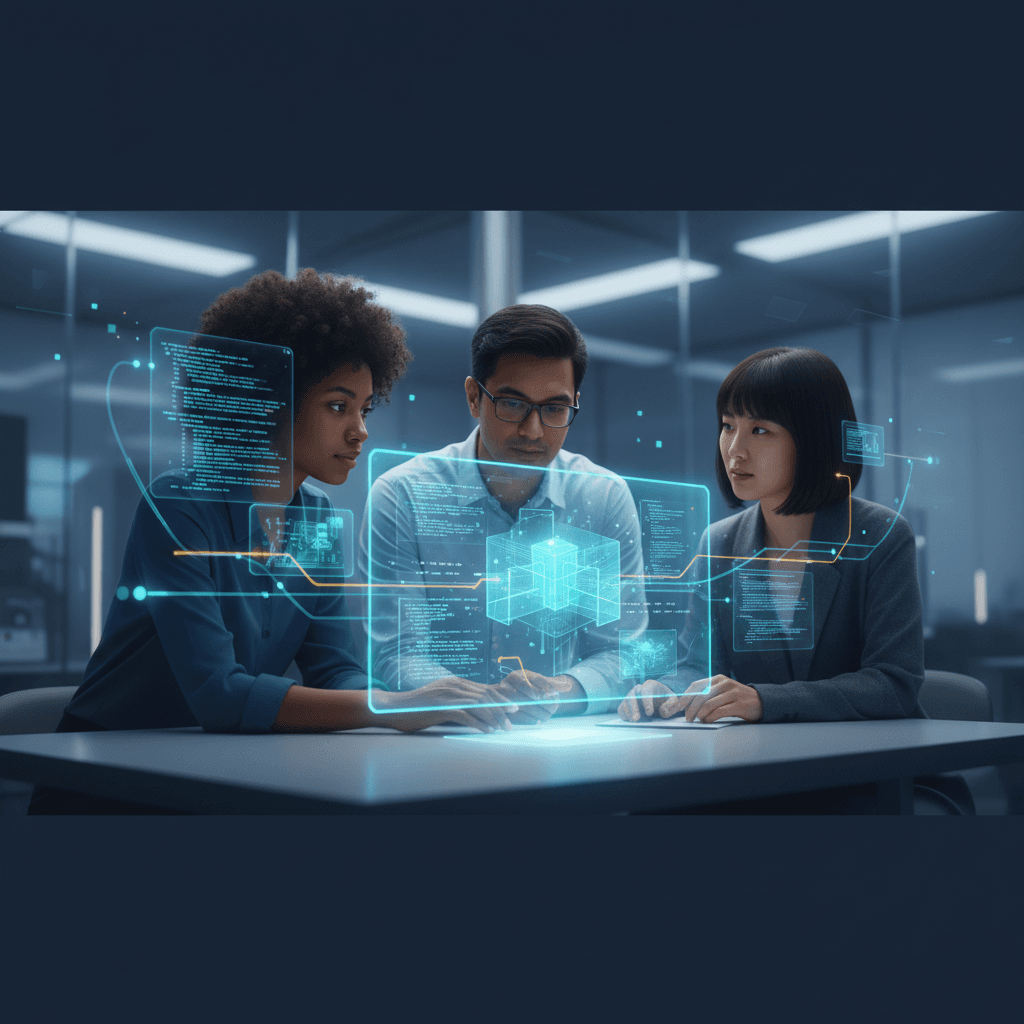
The landscape of corporate software development is undergoing a fundamental transformation as Meta begins testing a radical organizational structure centered on what the company calls AI-native pods. This experiment, primarily unfolding within the high-stakes environment of Reality Labs, represents a significant shift from the traditional large-scale engineering models that have dominated Silicon Valley for decades. By assembling small, highly autonomous teams that lean heavily on generative artificial intelligence for every stage of the product lifecycle, Meta is attempting to prove that a handful of engineers equipped with advanced large language models can outpace much larger, conventional departments. This initiative is not merely a technical pilot but a cultural evolution, signaling a move toward a future where human oversight and AI execution become the primary drivers of technological innovation.
The core of the AI-native pod concept lies in its lean composition and its reliance on a specialized stack of internal AI tools. Unlike traditional development teams that might include dozens of specialized roles—ranging from front-end and back-end engineers to quality assurance testers and project managers—these pods are typically composed of just two to five individuals. These team members are expected to be generalists who use AI to bridge gaps in their own expertise. Within these units, Meta is deploying its proprietary Llama models and specialized coding assistants to automate the more rote aspects of software production, such as boilerplate code generation, debugging, and documentation. By offloading these time-consuming tasks to synthetic agents, Meta aims to drastically reduce the friction between an initial concept and a finished feature. This approach effectively attempts to institutionalize the myth of the 10x engineer by giving every developer the tools to perform at a significantly higher order of magnitude.
Choosing Reality Labs as the testing ground for this new methodology is a strategic move that highlights the urgency behind Meta’s hardware and spatial computing ambitions. Reality Labs has long been the most capital-intensive arm of the company, absorbing billions of dollars annually as it develops augmented reality glasses, virtual reality headsets, and the underlying metaverse infrastructure. By implementing AI-native pods in this division, Meta is seeking a way to sustain its aggressive pace of innovation while adhering to the fiscal discipline established during its recent Year of Efficiency. The integration of AI into the workflow of Reality Labs is particularly critical as the company moves toward more complex hardware-software integrations, such as the Orion AR glasses. These projects require rapid prototyping and complex system architectures that are traditionally slow to develop. If small, AI-empowered teams can successfully navigate the intricacies of spatial operating systems and wearable hardware, it will validate Meta’s belief that AI is the ultimate force multiplier for its most ambitious projects.
The implications of this shift extend far beyond Meta’s internal productivity metrics and could redefine the broader labor market within the technology industry. For years, the prestige of a tech company or a specific executive was often measured by headcount—the more people under a manager’s purview, the more significant the project was perceived to be. The AI-native pod model flips this paradigm on its head, making lean efficiency the new metric of success. This transition suggests a move toward the seniorization of the workforce, where the demand for entry-level developers who handle basic coding tasks may plummet, replaced by a need for highly experienced architects who can guide AI systems and verify their output. As other tech giants like Google and Microsoft observe Meta’s experiment, the industry may see a widespread move toward flatter organizational structures. This could lead to a permanent reduction in mid-level management and a restructuring of how software engineering is taught and practiced, focusing more on system design and AI orchestration than on syntax and manual debugging.
However, the move toward AI-native development is not without significant risks and technical hurdles. One of the primary concerns is the potential for increased technical debt. While AI can generate code at an unprecedented speed, the long-term maintainability of that code remains an open question. If a small pod creates a massive codebase using generative tools and then moves on to a different project, the lack of deep human familiarity with every line of code could make future updates or bug fixes exponentially more difficult. Furthermore, there is the persistent issue of AI hallucinations, where a model might produce code that appears functional but contains subtle security vulnerabilities or logic flaws. Relying on small teams to catch these errors puts an immense burden of responsibility on a few individuals. There is also the risk of losing institutional knowledge; when processes are automated, the nuanced understanding of why certain architectural decisions were made can be lost, potentially leading to a fragile ecosystem where the developers understand the what but not the why of their creations.
Despite these challenges, the broader trajectory of the industry seems to be tilting toward the model Meta is currently pioneering. The economic pressure to deliver more advanced features with less overhead is a constant in the post-Zirp era of the tech economy. Meta’s experiment with AI-native pods is a bold attempt to find a new equilibrium between human creativity and machine efficiency. If successful, it will provide a blueprint for the next generation of tech startups and established enterprises alike, suggesting that the future of software isn't just written by humans using tools, but co-authored in a continuous loop between developers and their AI counterparts. As these pods continue to evolve within Reality Labs, their output will be the ultimate measure of whether AI can truly transform the fundamental nature of work or if it simply accelerates the creation of more complex systems that eventually require human intervention to untangle. The results of this experiment will likely determine the organizational structure of the digital world for the next decade.