
McConaughey pioneers federal trademark strategy to defend against AI deepfakes.
The proactive legal move, trademarking his voice and image, sets a federal test case for digital identity ownership against generative AI.
January 14, 2026
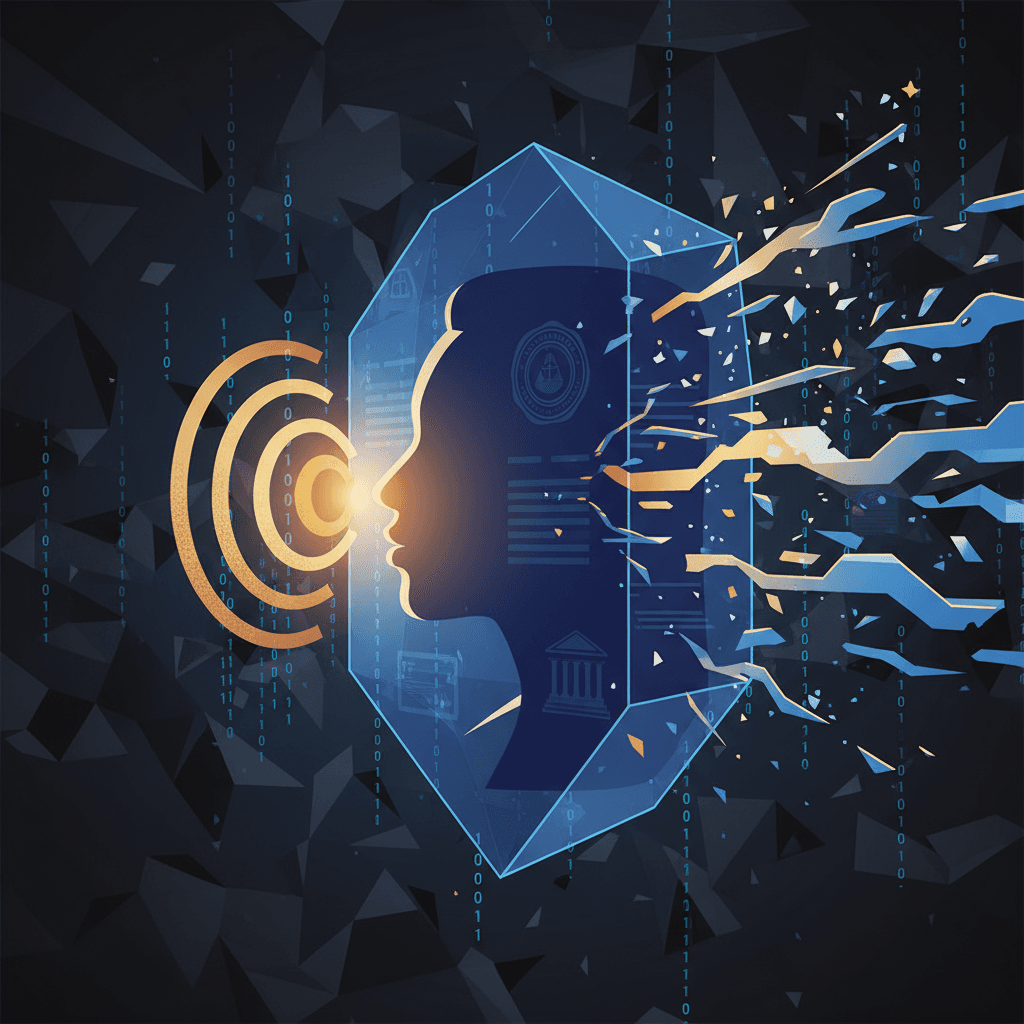
Hollywood actor Matthew McConaughey has initiated a novel legal strategy to safeguard his distinct persona against the rising tide of generative artificial intelligence, securing federal trademark rights for key elements of his image and voice. The move, which includes his famous catchphrase, "Alright, alright, alright," represents a proactive, and largely untested, effort by a major celebrity to leverage federal intellectual property law as a defense against unauthorized AI deepfakes and voice cloning. McConaughey's team is banking on the clearer enforcement mechanisms of trademark law to create a deterrent against AI misuse, providing a potential blueprint for other public figures grappling with the erosion of digital identity ownership in the age of synthetic media.
The Oscar-winning actor, known for his unique vocal cadence and laid-back on-screen presence, has had eight trademark applications approved by the U.S. Patent and Trademark Office (USPTO) over recent months.[1][2][3] These federal protections cover a broad range of his public identity, including audio recordings of his signature line from the 1993 film *Dazed and Confused*, as well as short video clips featuring him smiling, talking, and even a seven-second clip of him standing on a porch.[2][3][4] The trademarks are intended to create a federal basis for challenging unauthorized AI-generated content that uses his identity without permission, which his legal representatives view as an essential tool to combat the burgeoning problem of AI counterfeiting.[1][5][4]
This aggressive use of trademark law is seen as a direct response to the perceived gaps in current U.S. law regarding digital likeness.[6][3] Traditional celebrity protection relies primarily on state "right of publicity" laws, which make it illegal to commercialize a person’s likeness without consent.[1][7] However, the scope of these laws varies significantly by jurisdiction, and their application to AI-generated content, especially non-commercial or indirectly monetized online videos, remains a "murky" and slow-moving legal area.[8][3][9] Trademark protections, by contrast, operate under federal intellectual property law, which McConaughey’s legal counsel hopes will provide a swifter and more nationally consistent mechanism for legal action, allowing them to drag offenders into federal court.[1][3] While his team acknowledges that the legal theory of using a trademark on a voice and image clip to stop an AI clone is untested and that the outcome is uncertain if a defendant were to challenge the claim, the core strategy is to deter unauthorized usage through the threat of a federal lawsuit.[10][2][3]
The actor’s actions are not a blanket rejection of artificial intelligence technology, but rather a focused effort to establish clear boundaries for consent.[10][6] McConaughey is, in fact, an investor in, and a partner with, the prominent AI voice-cloning startup ElevenLabs.[10][5][11] This partnership allows ElevenLabs to use a licensed, synthetic version of his voice to create a Spanish-language audio version of his newsletter, "Lyrics of Livin'," demonstrating that his primary concern is not the technology itself but the "clear perimeter around ownership."[10][5][11][4] McConaughey himself stated, "My team and I want to know that when my voice or likeness is ever used, it’s because I approved and signed off on it."[5][4] This distinction is critical, establishing a framework where the actor can monetize his digital persona on his own terms while maintaining the right to control its unauthorized replication.
This move underscores an intensifying industry-wide conflict between creators and the generative AI ecosystem.[1][6] For the AI industry, which relies on vast datasets of publicly available content—including celebrity voices, images, and performance data—to train its models, the proliferation of such personal trademarks could introduce significant new complexities and liabilities.[7] If this legal strategy proves successful, it could force generative AI developers to dramatically alter their training and deployment practices to perform more stringent checks for personality rights, or to shift towards fully consent-based licensing models, mirroring the steps already taken by companies like ElevenLabs and Getty Images.[8][6] The industry's reaction has been mixed, with some viewing AI as an "dynamically evolving tool," while others, including SAG-AFTRA during the 2023 strikes, have expressed deep concern about the potential for stolen performances and the displacement of human actors.[10][12]
The problem of celebrity deepfakes has already impacted numerous A-listers, with unauthorized AI-generated content involving names like Tom Hanks, Taylor Swift, and Morgan Freeman circulating on social media and used in scams.[5][9] McConaughey’s innovative legal filing is an attempt to get ahead of the problem, putting the onus of responsibility and the threat of federal litigation directly onto potential misusers. It reflects a growing consensus in Hollywood that existing legal frameworks are inadequate for the digital reality of instant and hyper-realistic synthetic media.[6][3] The entertainment industry has largely backed proposed federal legislation, such as the No Fakes Act, which would provide greater protection against unauthorized digital replicas, but until Congress acts, pioneering strategies like McConaughey’s will serve as an essential "test" case for how intellectual property and personal identity rights will be defined in the future of AI.[3][9] The outcome of any eventual legal challenge to these trademarks will likely have a profound and lasting impact on the business of celebrity, content creation, and the generative AI industry as a whole, shaping the legal landscape for years to come.