
Instagram CEO: AI Has Broken Trust; We Must Doubt Everything We See
Generative AI has broken the human instinct to trust visuals, forcing platforms to now fingerprint and verify reality.
January 1, 2026
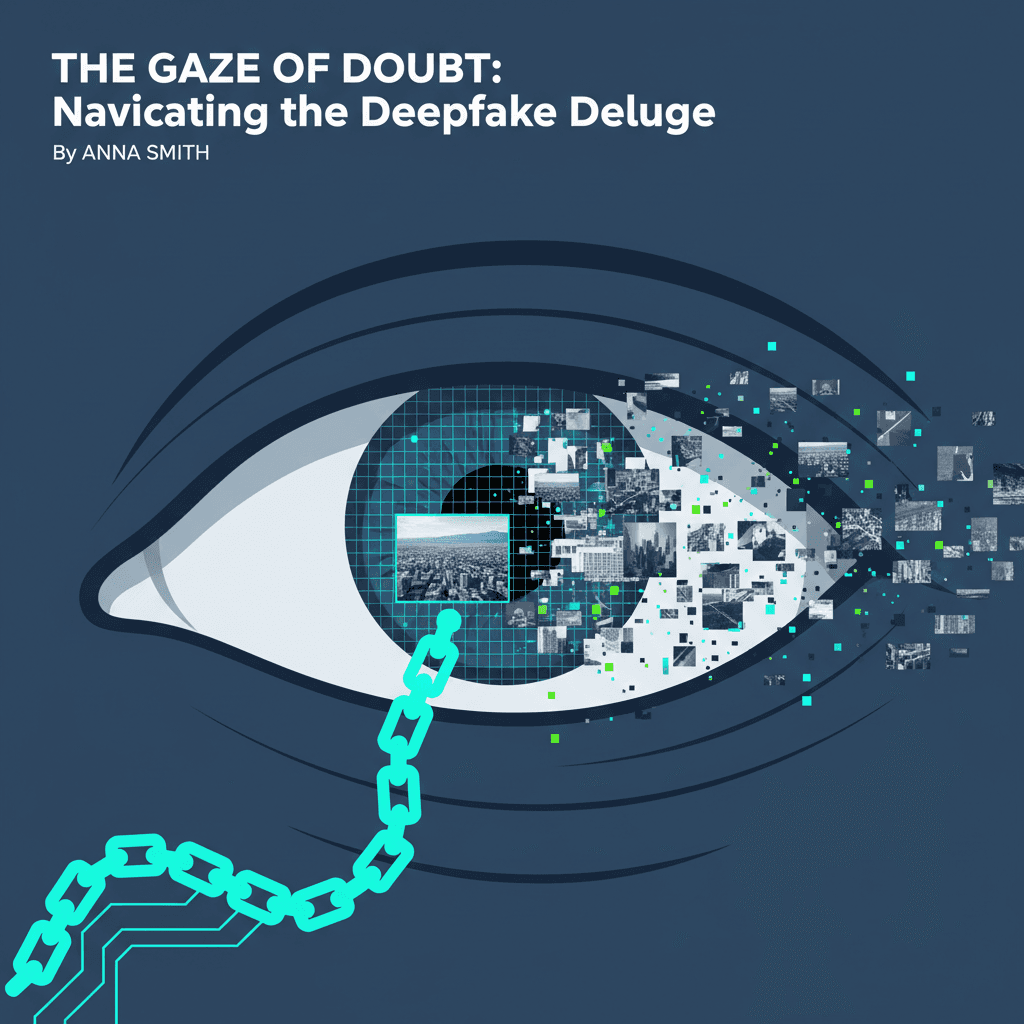
The head of one of the world's largest photo and video-sharing platforms has issued a stark warning to users worldwide, arguing that the age of artificial intelligence is fundamentally breaking the human instinct to trust visual media. Instagram CEO Adam Mosseri contends that the proliferation of generative AI tools has made authenticity "infinitely reproducible," necessitating a profound and uncomfortable societal shift toward default skepticism when consuming online content. His assessment is a significant acknowledgment from a top social media executive that the platforms themselves are at an inflection point, having to now actively engineer a way to re-establish the very credibility that AI is dissolving. The warning echoes a prediction made years ago by a pioneer in the field, signaling that the theoretical risk of generative AI has now become a central reality of the digital landscape.
The root of this crisis of authenticity lies in the explosive improvement and democratization of generative AI, which has made it possible to create hyper-realistic images and videos—often referred to as deepfakes—that are rapidly becoming "indistinguishable from captured media"[1][2]. Mosseri noted that for most of his life, a photograph or video could be safely assumed to be an "accurate capture of moments that happened," but this is "clearly no longer the case"[3]. Generative Adversarial Networks, or GANs—the foundational technology for deepfakes invented in 2014 by computer scientist Ian Goodfellow—pitted two neural networks against each other to continuously refine a forgery until it could no longer be detected[4][5][6]. This adversarial learning process has now matured to a point where the results are flooding platforms. While much of this new material is currently derided as "AI slop"—low-quality, high-volume content—the technology is simultaneously producing high-quality images and video that lack the tell-tale imperfections of earlier generations, making them nearly impossible for the average user to distinguish from reality[7][1]. This relentless capability to simulate reality is what led Goodfellow to warn years ago that people should no longer believe images and videos on the internet as a matter of course, a prediction that now forms the basis of the current platform head’s urgent message[4].
The shift Mosseri describes is not just a technical challenge for platforms, but a deeply psychological and societal one for users. He explicitly stated that moving to a default of skepticism will be "uncomfortable" because humans are "genetically predisposed to believing our eyes"[8][3]. This biological instinct, which has served people for millennia, is being weaponized by the technology. Users are being asked to approach content with a discerning mind, constantly questioning the source and the motivation behind the post, rather than simply accepting the visual evidence[9][10]. The profound implication is that the very basis of visual communication online is being undermined, forcing a new form of digital literacy to become a baseline requirement for participation in society. Mosseri argues that users must "move from assuming what we see is real by default, to starting with scepticism"[8][11]. This change in mindset affects everything from political discourse and electoral integrity to personal relationships and the authenticity of online creators, whose core value proposition—being genuine—can now be convincingly faked by anyone with the right tools[7][1].
In response to this existential threat to trust, social media platforms are being forced to adapt rapidly. Mosseri outlined a two-pronged strategy for Instagram's evolution: clear labeling and the verification of reality. The first measure involves labeling AI-generated content as accurately as possible[8][11]. However, as the platform head acknowledged, AI-generated content will inevitably "slip through the cracks," and not all misleading material is created by AI, rendering a detection-only strategy insufficient[12][10]. This has prompted a more proactive and profound measure: the platform must pivot its efforts from chasing fakes to validating authentic content. Mosseri suggests the necessity to "verify authentic content" or, in a more technical sense, to "fingerprint real media"[8][2][11]. This approach, which may leverage technologies like blockchain and embedded metadata to create an immutable proof of origin for real photos and videos, represents a fundamental reversal of the trust paradigm. Instead of the digital world assuming content is real until proven fake, it must now treat all content as potentially fake until a verifiable, digital proof of authenticity can be provided by the platform or creator[2].
The implications for the AI industry are clear: the race to create hyper-realistic content must now be matched by an equally robust effort to develop verification and attribution technologies. The pressure is on AI developers not just to build more powerful generative models, but to build them responsibly, incorporating mechanisms for watermarking and provenance tracking. For platforms, this transition means moving beyond simple moderation to becoming active custodians of digital reality, a task that demands significant investment in new technological infrastructure. Ultimately, Mosseri's warning is a sober realization that the era of "infinite synthetic content" is here, and the long-held assumption that "seeing is believing" has officially been relegated to history[3][11]. The core challenge for the coming years will be whether technology can evolve fast enough to preserve a working level of public trust, or if humanity will simply have to endure a permanent state of digital doubt.