
India's Forces Order Indigenous Anti-Drone Gun, Boosting 'Make in India' Defence Tech.
Dual-service contract for the indigenous IG T-Shul Pulse accelerates Aatmanirbhar Bharat and modernizes frontline electronic defence.
January 15, 2026
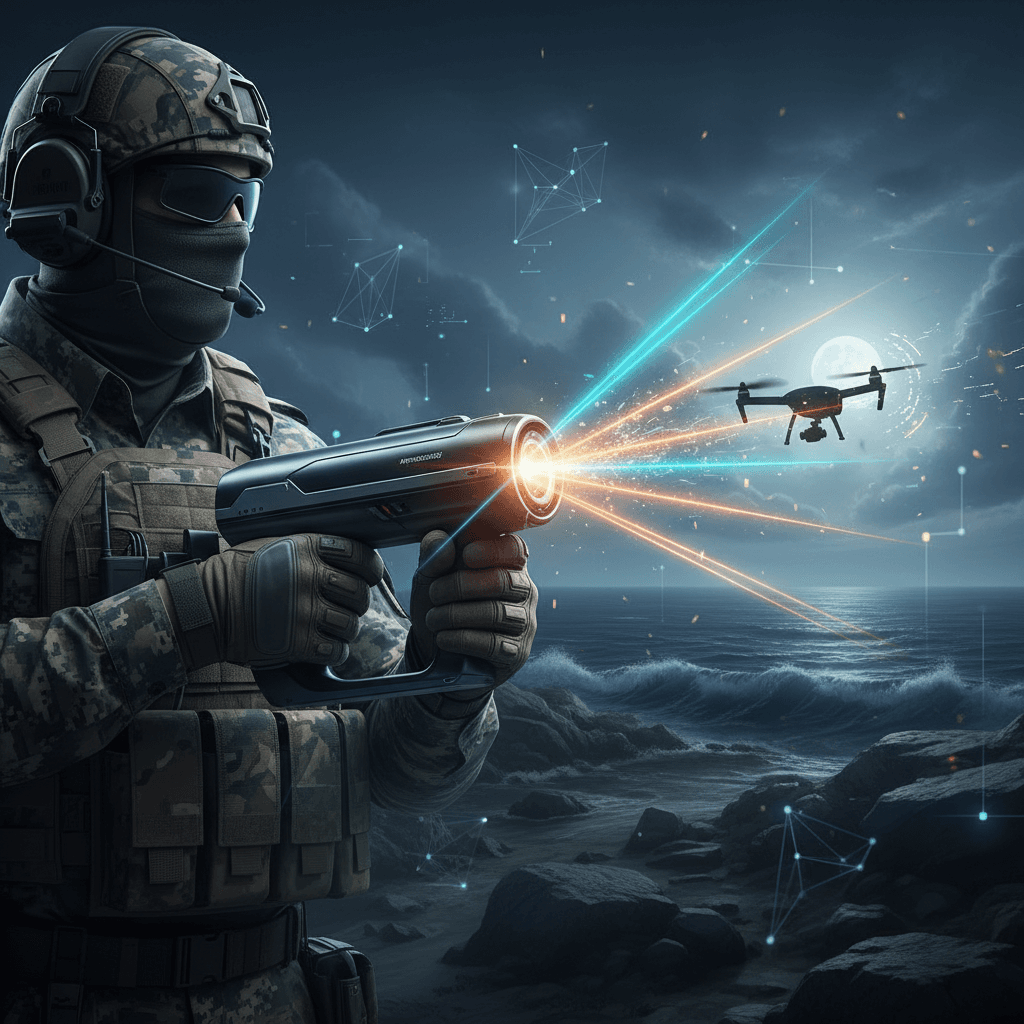
The Indian Army and Indian Navy have placed significant orders with IG Defence for the indigenous IG T-Shul Pulse Anti-Drone Gun, marking a pivotal moment in the nation's push for self-reliance in cutting-edge military technology. The Noida-based firm has been tasked with delivering and inducting the handheld counter-drone system within a month, an accelerated timeline that underscores the armed forces' urgency in bolstering defences against asymmetric aerial threats. The system, which is entirely designed, developed, and manufactured in India, represents a tangible commitment to the 'Make in India' and 'Aatmanirbhar Bharat' (self-reliant India) initiatives, shifting away from dependency on imported solutions for critical security needs. The procurement by both the land and maritime forces highlights a unified strategic focus on countering the proliferation of hostile unmanned aerial systems (UAS) used for surveillance, disruption, and cross-border infiltration, particularly in contested operational environments.[1][2][3][4][5][6]
The IG T-Shul Pulse is an electronic warfare-based counter-drone jammer engineered for tactical, frontline military use, offering a distinct technological advantage over previous generation systems. Unlike legacy single-band jammers, this platform employs a multi-band, directionally controlled electronic denial architecture, a crucial innovation for tackling increasingly adaptive and frequency-agile drones. The multi-band capability allows it to simultaneously disrupt multiple communication and navigation frequencies used by hostile UAS, effectively jamming and neutralising them within an effective line-of-sight range of up to two kilometres. This directional approach is strategically designed to focus electronic suppression precisely on the threat, thereby limiting electromagnetic interference with friendly communications and sensitive onboard naval or base systems. The unit's lightweight and rapidly deployable nature is intended to provide tactical units with an immediate response option, operating as a standalone, network-independent platform with built-in safety mechanisms for deployment in complex electromagnetic environments both on land and at sea. The orders for the T-Shul Pulse signify an acknowledgment of the evolving nature of warfare, where low-cost drone technology poses a high-impact threat that demands a flexible, modern electronic denial solution.[7][6][1][5][8]
While the IG T-Shul Pulse itself is described primarily as an electronic warfare-based jammer, its induction has broader implications for the AI industry in India's defence sector. The global counter-drone market is rapidly integrating artificial intelligence and machine learning models for advanced detection, classification, and autonomous engagement, a trend that is becoming a necessity in dense airspace. Modern Counter-UAS (C-UAS) architectures, such as other indigenous systems being developed in India, are increasingly fusing data from multiple sensors—including radar tracks, radio frequency sensing, and electro-optical feeds—and using AI to classify objects, distinguish hostile drones from harmless objects, and prioritise responses. While the T-Shul Pulse handles the kinetic or electronic neutralisation phase, the overarching C-UAS framework it plugs into is heavily reliant on AI for a comprehensive 'sense and act' cycle. This contract validates the local defence ecosystem's ability to produce deployable, mission-critical hardware, which in turn acts as a crucial endpoint for more sophisticated, AI-driven command, control, communications, computers, intelligence, surveillance, and reconnaissance (C4ISR) systems. The continued investment in indigenous C-UAS capabilities, as demonstrated by this contract, fuels the domestic market for deep-tech startups specialising in machine learning for object classification, threat modeling, and autonomous threat engagement.[9][10][5]
This dual-service contract further cements the strategic trajectory of India's defence industrial base, where private sector innovation is taking a central role. The government's policy reforms, aimed at improving the ease of doing business and incentivising domestic design and production, have catalysed an indigenous manufacturing surge, significantly boosting private sector participation in a historically state-dominated domain. The successful securing of orders by IG Defence, a private entity, for a high-demand, strategic system like the anti-drone gun showcases the growing synergy between the armed forces' operational requirements and the capabilities of Indian startups and private firms. The company's current production capacity, which runs into the hundreds and is scalable to meet larger operational requirements, ensures a reliable, sovereign supply chain for a critical capability. This indigenisation effort is not merely an economic objective but a national imperative aimed at achieving long-term strategic autonomy and sovereignty over the necessary skills, technology, and intellectual capital. By supporting and inducting domestically produced defence technology like the IG T-Shul Pulse, the Indian armed forces are sending a clear signal of confidence to the private sector, encouraging further in-house research and development and positioning India as a global player in the defence technology export market.[6][2][5][11]