
HCLTech, NVIDIA Lab Bridges Simulation Gap for Enterprise Physical AI
Bridging the critical gap from digital simulation to real-world physical AI deployment for industrial transformation.
November 17, 2025
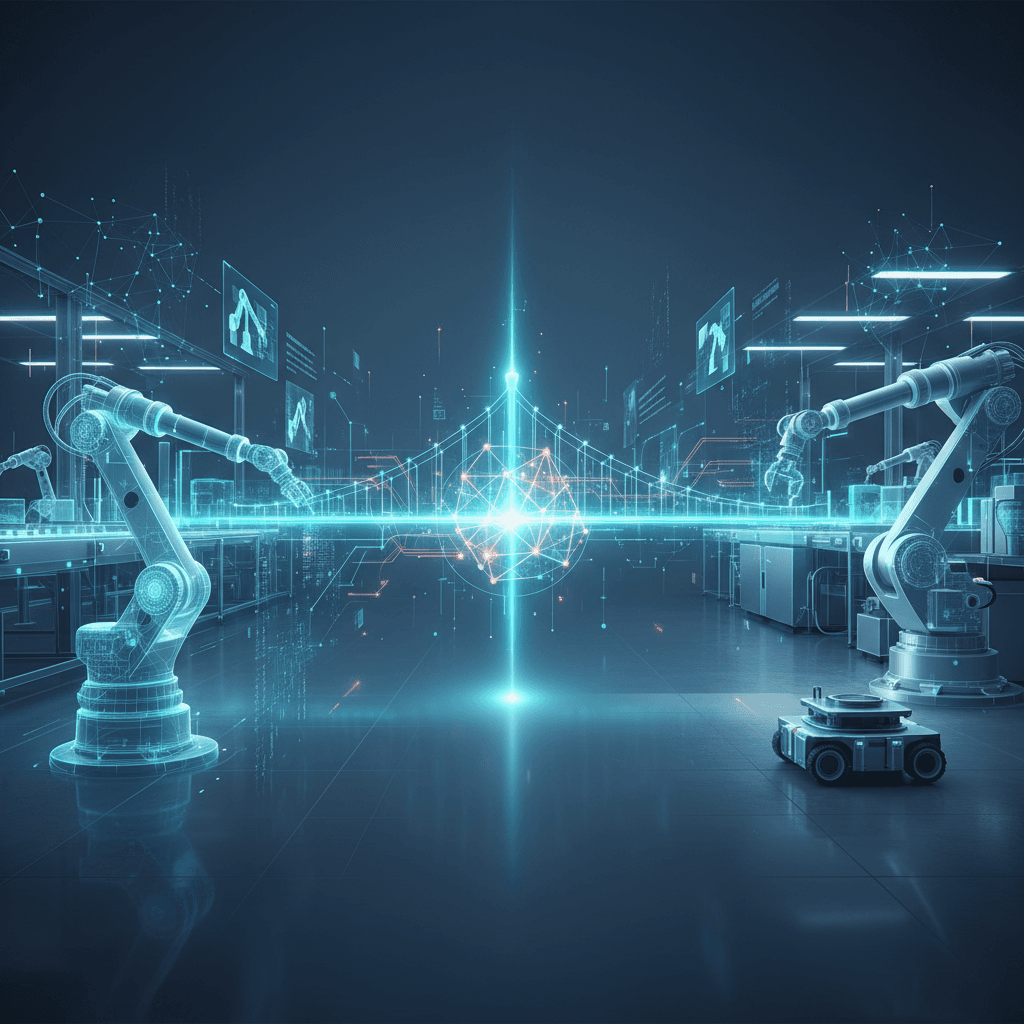
In a significant move to advance the enterprise adoption of autonomous systems, IT services firm HCLTech and semiconductor giant NVIDIA have launched a new Physical AI Innovation Lab in Santa Clara, California.[1][2][3] This dedicated facility aims to provide a space for global enterprises to explore, test, and ultimately scale industry applications of physical AI and cognitive robotics.[1][4] The collaboration deepens the strategic partnership between the two technology leaders, combining HCLTech's extensive experience in engineering and AI services with NVIDIA's powerful accelerated computing and AI platforms.[5][3] The lab is designed to bridge a critical gap in industrial automation: the transition from digital simulation to real-world deployment.[1][2][3] By creating a sandbox environment, the companies intend to empower businesses to develop and validate the complex autonomous systems required to transform their physical operations and gain a competitive edge.
The new Santa Clara lab, integrated into HCLTech's global network of AI Labs, offers a powerful combination of hardware and software designed to accelerate the development of physical AI.[3][4] At its core, the facility leverages NVIDIA's full technology stack, including foundational platforms such as NVIDIA Omniverse for creating and operating 3D digital twins, NVIDIA Isaac Sim for robotics simulation, and the NVIDIA Jetson platform for edge AI and robotics.[1][6][3][4] These are complemented by specialized platforms like NVIDIA Metropolis for vision AI applications and NVIDIA Holoscan for medical devices.[1][6][4] HCLTech integrates this powerful infrastructure with its own suite of proprietary physical AI solutions. These include VisionX for real-time video and sensor data intelligence at the edge, Kinetic AI for robotics and intelligent automation, IEdgeX, and SmartTwin, a solution for creating digital replicas of physical assets and processes.[1][5][2][4] This synergy allows enterprises to simulate robotic systems in high-fidelity virtual environments before deploying them in the real world, drastically reducing development costs, minimizing reliance on physical prototypes, and accelerating time to market.[6][7][8]
Physical AI represents the next frontier of artificial intelligence, moving beyond purely digital applications like language models to systems that can perceive, reason, and interact with the physical world.[1][9][10][11] This includes technologies like autonomous robots, self-driving cars, and smart cameras that can perform complex actions and orchestrate tasks in real-world environments.[1][9][10][11] The potential applications span nearly every industry, promising to revolutionize manufacturing, logistics, healthcare, public safety, and more.[12][13] In manufacturing, for instance, physical AI can enable smart factories where adaptive robots adjust to production changes in real-time, significantly boosting efficiency and quality control.[14] Likewise, in logistics and warehousing, autonomous robots can manage inventory and fulfillment, while in healthcare, surgical robots can assist with procedures requiring sub-millimeter precision.[13][15] The HCLTech and NVIDIA lab will focus on helping enterprises harness these capabilities, addressing the significant challenge of programming and validating these systems for complex, unpredictable environments.[12]
The launch of the Physical AI Innovation Lab underscores a shared vision between HCLTech and NVIDIA to drive the next wave of industrial transformation. Executives from both companies have highlighted the collaboration's potential to empower enterprises to reimagine their physical operations. Deepu Talla, Vice President of Robotics and Edge AI at NVIDIA, noted that while generative physical AI is set to revolutionize industrial automation, bridging the simulation-to-reality gap remains a critical challenge.[1][3][10][11] He emphasized that the HCLTech lab will provide the necessary environment for enterprises to develop, test, and validate the complex autonomous systems needed to turn AI ambitions into operational reality.[1][3][10][11] Vijay Guntur, Chief Technology Officer and Head of Ecosystems at HCLTech, described the collaboration as a pivotal step in strengthening the companies' synergy in the physical AI space.[1][3][10][11] He stated that the lab empowers enterprises to achieve breakthroughs in robotics, automation, safety, and operational intelligence, reinforcing a commitment to scaling AI-led transformation across industries.[1][3][10][11] HCLTech already serves several global organizations in this domain, including a major port company, a global high-tech player, and a European mining firm, indicating a clear demand for these advanced solutions.[1][4][10][11]
In conclusion, the establishment of the Physical AI Innovation Lab by HCLTech and NVIDIA in Santa Clara marks a crucial development for the enterprise AI sector. By providing a comprehensive platform that merges advanced simulation with real-world application development, the lab directly addresses the primary hurdles to deploying sophisticated autonomous systems at scale. This initiative is poised to accelerate innovation across a multitude of industries, enabling businesses to enhance productivity, improve safety, and create more resilient and sustainable operations. As physical AI continues to evolve from research concepts to practical, value-generating deployments, this collaboration will serve as a vital catalyst, equipping enterprises with the tools and expertise needed to navigate the complexities of this transformative technology and unlock its full potential in the physical world.
Sources
[2]
[5]
[9]
[10]
[11]
[12]
[13]
[14]
[15]