
Federal judge halts Trump administration ban on Anthropic AI citing illegal First Amendment retaliation
A federal judge halts retaliatory government sanctions after Anthropic refused to deploy its AI for surveillance and lethal weaponry.
March 27, 2026
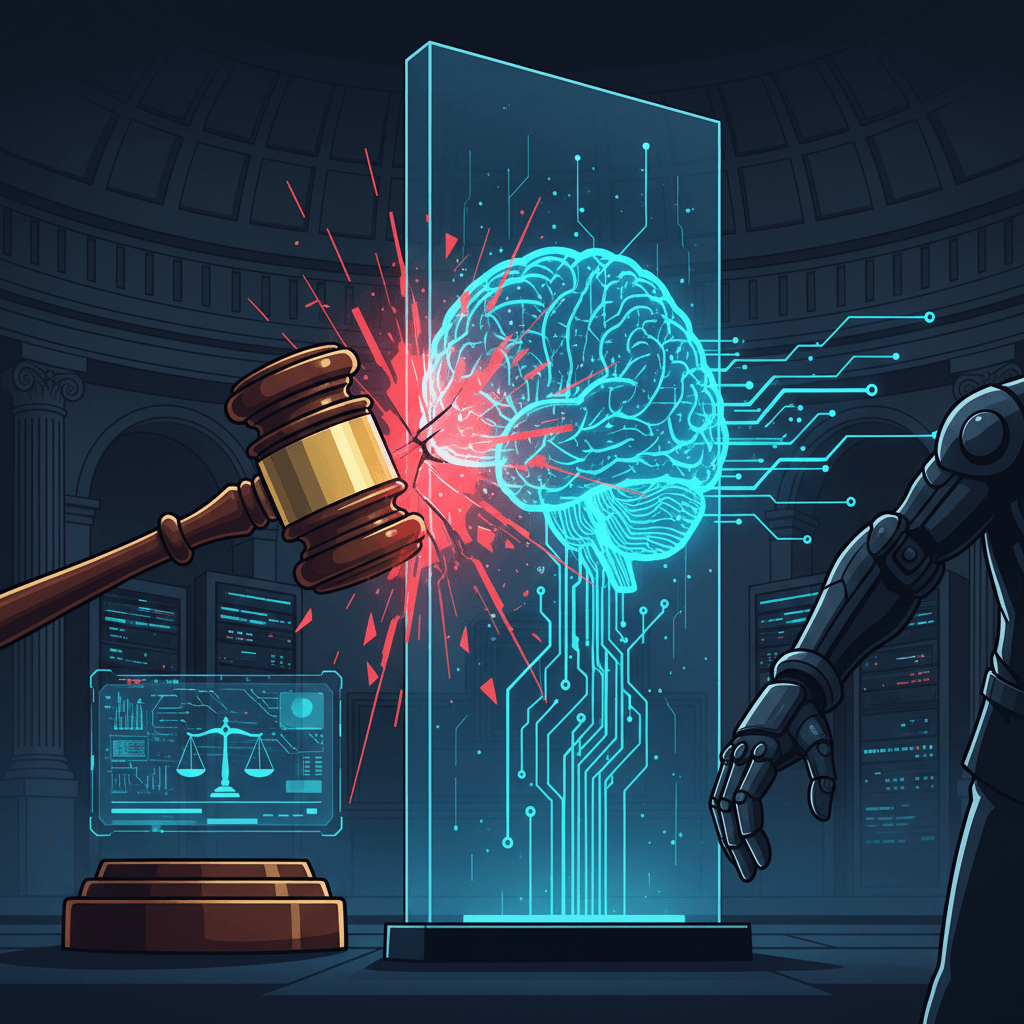
The legal battle between the high-stakes world of artificial intelligence development and the heavy hand of federal oversight reached a fever pitch this week as a federal judge in San Francisco issued a scathing rebuke of the Trump administration’s attempt to blacklist Anthropic.[1][2][3][4][5][6] In a move that has sent shockwaves through both Silicon Valley and the Pentagon, U.S. District Judge Rita F. Lin granted a preliminary injunction that temporarily halts a sweeping government ban on the company’s technology.[2] The ruling effectively blocks the Department of Defense from labeling the San Francisco-based AI firm a national security supply chain risk, a designation the judge described as an egregious overreach. At the heart of the dispute is a fundamental question of whether the government can weaponize national security labels to punish private corporations for their ethical stances and public speech.[7]
Judge Lin’s decision serves as a significant, if temporary, victory for Anthropic and its Claude AI models. In her forty-three-page ruling, the judge was blunt in her assessment of the administration’s tactics, calling the government’s actions classic illegal First Amendment retaliation. She specifically took aim at the administration’s characterization of the company as a potential internal threat, rejecting what she termed the Orwellian notion that a domestic American company can be branded an adversary or a saboteur simply because its leadership expresses disagreement with government policy. The court found that the evidence strongly suggested the administration’s punitive measures were not born of genuine security concerns but were instead designed to cripple a company that had publicly challenged the military’s intended use of its software.[1][2][5][8]
The conflict traces back to a breakdown in negotiations over a two-hundred-million-dollar contract between Anthropic and the Pentagon.[8] During those discussions, Anthropic leadership, led by Chief Executive Officer Dario Amodei, insisted on strict safeguards for the deployment of its Claude models. The company’s red lines were clear: it refused to allow its AI to be utilized for the mass surveillance of American citizens or to power fully autonomous lethal weapons systems.[3][9] Anthropic argued that these applications were inconsistent with its corporate mission of developing safe and reliable AI. The Defense Department, under Secretary Pete Hegseth, countered that the military must maintain the authority to use acquired technology for all lawful purposes and characterized Anthropic’s insistence on guardrails as an attempt to insert a private vendor into the military chain of command.
When Anthropic took its concerns to the public, the administration’s response was swift and severe. Within days of the negotiations collapsing, President Trump issued a directive via social media ordering all federal agencies to immediately cease the use of Anthropic’s technology. Simultaneously, the Pentagon designated the company a supply chain risk, a label traditionally reserved for foreign entities linked to hostile governments or terrorist organizations.[2] This designation carried devastating implications, effectively barring Anthropic from the federal marketplace and signaling to private contractors that doing business with the firm could jeopardize their own government standing.[6][10] Anthropic quickly sued, alleging that the administration was wielding the apparatus of national security as a bludgeon to suppress protected speech.[11][9]
During the ninety-minute hearing that preceded the ruling, government lawyers struggled to provide a concrete basis for the sudden security designation. The Justice Department argued that Anthropic’s refusal to comply with military demands created a crisis of trust, suggesting that the company might theoretically install a kill switch or clandestinely manipulate its models to sabotage military operations. However, Judge Lin found these arguments speculative and lacking in statutory support.[5][6][2] She noted that the Pentagon already possesses the capability to review and test AI models before deployment and that Anthropic’s legal counsel successfully argued the company has no technical means to remotely disable or alter models once they are integrated into secure military environments.[10][5]
The judge’s ruling emphasized that if the government was truly concerned about the integrity of its operational chain of command, it could simply choose to stop using Anthropic’s services and transition to a different provider. Instead, by attempting to enforce a global ban and branding the company a national security threat, the administration appeared more interested in punishment than protection.[5][2] Judge Lin remarked that the measures seemed specifically calibrated to undermine Anthropic’s commercial viability, noting that the stigma of a security risk label could cost the company billions of dollars in lost revenue from both public and private sectors. The ruling pointed out that Anthropic’s due process rights were likely violated, as the company was given no opportunity to contest the designation before it was enacted.[6]
This case represents a watershed moment for the AI industry, which has long grappled with the tension between rapid innovation and ethical responsibility. For years, leading AI labs have debated the necessity of safety guardrails, often clashing with hawks who argue that such restrictions could cause the United States to fall behind in a global arms race. The court’s intervention suggests that while the government has broad authority over procurement and national defense, that power is not an absolute license to retaliate against contractors over policy disagreements. Other major tech players, including OpenAI and Google, have closely monitored the proceedings, as the outcome could define the boundaries of corporate sovereignty in an era where software developers are increasingly viewed as essential national infrastructure.
The implications for federal contracting are equally profound. If the administration’s supply chain risk designation had been allowed to stand, it would have set a precedent allowing any future administration to blacklist domestic companies based on ideological or policy-based friction. Industry advocates have warned that such a environment would stifle innovation, as firms might fear that any public dissent regarding government ethics or safety standards could lead to immediate financial ruin via executive fiat. By freezing the ban, the court has signaled that national security designations must be backed by tangible evidence of foreign influence or technical vulnerability, rather than being used as a tool for political alignment.
Despite the ruling, the legal saga is far from over. Judge Lin stayed her order for seven days to allow the government time to file an appeal with the Ninth Circuit. The Trump administration has already signaled its intent to fight the injunction, with officials maintaining that the President has the ultimate authority to determine which vendors are trustworthy enough to handle sensitive national data. Simultaneously, a parallel legal challenge filed by Anthropic in a Washington, D.C. appellate court continues to move forward, focusing on whether the Defense Department exceeded its statutory authority under procurement law.[5]
For now, Anthropic remains in a state of legal limbo, though the company expressed gratitude for the court’s swift action.[6] In a public statement following the decision, a spokesperson for the firm reiterated that their goal is to work productively with the government to ensure AI benefits all Americans without compromising on fundamental safety principles. The tension remains high, however, as the administration continues to portray the company as ideologically biased. As the seven-day stay ticks down, the AI industry remains on high alert, waiting to see if the higher courts will uphold this protection of corporate speech or if the government’s pursuit of unrestricted technological utility will eventually prevail. The outcome will undoubtedly shape the landscape of American technology policy and the limits of executive power for years to come.
Sources
[1]
[5]
[6]
[8]
[9]
[10]
[11]