
China embeds AI into power grids to conquer volatile renewable energy.
The national strategy embeds AI into the grid and industry to master volatile renewables and achieve energy security.
December 23, 2025
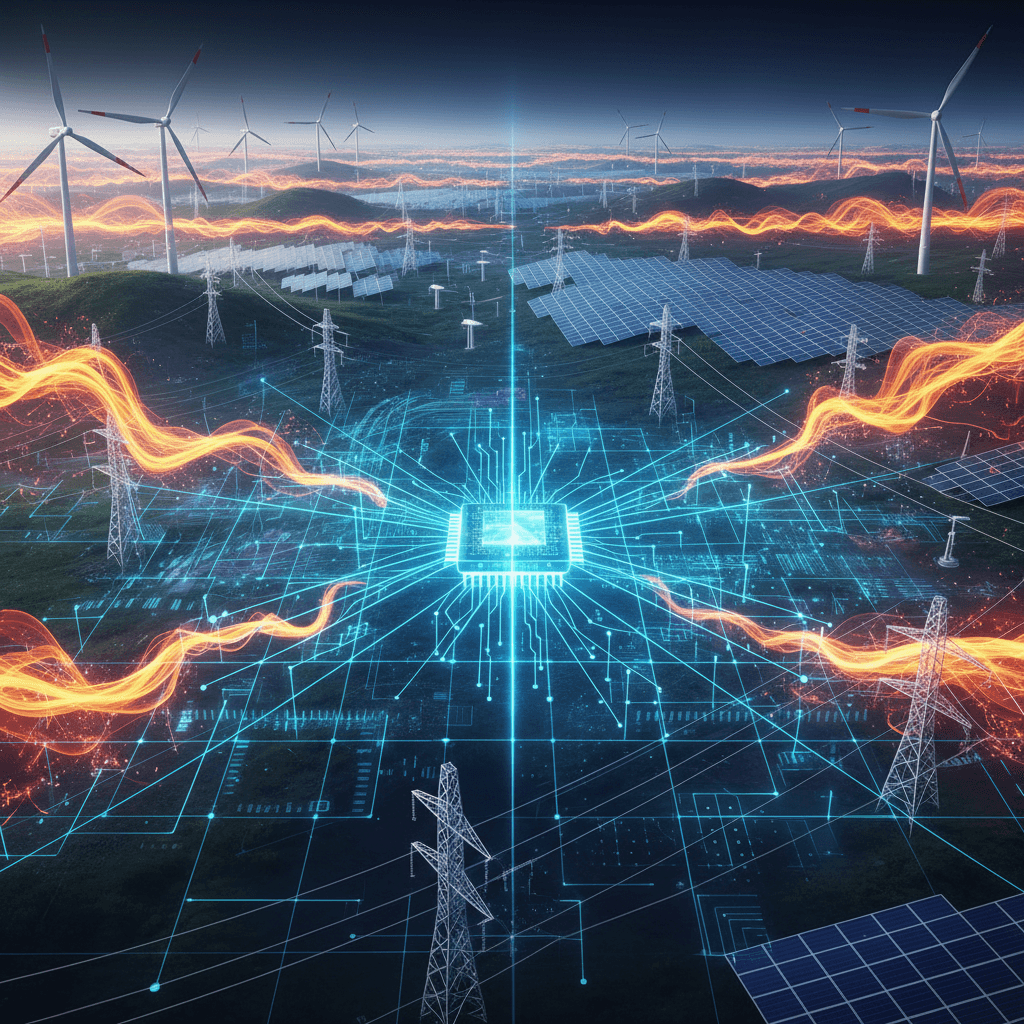
China is systematically embedding artificial intelligence into the core functions of its vast energy infrastructure, shifting the focus of AI development from purely consumer-facing applications to the foundational industrial systems that power the nation’s economy. This strategic pivot is driven by the country's dual imperative of achieving ambitious clean energy targets and enhancing national energy security through greater efficiency and self-reliance. The application of AI is no longer a theoretical policy aim but is rapidly becoming operational reality, exemplified in projects that span the energy lifecycle from production and transmission to consumption, fundamentally changing how power is managed in a system increasingly defined by variable renewable sources.
The challenge of integrating intermittent energy from sources like wind and solar is being directly addressed through specialized AI systems. A notable case is the Envision-owned factory in Chifeng, northern China, which produces green hydrogen and ammonia using electricity generated entirely from nearby wind and solar farms[1][2][3][4]. Because this facility runs on its own closed system, it faces the problem of stabilizing energy-intensive chemical production despite the volatile nature of its power input[1][2]. The solution is an AI-driven control system that acts as a conductor, continuously adjusting the plant's output to match real-time fluctuations in wind speed and sunlight[1][2]. This intelligent coordination allows production to ramp up automatically when conditions are optimal, maximizing the use of green power, and scaling back instantly to avoid strain when output drops, which the owner notes is key to maintaining high efficiency and production stability despite the volatility of renewable energy[1][2]. This plant also utilizes surplus renewable electricity to create and store liquid nitrogen, which further stabilizes the system by providing a steady energy reserve when needed[3][4].
Beyond singular industrial sites, the central government has formalized this drive through a national "AI+ energy" strategy, jointly issued by the National Development and Reform Commission and the National Energy Administration[5][6][7]. The plan sets concrete national goals, aiming to establish a basic innovation system for AI-energy integration by 2027 and to achieve a "world-leading level" in AI applications in the energy sector by 2030[5][8][6][7]. This strategy calls for the development and deployment of five or more large, industry-specific AI models to support the grid, power generation, coal mining, and oil and gas industries, along with launching at least ten replicable demonstration projects and exploring over 100 typical application scenarios[6][7][9]. The government's objective is to integrate AI across all energy scenarios, including power grids, renewable energy, nuclear power, and even the national carbon market[5][8][6][7].
The largest immediate impact of AI is being seen in grid management, which has become exponentially more complex as China continues to install more wind and solar capacity than any other country[1][10]. The core challenge is matching supply and demand in real-time to avoid outages, and AI is proving indispensable for this forecasting[2][6]. For instance, the China Southern Power Grid, which serves over 270 million people and where renewables account for nearly 40 percent of its installed capacity, has been using AI to assess supply-demand, check grid safety, and develop operational strategies[11]. This AI system has enabled planners to work ten times faster while achieving high prediction accuracy and has also proven capable of identifying over 90 percent of typical equipment defects, improving inspection efficiency by a factor of eighty[11]. Furthering this smart grid development, cities like Shanghai are experimenting with citywide virtual power plants that use a digital platform to link dozens of operators—including data centers, building systems, and electric vehicle chargers—into a single coordinated network[1][2]. One trial reduced peak demand by over 160 megawatts, equivalent to the output of a small coal plant[1]. By providing accurate forecasts of renewable output and electricity use, these systems allow operators to plan ahead, reducing reliance on coal-fired backup plants and allowing more green power to be absorbed by the grid[1][2][6].
This massive deployment of AI in the energy sector carries significant implications for the global and domestic AI industry. China’s strategy is notable for its focus on highly specialized, tailored AI solutions designed for specific industrial jobs, which contrasts with the significant US investment concentration on general-purpose large language models and cloud infrastructure[1][2]. This industrial approach is creating immense demand for specific types of hardware, software, and talent. Investment banks project that by 2030, nearly one-third of China's total AI spending will be directed toward building supporting facilities, including power, metals, and cooling systems[12]. This pivot has already translated into stock market activity, with Chinese investors increasingly looking beyond pure-play chipmakers to utilities and metals producers that form the physical backbone of the AI industry's power and infrastructure needs[12]. The rapid rise of AI data centers is fueling this demand, with one projection indicating that China's AI data centers could consume over 1,000 terawatt-hours of electricity each year by 2030, a figure roughly equivalent to Japan's current annual usage[1]. Paradoxically, while AI is being used to clean up the energy system, its own burgeoning consumption footprint must also be managed[1]. The government's push, which includes policies to optimize data-sharing mechanisms and foster versatile talent with expertise in both energy systems and AI applications, indicates a long-term commitment to integrating these technologies as a strategic force multiplier for its entire economy[5].