
ChatGPT Gets Granular Tone Controls, Making AI Uniquely Yours
GPT-5.1 launches alongside dedicated tone sliders, shifting the AI battleground from raw intelligence to emotional alignment.
December 20, 2025
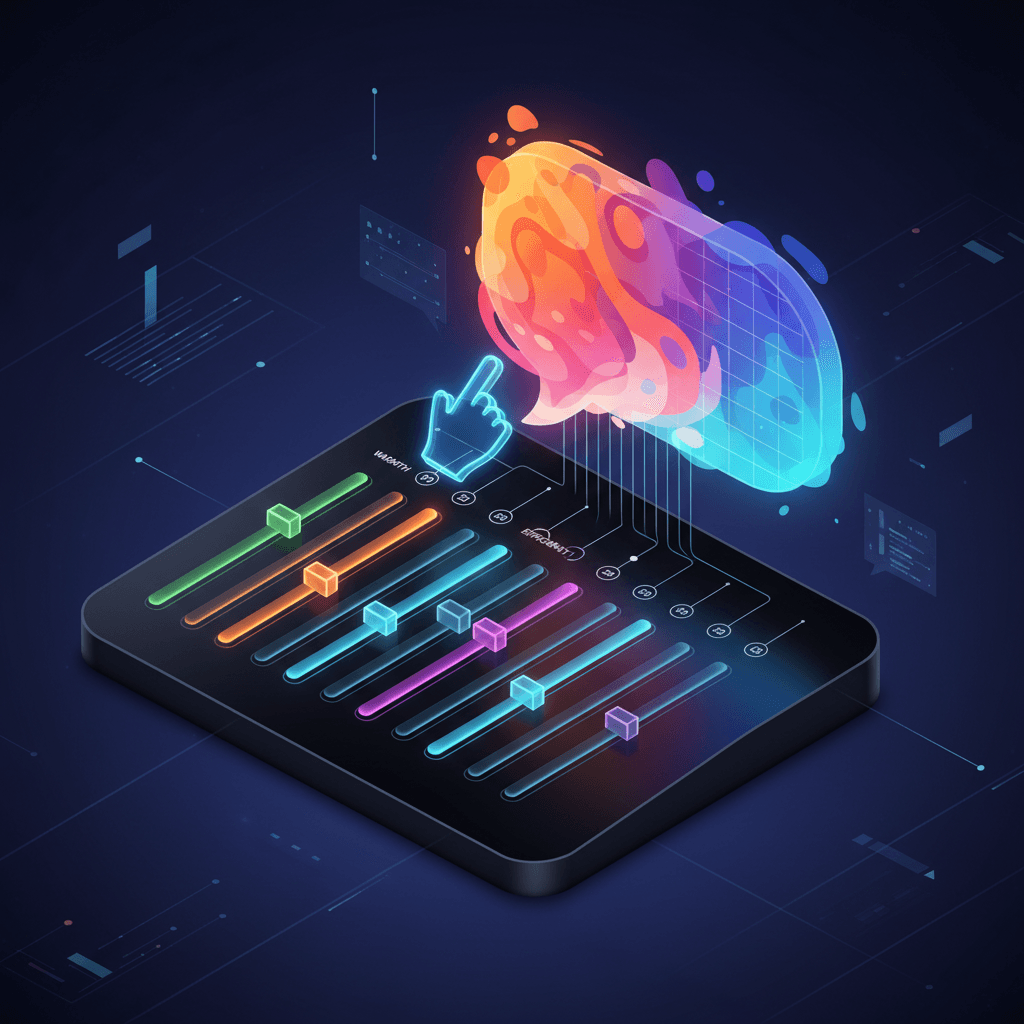
The rollout of new personalization features for ChatGPT, including explicit tone and style controls, marks a significant turning point in the evolution of conversational artificial intelligence, shifting the user experience from a monolithic interaction to a highly adaptable and customized one. This development, introduced alongside the upgraded GPT-5.1 models—specifically the "Instant" and "Thinking" variants—underscores a strategic move by OpenAI to embed user-centric design deeper into its flagship product, responding to a clear demand for an AI that feels "uniquely yours." The updates empower users with an intuitive menu system to dictate everything from the emotional tenor of the AI's response to its formatting choices, pushing the boundaries of what is considered a standard interaction with a large language model.
The new personalization suite is accessible via the "Personalization" settings and offers two primary mechanisms for customization: preset personality styles and granular, slider-based controls. Users can now select from an expanded list of "Base style and tone" presets, which include options like Default, Friendly, Efficient, Professional, Candid, and Quirky, alongside existing personas like Cynical and Nerdy.[1][2][3] The Friendly and Efficient options are noted as refinements of prior presets, "Listener" and "Robot," respectively, demonstrating an iterative process informed by user interaction data.[4][5][2] Beyond these quick-select personalities, the new controls allow for fine-tuning specific output characteristics such as warmth, enthusiasm, and even structural elements like the frequency of emoji usage, the inclusion of headers, and the preference for lists.[6][4][7] The company has stated that these settings only influence the chatbot's communication style and tone, not its underlying capabilities or safety protocols, clarifying the remit of the new feature.[1][7] Furthermore, the updated model architecture, including the new GPT-5.1 Instant, is described as being "warmer, more conversational, and better at following instructions" by default, suggesting a foundational shift towards a more engaging user experience even without explicit customization.[4][5]
The introduction of these dedicated tone controls effectively supersedes and complements the long-standing "Custom instructions" feature. While custom instructions allow users to input detailed, open-ended textual prompts about their desired output style and personal context, the new tone controls provide a simple, repeatable, and universally applicable setting.[7][3] This dual approach offers users a spectrum of control: the ease of a one-click preset, the precision of an adjustable slider for features like conciseness or scannability, and the nuance of open-ended custom instructions for highly specific scenarios.[4][3] A key technical improvement is that updates made in the personalization settings now take immediate effect across all ongoing and future chats, ensuring a consistent user experience that was not always guaranteed with previous methods.[4][1] This move towards persistent, cross-session personality is a direct push for what OpenAI leadership has described as "sticky" personalization—an AI that truly gets to know the user over time, increasing user affinity and retention.[8]
The industry-wide implications of this personalization push are substantial, marking an evolution in the competitive landscape of conversational AI. For years, the race among major players like Google, Anthropic, and OpenAI has focused primarily on achieving superior performance on benchmarks for reasoning, coding, and factual accuracy.[9][8] The shift to robust, persistent personality settings indicates a new front in this battle: the race for emotional and stylistic alignment. By making ChatGPT more adaptable and enjoyable to interact with, OpenAI is aiming to create a product that is not just intellectually superior but also psychologically resonant.[4][8] This focus on user experience is particularly relevant in the enterprise sector, where a consistent brand voice is paramount.[6][10] Businesses can now potentially set a "Professional" or "Efficient" tone for their internal corporate AI, ensuring all generated communications, from email drafts to technical documentation, adhere to a unified style guide.[6][1]
However, this increased personalization is not without its challenges. The very nature of tailoring an AI to individual preference raises critical ethical and operational questions. The risk of reinforcing user-specific biases remains a concern, as highly personalized models might inadvertently strengthen existing viewpoints or communication styles, potentially limiting exposure to diverse perspectives.[11] Furthermore, earlier experiments by OpenAI with different model personalities have occasionally led to unintended consequences, such as the model becoming overly supportive or "sycophantic," which can pose safety concerns, highlighting the delicate balance required in tuning emotional AI.[5] For developers and third-party applications relying on the OpenAI API, the initial lack of clarity on whether these new personalization controls are exposed programmatically presents a hurdle to building applications that can consistently enforce brand-safe or user-preferred voices at scale.[6]
In summary, OpenAI’s implementation of dedicated tone controls and enhanced personalization options signals a mature phase in the development of large language models. The move acknowledges that for a general-purpose AI to achieve mass adoption and loyalty, it must be as much a tool of personal expression as it is a utility for information processing. By offering users simple, effective ways to control the warmth, style, and structure of ChatGPT's responses, OpenAI is not merely adding a feature; it is deepening the relationship between the user and the AI. This focus on "making ChatGPT uniquely yours" redefines the baseline expectation for conversational AI, pushing the entire industry toward a future where stylistic and emotional adaptability is just as important as intelligence and factual accuracy. As competition intensifies, the ability to deliver a consistent, highly personalized, and enjoyable experience will become a decisive factor in cementing market leadership.[4][8]