
Boston Dynamics shifts Atlas from research spectacle to commercial industrial AI worker.
The electric workhorse, engineered for 50kg lifts, leverages embodied AI for its 2028 factory deployment at Hyundai.
January 6, 2026
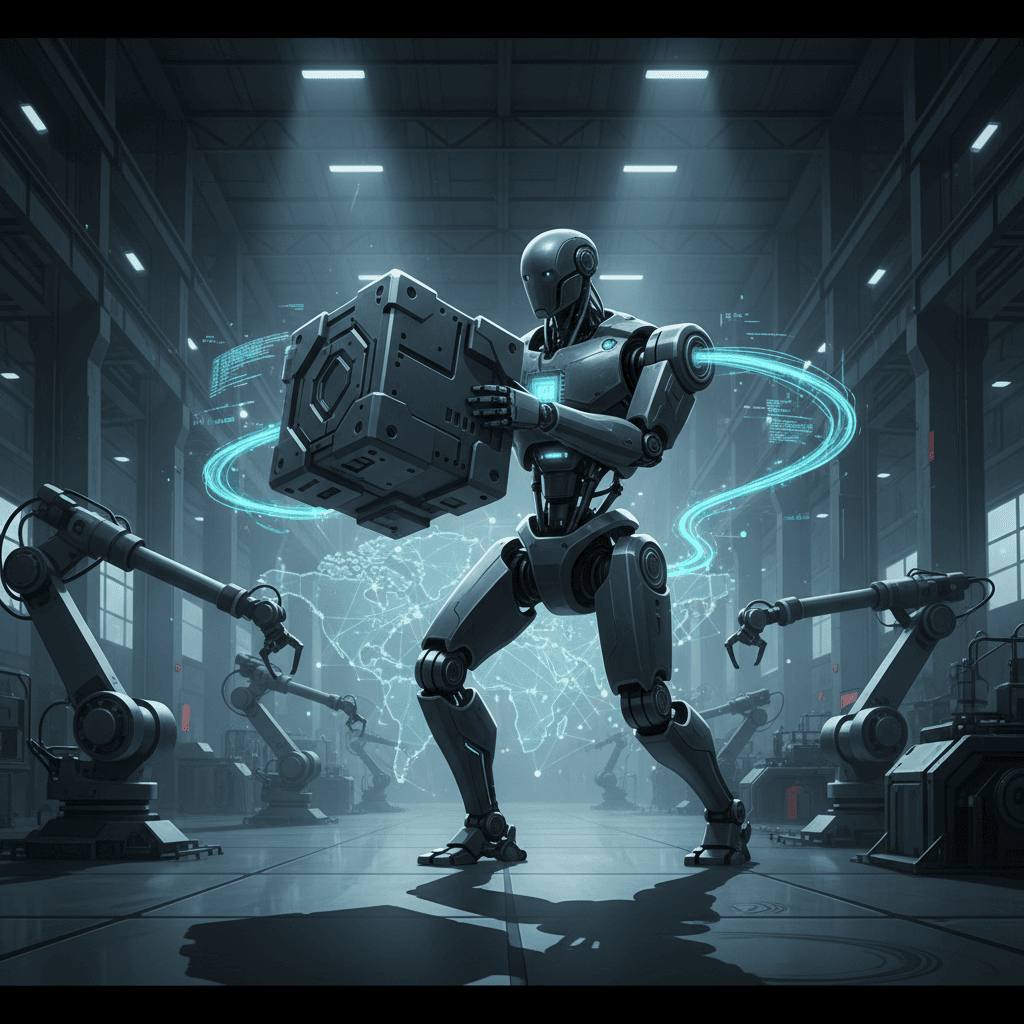
Boston Dynamics is moving its iconic Atlas humanoid robot out of the laboratory and onto the factory floor, signaling a pivotal shift from a research spectacle to a commercial product. This transformative step, announced recently alongside the reveal of a production-ready, fully electric model, marks a new era for both the company and the burgeoning field of physical AI[1][2][3]. The initial fleet of the new 1.9-meter-tall robot is scheduled to begin deployment in 2026 at the facilities of its majority shareholder, Hyundai Motor Group, a key move that solidifies the automotive giant's commitment to robotics as a foundational pillar of its manufacturing future[4][5][6].
The new, fully electric Atlas represents a significant break from its hydraulic predecessors, which were known for their impressive, yet complex and expensive, athletic feats[3][7][8]. The commercial model is engineered for the rigors of industrial environments, focusing on consistency, reliability, and utility, rather than simply dynamic performance[2]. The robot boasts substantial "superhuman" capabilities tailored for heavy-duty factory and warehouse work, including a reach extending up to 2.3 meters (7.5 feet) and the strength to lift up to 50 kilograms (110 pounds)[1][5][2]. It features a robust design capable of operating in a wide temperature range, from minus 20 to 40 degrees Celsius (minus 4 to 104 degrees Fahrenheit), and is highly water-resistant[1][5][9]. A key technical advancement is the incorporation of fully rotational joints, offering a 360-degree range of motion that allows the robot to move more efficiently than humans in tight industrial spaces[5][9]. This focus on industrial specifications, paired with a commitment to producing up to 30,000 units per year by 2028 from a new factory, positions Atlas as a leader in the next wave of industrial automation[5][6][3].
The commercial viability of Atlas is fundamentally tied to its artificial intelligence and learning capabilities, moving away from manually coded algorithms to advanced machine learning and foundation models[2][10]. Boston Dynamics is leveraging embodied AI, including a major partnership with Google DeepMind, to train the robot using large-scale simulation and real-world demonstrations[1][2][10]. Engineers employ methods like supervised learning via virtual reality teleoperation and motion capture suits, generating vast amounts of data to teach Atlas complex tasks[10]. This system allows for skills learned in simulation to be instantly scaled and uploaded to every physical robot, streamlining deployment and maintenance[10]. The goal is to create an enterprise-grade robot capable of performing a wide array of industrial tasks, from material handling and order fulfillment to complex component assembly, initially within the automotive sector[1][2][10]. The new AI architecture also enables the robot to learn new tasks quickly and adapt autonomously to dynamic, unstructured environments, a crucial differentiator from traditional, fixed-arm industrial robots[1][8].
Hyundai Motor Group’s phased deployment plan for Atlas provides a clear roadmap for the commercial integration of humanoid robots[5][6]. While the first fleets ship in 2026 to the company's Robotics Metaplant Application Center (RMAC) for training, the actual factory floor application will begin in 2028 at the Hyundai Motor Group Metaplant America (HMGMA) in Savannah, Georgia[5][6][11]. Initially, Atlas will be assigned to lower-risk, repetitive tasks like parts sequencing and classification, which offer measurable gains in safety and quality[5][6]. By 2030, the robot’s role is planned to expand to more physically demanding and high-risk operations, including component assembly, heavy-load transportation, and precision work that reduces physical strain on human workers[5][6][9]. This strategic timeline underscores a cautious, data-driven approach, framing the deployment not as a replacement for human labor but as a tool for improving worker safety and overall product quality[10][9]. Hyundai views humanoid robots as the largest future segment of the "Physical AI" market, a market Goldman Sachs predicts could reach $38 billion by 2035, and is positioning itself to become a leader in this domain[11][12].
The commercial launch of Atlas is more than a product release; it is a seminal moment for the entire AI and robotics industry, marking the true entrance of the dynamic humanoid form factor into the mass-market industrial domain[3]. It validates years of research and investment, including the nearly $4.6 billion invested in humanoid developers in a recent year, and sets a high benchmark for competitors[11]. The collaboration with Google DeepMind for AI foundation models and the full integration with Hyundai's massive manufacturing ecosystem establish a potent, vertically integrated platform for development and scaling[1][2][12]. This move shifts the narrative from captivating viral videos of dancing robots to the tangible economic and operational impact of an autonomous workforce capable of navigating and manipulating the world designed for humans[10][8]. The successful deployment in Hyundai's factories will serve as a crucial test case, likely accelerating the adoption of similar physical AI systems across logistics, manufacturing, and eventually, other complex human environments worldwide[1][8].