
Army Creates Dedicated Officer Track for Artificial Intelligence and Machine Learning.
This foundational doctrinal shift establishes an internal cadre of uniformed experts to operationalize automated battlefield decision-making.
January 2, 2026
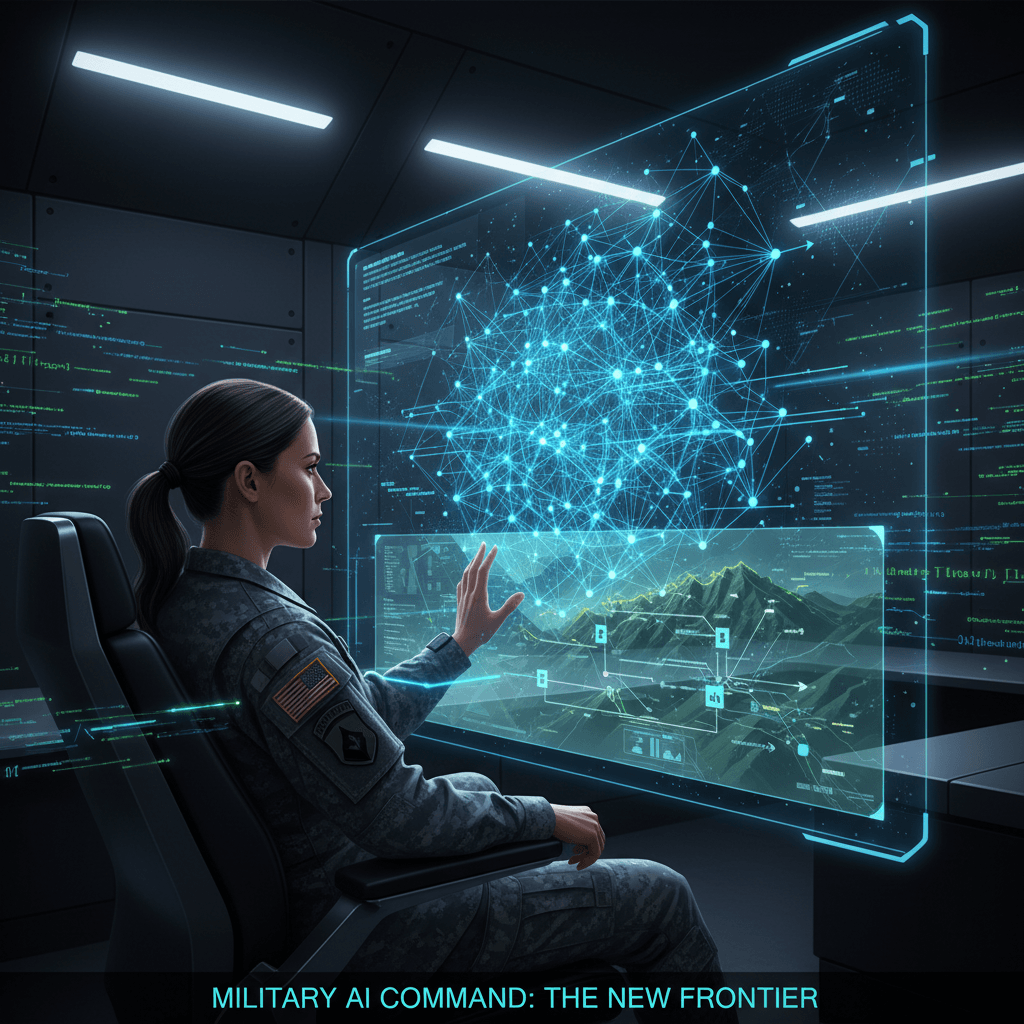
The United States Army has formalized a major pivot toward technological self-sufficiency in modern warfare with the creation of a dedicated career track for artificial intelligence and machine learning officers. This strategic institutionalization of technical expertise is designed to embed AI-native leadership directly into warfighting functions, signaling a deep and lasting commitment to a data-centric force. The new specialization, designated as Area of Concentration 49B for Artificial Intelligence/Machine Learning Officer, aims to build an in-house cadre of uniformed experts capable of developing, deploying, and managing cutting-edge intelligent systems across the full spectrum of military operations.
The move is a deliberate response to the escalating global AI arms race and the recognition that future military dominance hinges on the speed and precision of automated decision-making. According to Army spokespersons, the initiative is a "crucial step" in transforming the force into one that can "outthink, outpace, and outmaneuver any adversary." The strategic goal is to close the widening gap between the Army's operational needs and its existing technical talent base, ensuring that sophisticated AI models are integrated effectively, rather than remaining theoretical concepts or niche laboratory projects. This effort is not merely a staffing change but a foundational doctrinal shift, prioritizing the integration of AI-driven capabilities into the very fabric of military planning and execution.[1][2][3]
The implementation of the 49B specialization begins with a focused recruitment effort via the Voluntary Transfer Incentive Program, or VTIP, for existing officers. While the transfer program is open to all eligible officers, the Army has stated that candidates with advanced academic and technical backgrounds in fields such as computer science, data analytics, and machine learning will be particularly competitive. The officers selected for this new pathway are expected to undergo rigorous, graduate-level training, providing them with hands-on experience in the entire lifecycle of AI systems, from their creation to their deployment and maintenance in operational environments. The initial cohort of officers is scheduled to begin the transition in early, with formal reclassification expected to be complete by the end of the fiscal year. This accelerated timeline underscores the urgency the Army places on cultivating this specialized internal workforce.[4][1][2][5][6] The Army is also exploring the possibility of establishing a parallel track for warrant officers, a role focused on deep technical proficiency, which would further deepen the technical bench at lower echelons of command.[4][1]
The responsibilities of these new AI officers will span the most critical functions of modern warfare. Their primary role is to operationalize advanced technology, applying their expertise to accelerate battlefield decision-making, where real-time data analysis is paramount to gaining an advantage in complex environments. Beyond the combat zone, AI/ML officers will be tasked with streamlining logistics, optimizing supply chain and maintenance operations, and improving the accuracy of intelligence and targeting systems. A major component of their work will be supporting the fielding and management of robotics and autonomous systems, essentially serving as the human-in-the-loop experts who manage the next generation of automated battlefield platforms.[1][2] This focus on integration at every level reflects a broader Department of Defense trend, following recent initiatives such as the establishment of the Army Artificial Intelligence Integration Center (AI2C) and the Pentagon's launch of GenAI.mil, a centralized platform for commercial AI tools.[7][5]
For the technology and defense industry, the creation of the 49B AOC has significant implications, particularly in the ongoing "talent war" between the private sector and government. Historically, the military has struggled to compete with the lucrative compensation and fast-paced culture of Silicon Valley for top AI engineers and data scientists. By formally creating a career path with advanced training, the Army is attempting to appeal to a unique segment of the talent pool: individuals who are driven by a sense of mission and the opportunity to work on complex, high-stakes problems that are often legally or ethically restricted in the civilian world.[8] Defense analysts suggest this is a necessary internal investment, acknowledging that while the DoD spends significantly on AI contracts with companies like Palantir and has forged partnerships for pilot programs with firms like OpenAI, it cannot rely solely on external contractors for core operational expertise.[9]
While the new career field is an attempt to cultivate talent internally, it will likely deepen the co-dependence between the defense sector and civilian tech. The 49B officers will serve as a crucial interface, acting as the intelligent customers, technical managers, and operational integrators of systems developed by private sector defense contractors. This will likely lead to greater scrutiny of the ethical implications of AI in warfare, as these uniformed experts will be responsible for ensuring that AI-enabled systems adhere to international humanitarian law and the rules of engagement, balancing technological capability with human oversight and ethical considerations.[10][11] The successful implementation of the 49B AOC will be a bellwether for the future of the American military, marking the institutionalization of AI not as a separate capability, but as a core leadership function essential for maintaining a decisive edge in an era of rapid technological change.[1][2][3]