
Anthropic taps Elon Musk’s xAI supercomputer to sustain eighty-fold growth and train Claude 4
Faced with eighty-fold growth, Anthropic strikes an unlikely alliance with Elon Musk to secure critical AI compute power.
May 7, 2026
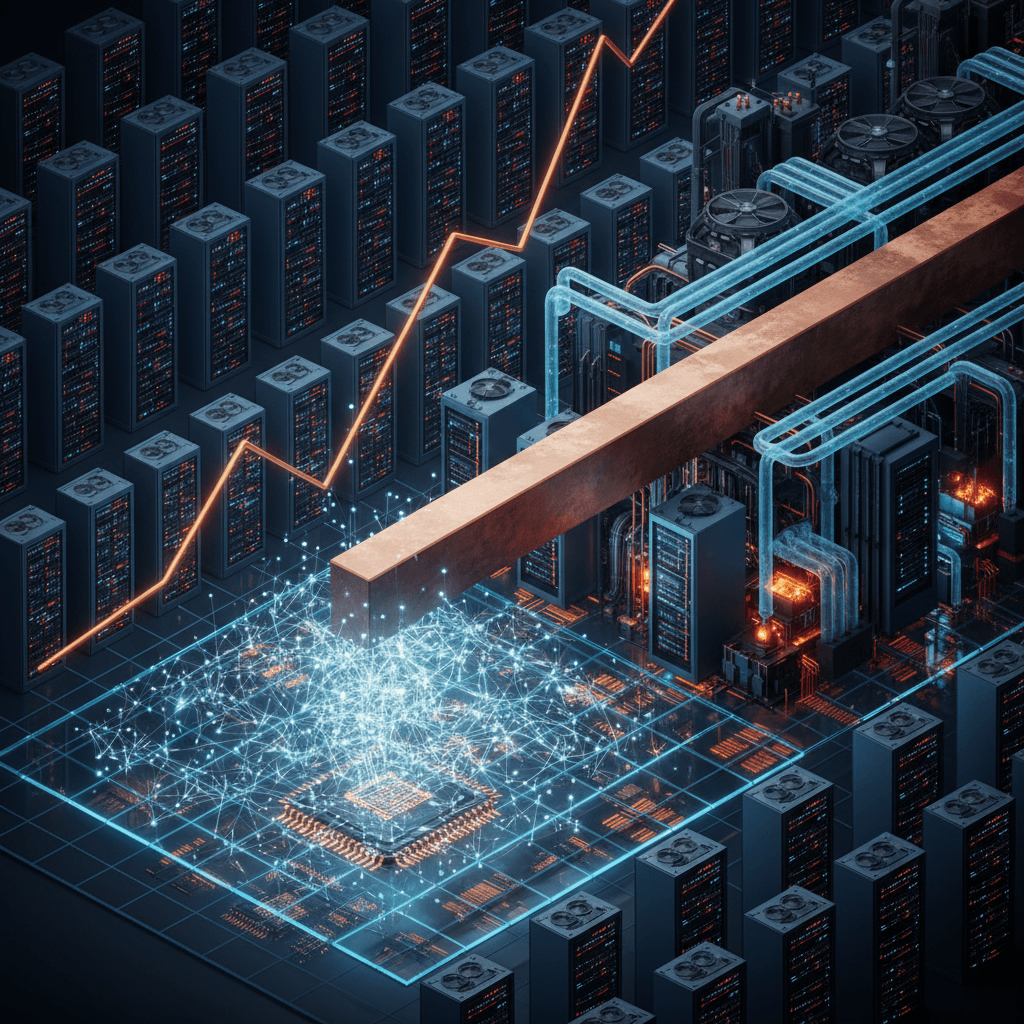
The rapid escalation of the generative artificial intelligence sector has forced a series of unlikely alliances, but few are as strategically jarring as the recent move by Anthropic to secure massive compute power from Elon Musk’s xAI infrastructure. Anthropic, a company founded on the principles of AI safety and long considered the more reserved, ethically focused counterpart to OpenAI, has experienced an unprecedented eighty-fold surge in growth over the past year. This exponential rise in demand for its Claude models has not only tested the limits of the company’s internal engineering but has effectively exhausted the immediate capacity of its primary cloud backers, Amazon and Google. Faced with a critical shortage of the specialized chips necessary to train its next generation of models and sustain its ballooning user base, Anthropic has turned to the Colossus supercomputer, a massive data center cluster managed by a man who has frequently and publicly criticized the very foundations upon which Anthropic was built.
The catalyst for this shift lies in the sheer volume of Anthropic’s scaling and the speed at which it occurred. Since the release of the Claude 3 family of models, which many benchmarks placed at the top of the industry hierarchy, the company has transitioned from a high-potential research lab into a commercial powerhouse. Internal reports suggest that the usage of Anthropic’s API and its consumer-facing products increased by eighty times in a matter of months, a trajectory that caught even its most optimistic investors off guard. While Amazon Web Services and Google Cloud remain Anthropic’s primary strategic partners, having collectively committed billions of dollars in investment, the physical reality of data center expansion has lagged behind the company’s software success. Amazon and Google are currently juggling their own internal AI hardware needs alongside a massive backlog of enterprise clients, leaving Anthropic in a precarious position where its growth was outstripping the available hardware allocations within the ecosystems of its own minority owners. The bottleneck is not merely a matter of financial capital, but of the physical availability of high-end semiconductors and the electrical infrastructure required to power them.
The solution to this capacity crisis arrived in the form of Colossus, the massive supercomputer cluster located in Memphis, Tennessee, which was built with record-breaking speed by Musk’s xAI venture. Housing approximately 100,000 Nvidia H100 GPUs, Colossus currently represents one of the densest and most powerful concentrations of AI compute power on the planet. For Musk, leasing this capacity to a direct competitor like Anthropic is a pragmatic pivot that underscores the shifting economics of the AI industry. While xAI utilizes the facility for the development of its own Grok models, the sheer scale of the Memphis site allows for a multi-tenant approach that generates immediate, substantial revenue from the industry’s desperate hunger for silicon. For Anthropic, the appeal of Colossus is purely logistical. The facility provides the raw, concentrated power needed to begin the rigorous training cycles for Claude 4, a model that is expected to require a magnitude of compute far exceeding that of its predecessors. By tapping into this infrastructure, Anthropic is effectively bypassing the construction delays and power grid constraints that have slowed the expansion of more traditional hyper-scalers.
This arrangement highlights a profound irony and a significant strategic realignment within the Silicon Valley landscape. Anthropic was famously founded by former OpenAI executives who departed due to concerns over the commercialization and safety protocols of their former employer. Musk, similarly, was a co-founder of OpenAI who later became its most vocal critic, frequently accusing the industry of moving too fast toward potentially dangerous artificial general intelligence. Yet, the pressure of the global AI race has forced these parties into a marriage of convenience. Anthropic’s need to remain competitive against OpenAI’s upcoming projects has necessitated a focus on raw scale that occasionally clashes with its original safety-first branding. The move into the Colossus data center suggests that in the current environment, the ability to secure H100 or Blackwell-class chips has become a more important strategic variable than ideological alignment or even corporate lineage. This is a clear signal that the AI industry is entering a phase where the physical layer of the stack—the data centers and the chips—holds ultimate leverage over the software layer.
Beyond the immediate technical requirements, the deal is heavily influenced by Anthropic’s looming trajectory toward a public offering. To maintain its multi-billion-dollar valuation and justify a successful IPO, Anthropic must demonstrate that it is not merely a research entity but a scalable utility capable of competing at the highest levels of the industry. Any plateau in model performance due to infrastructure bottlenecks would be catastrophic for investor confidence and market share. By securing a massive, dedicated block of compute through the xAI deal, Anthropic is signaling to the market that it has the hardware runway to continue its aggressive development cycle without being entirely beholden to the hardware roadmaps of Amazon or Google. This move also sets a precedent for the industry, suggesting that the compute wars are entering a phase where the traditional boundaries between cloud providers, model builders, and hardware owners are blurring. The AI sector is witnessing the emergence of a secondary market for high-end compute, where even the fiercest rivals may find themselves relying on one another’s physical assets to survive and innovate.
The implications for the broader AI ecosystem are significant. As Anthropic begins to offload portions of its training and inference workloads onto the Colossus framework, the industry is seeing a decoupling of infrastructure from corporate identity. The era of localized, proprietary infrastructure is giving way to a more fluid distribution of power based on who can build and power the largest clusters the fastest. Anthropic’s transition from a safety-focused lab to a growth-driven giant highlights the inescapable gravitational pull of scaling laws, which dictate that more data and more compute are the primary drivers of progress. While the partnership with Musk may seem contradictory to Anthropic’s origins, it is a testament to the company’s commitment to staying at the vanguard of the field. In the race for advanced machine intelligence, the only thing more dangerous than a rival’s infrastructure is the total lack of any infrastructure at all.
As the industry moves forward, the success of this deal will likely be measured by the performance of Anthropic's next-generation models. If Claude 4 manages to bridge the gap toward true reasoning and agentic capabilities, the decision to leverage Musk's infrastructure will be viewed as a masterstroke of crisis management. However, it also raises questions about the long-term dependency of AI startups on a limited number of massive hardware clusters. If the power to train the world's most advanced models is concentrated in the hands of a few entities capable of building facilities like Colossus, the competitive landscape of the 21st century may be defined less by code and more by the ability to manage the massive energy and cooling requirements of the Tennessee Valley and beyond. Anthropic's 80x growth has not just pushed the company into a new data center; it has pushed the entire industry into a new era of infrastructure-centric competition.