
Anthropic launches Claude Cowork enabling AI agents to control desktop software for all paid subscribers
Anthropic’s agentic desktop platform enters general availability, allowing users to automate complex workflows across macOS and Windows with enterprise-grade controls.
April 9, 2026
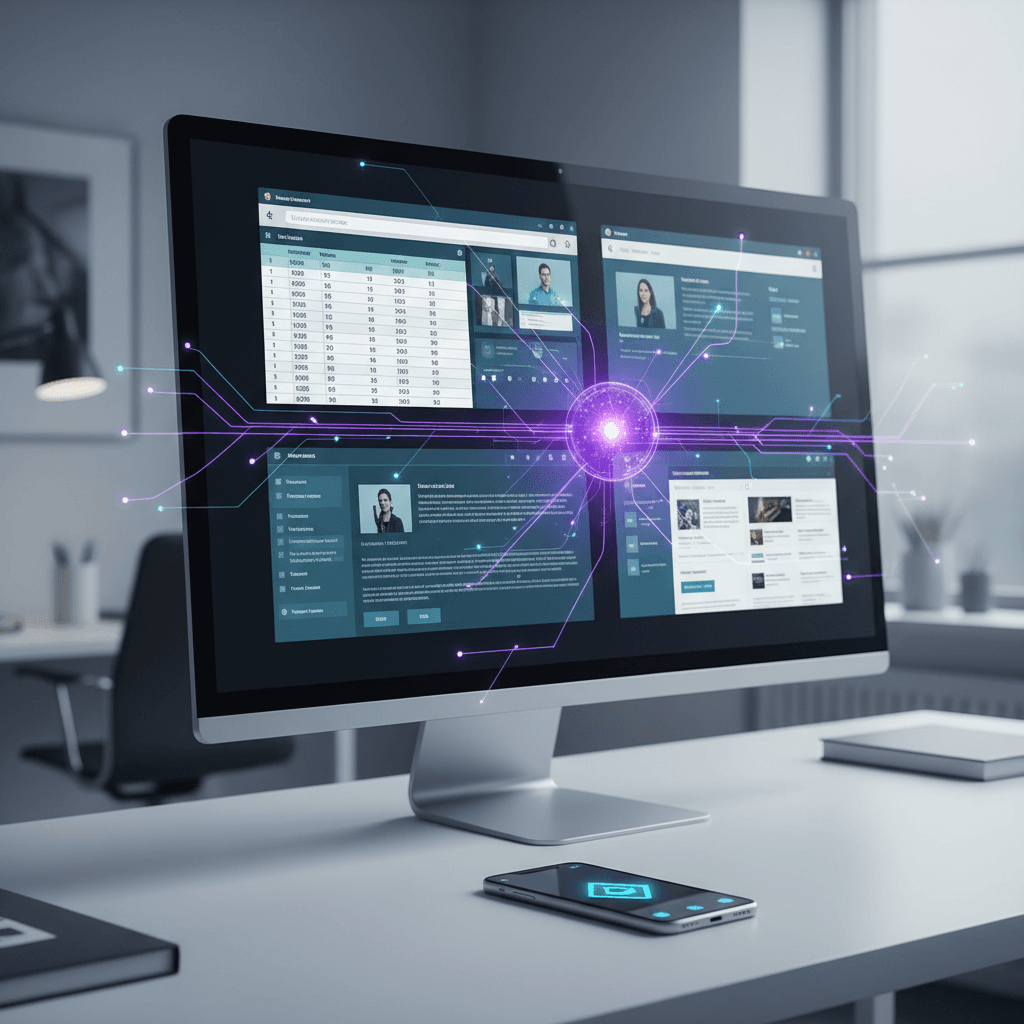
Anthropic has announced a significant expansion of its agentic desktop platform, Claude Cowork, moving the tool out of its research preview phase and making it generally available to all paid subscribers on both macOS and Windows. This rollout marks a critical milestone in the transition of large language models from conversational interfaces to active digital collaborators capable of navigating a computer’s operating system.[1] By bringing these capabilities to Pro, Team, and Enterprise plans, the company is signaling its intent to move AI deeper into the corporate environment, providing users with a system that can not only generate content but also execute complex, multi-step workflows across various native applications.
The core of this update is the integration of advanced computer-use capabilities, allowing the AI to interact with the desktop environment in a way that mimics human behavior.[1] Unlike traditional integrations that rely on rigid application programming interfaces, the new system can interpret screen pixels to identify buttons, text fields, and menu items. This "pixels-over-plugins" approach allows the assistant to operate software that lacks formal AI connectors, effectively turning the entire desktop into a programmable workspace.[1] When a user assigns a task, such as organizing a directory of receipts into a formatted spreadsheet or conducting cross-platform research, the assistant can open browsers, navigate local folders, and toggle between apps to complete the objective autonomously.
To ensure this level of control remains secure, the platform operates within an isolated virtual machine sandbox. This architecture is designed to prevent the AI from making unauthorized system changes while providing a safe environment for executing scripts and handling local data. A new feature called Dispatch further extends this functionality by allowing users to trigger desktop workflows remotely from their mobile devices. This enables a professional to initiate a research session or an automated report generation while away from their desk, returning later to find the completed deliverable waiting on their machine.[2]
Recognizing the hurdles to corporate adoption, Anthropic has introduced a comprehensive suite of organizational controls designed for IT administrators and department heads. These features address the primary concerns of enterprise security, governance, and budget management. New role-based access controls allow organizations to manage user permissions through existing identity providers, ensuring that only authorized personnel can access specific agentic features. This is bolstered by granular connector controls, which allow administrators to define exactly which applications and data sources the AI can interact with on a team-by-team basis.
Financial transparency has also been prioritized through the introduction of group spend limits and centralized usage analytics. Organizations can now set strict budgets for specific departments to avoid the unpredictable costs often associated with high-frequency AI usage. A new Analytics API provides a detailed view of per-user activity, skill invocations, and tool engagement, offering insights into how different teams are integrating the assistant into their daily routines. Furthermore, the platform now supports OpenTelemetry, allowing enterprises to pipe event logs directly into established security and observability pipelines such as Splunk or Cribl.[3] This level of oversight is intended to mitigate the risks of "shadow AI" and provide the audit trails necessary for regulated industries.
The release also highlights a deepening of the AI ecosystem through a strategic integration with Zoom and the expansion of the Model Context Protocol. The new Zoom connector enables the assistant to participate in the collaborative lifecycle of a meeting by automatically generating summaries, extracting action items, and syncing transcripts directly into active project folders. This functionality is part of a broader push toward role-specific "plugins" that bundle custom commands and connectors tailored for marketing, finance, legal, and engineering professionals. Instead of manually configuring every tool, users can install pre-configured marketplaces that align with their specific job functions.
The partnership with Zoom demonstrates a shift toward more seamless communication-to-action loops. By leveraging the Model Context Protocol, the assistant can maintain a consistent context across different software environments, ensuring that a decision made during a video call can immediately trigger a file update or a coding task without the need for manual copy-pasting. This connectivity effectively positions the assistant as a central nervous system for digital work, bridging the gap between siloed communication tools and the actual production of work.
The expansion of these agentic features comes at a time of intense competition within the AI industry, as major labs vie for dominance in the "AI sidekick" category. While rivals have often focused on web-based agents or specialized coding tools, this latest move suggests a focus on the broader knowledge worker who operates across a diverse array of desktop software.[1] The ability for an AI to operate as a "personal executor" represents a shift in the fundamental utility of the personal computer.[1] Rather than being a passive tool that requires constant human input for every click and keystroke, the PC is evolving into a collaborative environment where the human provides high-level intent while the AI handles the mechanical execution.
Industry analysts have noted that this move could have profound implications for the traditional software-as-a-service market. As AI agents become more capable of navigating any interface, the necessity for specialized, single-purpose software integrations may diminish. If an assistant can perform tasks by simply "seeing" and "interacting" with the screen, the moat protected by proprietary APIs and ecosystem lock-in could begin to erode.[1] This phenomenon is already forcing software providers to rethink their value propositions, moving away from simple task facilitation toward more deeply integrated AI-native experiences.[1]
Security and reliability remain at the forefront of the discussion as these agents gain more autonomy. To address potential risks, the platform includes explicit permission prompts for high-stakes actions and allows users to halt the AI’s movements in real-time.[1][2] This "human-in-the-loop" model is a tactical choice to build trust among users who may be wary of an automated system controlling their keyboard and mouse. The company emphasizes that while the system is highly capable, it is designed to serve as a partner that enhances human productivity rather than a replacement for human judgment.
The general availability of these desktop agents signals a transition into an era where the distinction between "using software" and "collaborating with AI" becomes increasingly blurred.[1] For the enterprise, the introduction of robust administrative controls provides the necessary infrastructure to scale these tools beyond experimental pilots. As professionals across various industries begin to offload repetitive digital labor to their AI counterparts, the long-term impact on workforce productivity and software design is likely to be substantial. The focus has moved beyond what an AI can say to what an AI can do, setting a new standard for the next generation of professional computing.