
Alibaba's PANDA AI Turns Routine CT Scans Into Life-Saving Screeners
Deep learning uses routine, non-contrast CT scans to detect early, treatable pancreatic cancer human eyes miss.
January 5, 2026
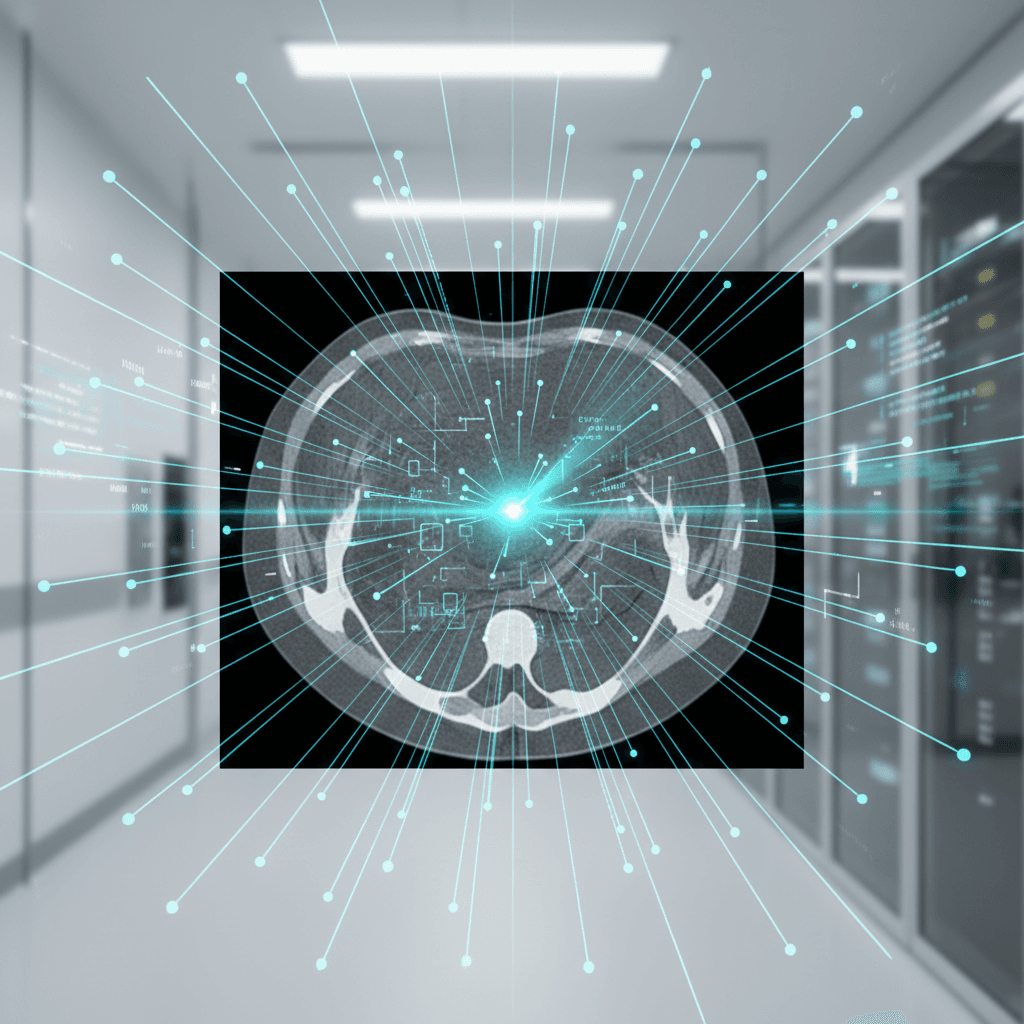
A quiet revolution is underway in diagnostic medicine, driven by artificial intelligence that has demonstrated an unprecedented ability to detect one of the world's deadliest malignancies at its earliest, most treatable stage. Pancreatic cancer, long known as a silent killer with a tragically low survival rate, is now meeting its match in an advanced deep learning tool developed by researchers at Chinese tech giant Alibaba. The system, known as PANDA, short for Pancreatic Cancer Detection with Artificial Intelligence, is proving capable of spotting tiny tumors in routine computed tomography scans that even highly experienced radiologists often miss, opening a new frontier in population-scale cancer screening.
The breakthrough is particularly significant because PANDA achieves its results using non-contrast CT images, which are standard, lower-radiation scans routinely performed for a wide range of unrelated medical issues, from kidney stones to pneumonia[1][2]. Traditional screening for pancreatic ductal adenocarcinoma, or PDAC, the most common and aggressive form of the disease, is severely limited because its symptoms typically do not manifest until the cancer is already advanced and often inoperable[3][1]. Furthermore, the specialized scans needed to confirm its presence, known as contrast-enhanced CTs, require an injected dye and higher radiation exposure, making them unsuitable for widespread, asymptomatic screening[4]. PANDA overcomes this dilemma by being trained to recognize the subtle shifts in grayscale intensity on non-contrast scans, patterns that are invisible to the human eye but which the deep learning model interprets as early-stage lesions[5].
The impact of this technological capability is already being felt in clinical settings. At the Affiliated People's Hospital of Ningbo University in eastern China, where the tool has been used in a clinical trial, physician Zhu Kelei has stated that the AI has definitively saved the lives of patients whose scans were flagged only by the PANDA system[6][4]. A compelling case in point involves a retired bricklayer who came in for a routine diabetes check-up and had an unremarkable, low-radiation CT scan[4]. Days later, PANDA flagged his scan, and follow-up examinations confirmed an early-stage pancreatic tumor which was successfully removed before he had experienced any symptoms[4][7]. This scenario—catching cancer when it is still curable—is the ultimate goal for diseases like PDAC, which currently has a five-year relative survival rate of just 10 to 13 percent[8][1][9].
The rigorous validation of PANDA’s performance provides the data underpinning this optimism. Published research in the journal *Nature Medicine* outlined the system’s initial success, demonstrating its superior diagnostic capabilities[8][2][10]. The deep learning model was trained on data from over 3,200 patients and achieved a detection sensitivity 34.1 percent higher than the mean performance of human radiologists for identifying PDAC[8][10][11]. In a large-scale real-world validation, which included analyzing over 20,000 consecutive patient scans across multiple centers, PANDA demonstrated a robust sensitivity of 92.9 percent and a specificity of 99.9 percent for lesion detection[8][3][2]. Since its rollout in trial settings, the system has analyzed more than 180,000 abdominal and chest CT scans, successfully identifying about two dozen pancreatic cancer cases, with over half of those, fourteen cases, detected at an early stage[4][12][7]. For a cancer where diagnosis is typically synonymous with an advanced and grim prognosis, this rate of incidental, early detection represents a profound shift in patient outcomes.
The impressive performance of the tool has triggered rapid regulatory momentum, which is a major signal for the global AI industry's push into healthcare[1][10]. The U.S. Food and Drug Administration granted PANDA a "Breakthrough Device" designation, a status intended to expedite the review and approval process for medical devices that offer a more effective diagnosis or treatment for life-threatening or irreversibly debilitating diseases[8][4][10]. This move accelerates the potential for Alibaba’s research division, DAMO Academy, to bring the system to global markets, underscoring the expanding role of Chinese tech firms in high-stakes medical innovation[10][13]. The regulatory endorsement places PANDA on a fast track for clinical adoption, transforming it from a research project into a potentially life-saving piece of medical infrastructure.
However, the widespread deployment of PANDA also brings into sharp relief the challenges inherent in AI-driven mass screening. While the AI’s sensitivity is its strength, the rate of false positives must be carefully managed[9]. During its real-world implementation in the Chinese hospital, PANDA issued alerts for approximately 1,400 scans out of 180,000 analyzed, but doctors subsequently determined that only about 300 of those alerts merited further, more invasive testing[5][12][9]. This high volume of false alarms—over 1,100 people potentially receiving a terrifying phone call only to be cleared later—raises significant concerns about unnecessary patient anxiety, the financial burden of follow-up tests, and the subsequent strain on healthcare resources[5][9]. Experts caution that for any large-scale screening tool, the clinical benefits of early detection must definitively outweigh the societal costs and psychological risks of these false-positive results[1][12]. This fine-tuning of the false-positive rate will be a critical determinant for PANDA’s success as a truly scalable screening tool.
Despite the remaining clinical and logistical hurdles, the deployment of PANDA signifies a crucial inflection point for the AI industry. It moves AI from being a niche tool for specialized cases to a foundational, nearly invisible piece of hospital infrastructure[5]. It acts as a continuous digital safety net, autonomously scanning already-obtained medical data to catch life-threatening diseases that were not even the original focus of the patient’s visit[5]. This model, where AI proactively hunts for disease in the background of routine clinical workflow, demonstrates the most significant near-term potential for deep learning in medicine: augmenting human capability and converting previously useless data—non-contrast CTs for pancreatic cancer—into a valuable second chance at life[5]. As regulatory pathways clear and clinical experience accumulates, the silent efficiency of tools like PANDA is poised to fundamentally redefine early cancer detection and improve survival rates for one of humanity’s most formidable diseases.