
AI’s New Bottleneck: Physical Chip Scarcity Overwhelms Software Speed
The 2025 AI crisis: Geopolitics and physics proved far more determinative than internal planning or vendor roadmaps.
January 6, 2026
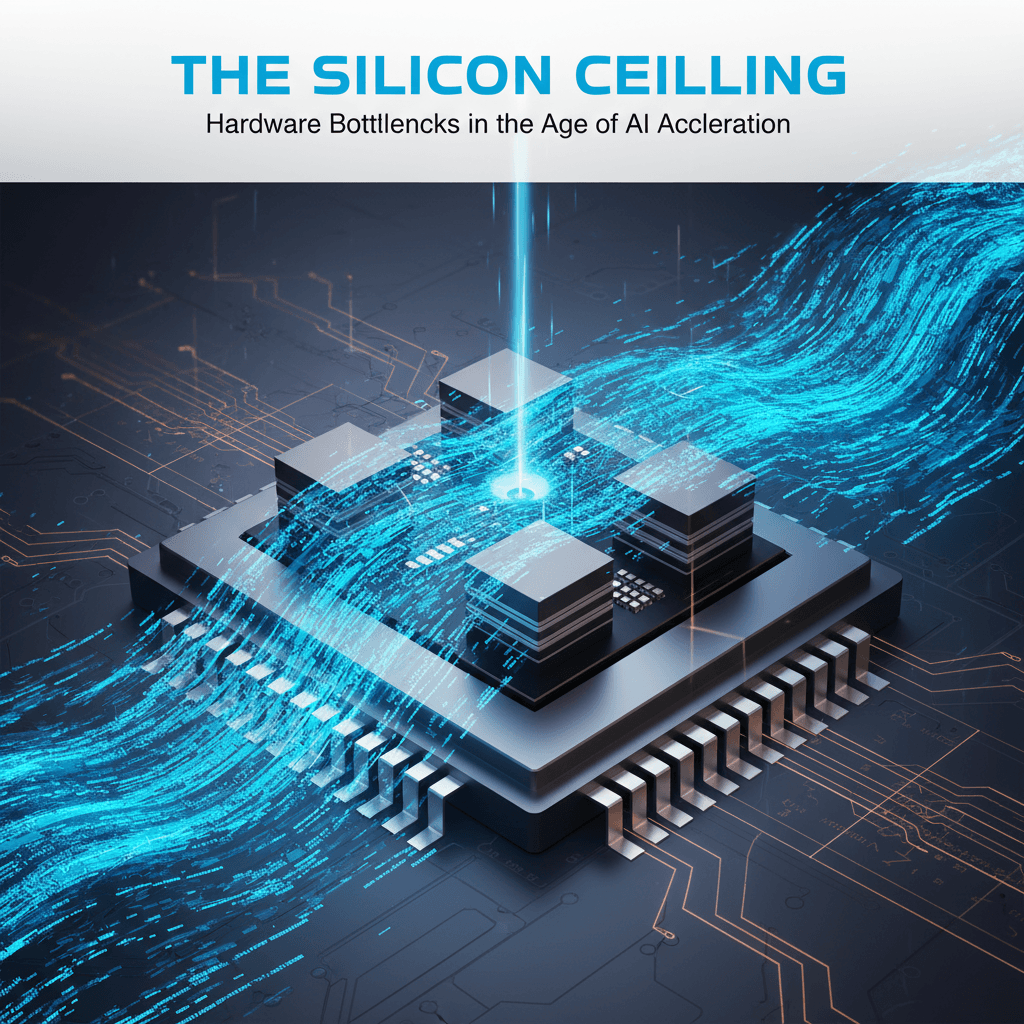
The defining constraint for enterprise artificial intelligence deployment shifted dramatically, moving the bottleneck from software development velocity to the hard physics of the global semiconductor supply chain. The pervasive AI chip shortage that swept the industry throughout 2025 served as a brutal lesson for Chief Technology Officers and enterprise leaders globally, forcing them to accept that semiconductor geopolitics and manufacturing capacity constraints were, in the end, far more determinative of their AI roadmap than any vendor commitment or internal planning document. What began as a targeted, national security-driven policy by the United States to restrict advanced AI chips to strategic rivals like China soon broadened into a complex, global infrastructure crisis. The core issue was not a failure of a single factory, but rather an explosive, unprecedented surge in AI infrastructure demand colliding directly with a manufacturing and packaging capacity that simply could not scale at the speed of software innovation[1]. The resulting pressure fundamentally reshaped the economics of enterprise AI, proving that the foundation of the digital future is still deeply rooted in physical, geopolitical reality.
The first and most complex layer of the 2025 crisis was the weaponization of the semiconductor supply chain through escalating export controls. The US Department of Commerce’s Bureau of Industry and Security introduced new regulations, often through a tiered licensing system, which placed stringent limitations on the export of high-performance AI processors and, crucially, the specialized equipment and software required to manufacture them[2][3]. This regulatory framework, designed to protect national security interests and maintain a technological lead, fractured the historically integrated global supply chain into emerging regional blocs defined by geopolitical alignment[4][5]. For instance, the restrictions targeted specific performance metrics, making access to chips like the highest-end components from companies such as Nvidia and AMD conditional or outright prohibited in certain markets[6][7]. While these firms sought to create compliant, lower-performance alternatives for restricted markets, the overall effect was a massive reduction in the global pool of the most capable accelerators. American firms saw billions in projected revenue evaporate from these restrictions, illustrating the direct cost of the new techno-nationalist environment[7]. The ripple effect of these policies meant enterprises in Tier Two and Tier Three countries faced sudden, unpredictable limitations on hardware access, slowing internal research and deployment projects and compelling them to explore non-traditional sourcing or alternative architectures to sustain their competitive efforts[2][6].
Beyond geopolitics, the inherent physics of advanced manufacturing proved to be the most frustrating capacity constraint for CTOs. While chip wafer production itself was ramping up, a critical secondary choke point emerged in the form of advanced packaging. Specifically, Taiwan Semiconductor Manufacturing Company’s (TSMC) CoWoS (Chip-on-Wafer-on-Substrate) technology, which is essential for stacking High-Bandwidth Memory (HBM) alongside the GPU die to maximize throughput, became the defining physical bottleneck[1]. Demand for this highly specialized integration technique was fully booked through the end of 2025, a delay that unilaterally added months to the delivery timelines for fully assembled AI accelerators and forced deployment timelines to stretch far beyond initial projections[1]. Moreover, the insatiable appetite for advanced AI chips caused a cascade effect across the broader electronics market. Manufacturers redirected production capacity from conventional memory components, like standard DRAM and flash memory, to the high-margin HBM used in AI data centers, resulting in an immediate scarcity of routine memory chips[8][9]. Inventory levels for these foundational components collapsed from comfortable buffers to just days of supply in some regions, creating a secondary supply chain crisis that affected not just AI servers but also general enterprise IT infrastructure, consumer electronics, and industrial equipment makers globally[8][9].
The dual pressures of geopolitical restrictions and physical scarcity translated directly into a sharp and painful increase in the cost of enterprise AI deployment. Initial industry forecasts had predicted a strong rise in spending, but the reality was far more severe than expected. Average monthly enterprise AI spending was forecasted at US$85,521 in 2025, marking a 36% jump from the previous year, with a significant portion of this inflation attributed directly to soaring component costs[1]. The visible price increases were stark: HBM, a key enabler for modern AI chips, saw price climbs of 20-30% year-over-year[1]. The shortage also pushed GPU cloud computing costs to rise dramatically, with some regional cloud providers reporting increases between 40% and 300% depending on the specific service and location[1]. The cost escalation was not limited to the flagship AI components; hidden costs compounded the budget pressures, as enterprise-grade NVMe Solid State Drives, which are vital for feeding data to high-speed accelerators, saw prices climb 15-20% due to the increased endurance and bandwidth requirements of AI workloads[1]. These unforeseen capital expenditures compelled many organizations to re-evaluate their financial models, often shifting AI projects from on-premise deployment to a more elastic, albeit more expensive, cloud-based consumption model as a stopgap solution.
The hard-won insights from navigating this tumultuous environment crystallized into a new playbook for enterprise technology leaders. The primary strategic lesson was the necessity of supply chain diversification and resilience over relying on single-vendor roadmaps. Organizations that had established long-term supply agreements with multiple vendors before the shortages intensified were able to maintain significantly more predictable deployment timelines than those who operated on a purely transactional basis[1]. CTOs are now prioritizing regional diversification and nearshoring strategies to reduce dependence on geographically concentrated manufacturing hubs, a trend accelerated by the ongoing geopolitical tensions[8][10]. Technologically, the crisis spurred a greater focus on adaptive AI architectures that allow for flexibility across various processors, including those from Nvidia, AMD, and Intel, rather than being locked into a single ecosystem[11]. For many, the only immediate relief was an investment in cloud-based AI services, using the pay-as-you-go model to bypass the impossible lead times for physical hardware[11]. Ultimately, the 2025 AI chip shortage irrevocably changed the strategic calculus, confirming that future technological dominance would be determined not just by software innovation, but by mastery of the complex, politically charged, and physically constrained supply chains that power it.