
AI Transforms Marketing From Mass Communication to Hyper-Personalized Engagement
How AI and big data facilitate the shift from mass communication to real-time, hyper-individualized consumer engagement.
January 2, 2026
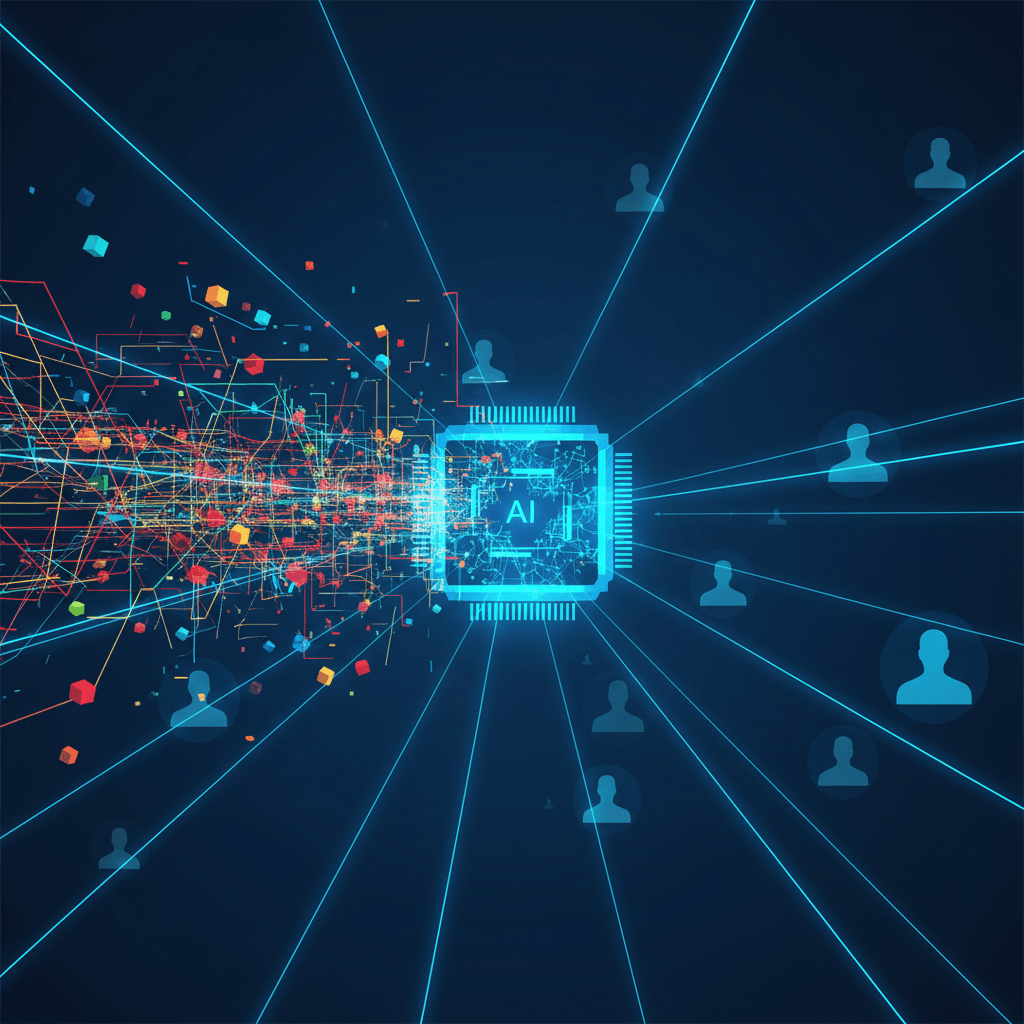
The confluence of artificial intelligence and big data has ushered in a fundamental re-architecture of the digital marketing landscape, moving it decisively from mass communication toward hyper-individualized engagement. These technologies represent more than just incremental tools; they are the new operating system for businesses seeking to gain a competitive edge by deeply understanding and proactively serving the modern consumer. The sheer volume, velocity, and variety of digital data generated from every click, search, and social media interaction provide an unprecedented canvas for AI algorithms to paint a near-perfect picture of consumer intent and preference[1]. By leveraging machine learning and advanced analytics to process this enormous dataset, marketers can transition from relying on broad demographic targeting to executing strategies that feel uniquely tailored to the individual, driving measurable improvements in both efficiency and return on investment.
The most visible transformation wrought by this technological partnership is the rise of hyper-personalization at scale, a critical factor in current consumer expectations. Consumers are increasingly likely to shop with brands that not only know their preferences but also provide personalized offers, a factor cited by over 90 percent of customers in some studies[2]. Traditional marketing, which relied on rule-based systems, is quickly being superseded by AI-powered systems that continuously learn and adapt in real-time[3]. These intelligent systems analyze a customer's entire digital footprint, including browsing history, past purchases, and real-time behavioral data, to create dynamic customer profiles[3]. The result is that companies using AI-driven personalization strategies have reported an increase in sales by 20 percent or more[2]. Examples from digital giants underscore this impact: personalized calls-to-action have been shown to outperform their generic counterparts by over 200 percent, and AI-powered recommendation engines can be responsible for significant portions of an e-commerce platform's total revenue[4][3]. This shift represents an evolution of consumer segmentation into a granular, one-to-one marketing model, creating stronger brand loyalty and significantly improving customer lifetime value[5].
Beyond customer-facing content, AI and big data have entirely redefined the mechanics of digital advertising, most notably through the automation and optimization of programmatic ad buying. Programmatic advertising, which automates the decision-making process of ad placement, now has AI as its backbone, allowing advertisers to analyze vast amounts of data in the milliseconds it takes for a webpage to load[6][7]. Machine learning algorithms are employed in real-time bidding to determine the optimal price and placement for an ad impression, ensuring that messages reach the right person at the most opportune moment[7]. This capability ensures marketing budgets are optimized for both cost and impact, leading to higher conversion rates and an improved return on ad spend[6][8]. Furthermore, this technological precision is a crucial defense mechanism against persistent industry challenges. AI-driven systems are capable of analyzing patterns and detecting anomalies to identify and prevent ad fraud, protecting advertiser funds and maintaining the integrity of digital campaigns[6]. As advertising platforms become more complex, the AI's ability to streamline campaign management and make real-time adjustments across multiple dimensions—such as ad format, device type, and geography—is a necessary feature for efficiency[9].
Another profound application that is shaping strategic marketing is the integration of predictive analytics. By analyzing historical data, machine learning algorithms can forecast future trends and anticipate consumer behavior with a degree of accuracy previously unattainable[10]. This capability extends to predicting a customer’s future purchase propensity, their likelihood to churn, or their lifetime value, allowing businesses to proactively allocate resources and tailor retention strategies[1]. Instead of merely reacting to past campaign performance, marketers can now use these predictions to make data-driven decisions that reduce guesswork and optimize resource allocation[11]. This forward-looking approach enables a more agile and adaptive marketing strategy, where businesses can anticipate market shifts and consumer needs before they fully materialize[10]. The broader trend of AI-powered automation extends to content generation, social media management, and customer service, with generative AI tools drafting everything from ad copy to personalized email sequences[12][13]. This automation of mundane tasks can boost campaign efficiency by as much as 40 percent, freeing human marketers to concentrate on high-level strategic planning and creative development[14][13].
The industry-wide implications of this transformation for the AI sector and marketing professionals are immense. The global AI market in marketing is projected to grow significantly, underscoring the rapid and sustained adoption of these solutions by businesses worldwide[15]. This growth fuels demand for sophisticated AI marketing platforms, specialized data infrastructure, and, critically, a new class of marketing professional[16][17]. Marketers must adapt by acquiring expertise in data analysis, machine learning concepts, and the ethical deployment of AI tools to remain competitive[18][17]. However, the acceleration of AI integration is not without its challenges, primarily concerning data privacy and algorithmic bias[5][17]. Stricter privacy regulations and a quarter of consumers expressing concern about AI-driven interactions necessitate that marketers maintain vigilance regarding ethical data use, transparency, and the integrity of their algorithmic models to ensure continued consumer trust and compliance[19][4][20][17]. Ultimately, the fusion of AI and big data is not a temporary trend but a permanent technological paradigm shift that mandates continuous innovation and adaptation for any business aiming to thrive in the evolving digital economy.
Sources
[3]
[5]
[7]
[8]
[12]
[13]
[14]
[16]
[17]
[19]