
AI transforms HR operations, freeing teams for strategic, human-centric work.
The era of experimentation is over: AI is achieving massive cost savings and strategic liberation in core HR operations.
December 18, 2025
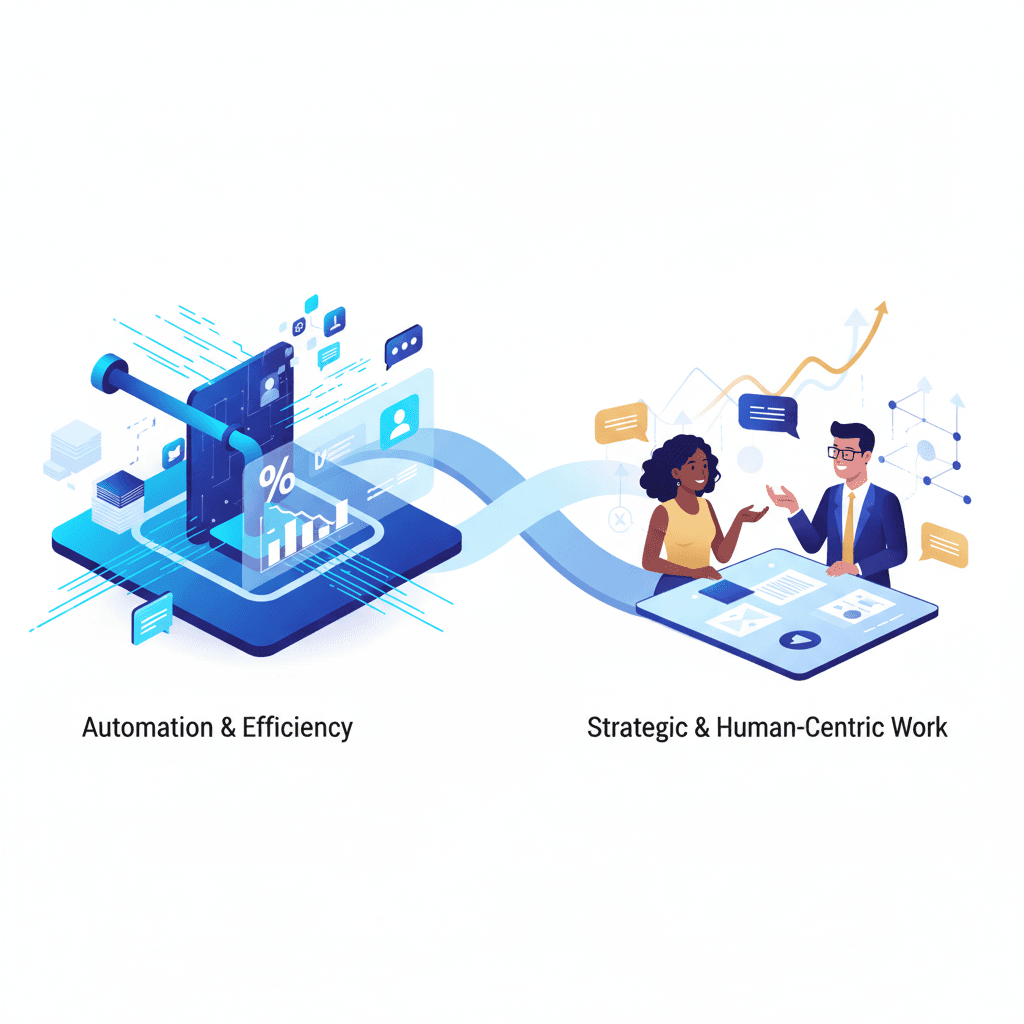
The integration of Artificial Intelligence into Human Resources has moved decisively past the experimental stage, transitioning into a core operational component that is fundamentally reshaping how organisations manage their workforce and drive strategic business outcomes. This technology is now deeply embedded in the day-to-day mechanisms of HR departments, from answering employees’ questions to automating key stages of the talent lifecycle. The most compelling evidence of this shift is found in the quantifiable results, where companies are demonstrating significant gains in efficiency, measured precisely by time saved, cost reduction, and the volume of successfully resolved employee queries. This measurable operational impact is not merely a convenience; it represents a strategic liberation of HR professionals to focus on high-value, human-centric activities, validating AI’s role as an indispensable enterprise tool.
One of the clearest operational impacts of AI is its ability to streamline HR service delivery and enhance employee self-service. AI-powered virtual agents and chatbots are revolutionising how employees access information, providing instant, 24/7 support for routine inquiries about policies, benefits, and leave management. Companies using these systems have seen a substantial reduction in the administrative burden on their HR teams. For instance, IBM's internal virtual agent, AskHR, automates over 80 internal HR tasks and has engaged in millions of conversations, reporting a 94% success rate in answering commonly-asked questions.[1] This efficiency gain is further underscored by a reported 75% reduction in lodged support tickets and a monumental 40% reduction in overall HR operational costs over a four-year period, demonstrating a clear return on investment.[1] The deployment of onboarding chatbots by mid-sized firms has similarly shown significant success, with one example resolving 70% of all HR-related queries in the first month, thereby allowing HR staff to focus on critical tasks like cultural immersion and team-building for new hires.[2] Furthermore, research indicates that organisations using AI chatbots can see a 50% to 80% reduction in time spent on basic query resolution.[3] This capacity for automated transaction completion, rather than just query routing, marks a distinct evolution of the technology's capability to take on complex administrative workloads.
Beyond internal query management, AI is generating profound operational efficiencies across the entire talent acquisition process. Recruitment, traditionally a time-consuming and often bias-laden function, is being transformed by predictive AI and machine learning algorithms. These systems are capable of analysing vast quantities of applicant data to automate resume screening, predict candidate success, and even suggest personalised job recommendations.[4][5][6] The operational benefits are being reported globally, with a large international company that implemented an AI-powered recruitment platform seeing a 50% decrease in its recruitment cycle time and a 30% reduction in the cost per hire.[4] A separate multinational corporation reduced its recruitment time by 40% after integrating AI solutions, simultaneously increasing diversity among new hires by 30%.[7] Another study by McKinsey found that AI-driven recruitment processes can reduce the time-to-hire by up to 30%.[8] Vodafone, for example, used its internal ‘Grow with Vodafone’ platform to reduce its time-to-hire from 50 days to 48 days and achieved a 78% reduction in questions posed by potential applicants and those onboarding into new roles.[1] These metrics highlight a fundamental shift: AI is not just speeding up hiring, but is also improving the quality and objectivity of talent selection, leading to better candidate-role matching and contributing to lower employee turnover.[4]
The strategic impact of AI extends into employee development, retention, and workforce planning, moving HR from a reactive to a proactive function. Predictive analytics, a core capability of AI, allows HR leaders to anticipate future challenges by analysing historical workforce data.[8][2] This enables proactive strategies such as identifying employees at risk of attrition, flagging potential skills gaps, and forecasting staffing needs.[9][8][5] Deloitte's research supports this, revealing that organisations investing in AI for HR management have seen up to a 30% reduction in turnover rates.[10] The technology also facilitates smarter, continuous performance management by analysing real-time data to provide personalised learning and development recommendations, moving beyond the limitations of subjective annual reviews.[8][11] Furthermore, in the realm of employee wellbeing, machine learning is being used to predict which members of a benefits plan are likely to drive higher healthcare costs, allowing employers to intervene proactively and improve engagement with total rewards offerings.[9] This capability to draw actionable insights from complex data sets empowers HR teams to make data-driven decisions that impact long-term business goals, an improvement over traditional methods where teams without AI assistance spend roughly 40% of their time on administrative tasks that could be automated.[12]
The comprehensive operational transformation of the HR function has significant implications for the broader AI industry. The demonstrable return on investment, marked by hard data on time and cost savings, is fueling a surge in the demand for specialised HR tech solutions. Gartner's research indicates that the share of HR leaders actively planning or deploying Generative AI solutions jumped from 19% in June 2023 to 61% by January 2025, underscoring rapid adoption.[13] This market growth is driving innovation in AI, pushing developers to create more sophisticated and industry-specific models, particularly in predictive analytics and conversational AI. The trend also necessitates a new approach to HR leadership, requiring the redesign of HR roles and the emergence of new positions like a "Product leader for AI in HR" and "GenAI expert" to manage this AI-infused operating model.[13] The future of the AI industry is increasingly tied to its capacity to deliver measurable, human-augmenting efficiencies in enterprise functions like HR, moving beyond generalised automation to complex, strategic co-delivery of outcomes between human workers and AI agents. For the AI sector, the success in HR provides a powerful case study for the application of AI to drive non-IT-specific operational excellence across all industries.
Sources
[3]
[4]
[5]
[7]
[9]
[10]
[11]
[12]
[13]