
AI Operating System Will Drive Britain's Railway Expansion and Efficiency
Machine learning drives a predictive revolution, delivering hyper-efficient traffic control and capacity for a billion more passengers.
December 24, 2025
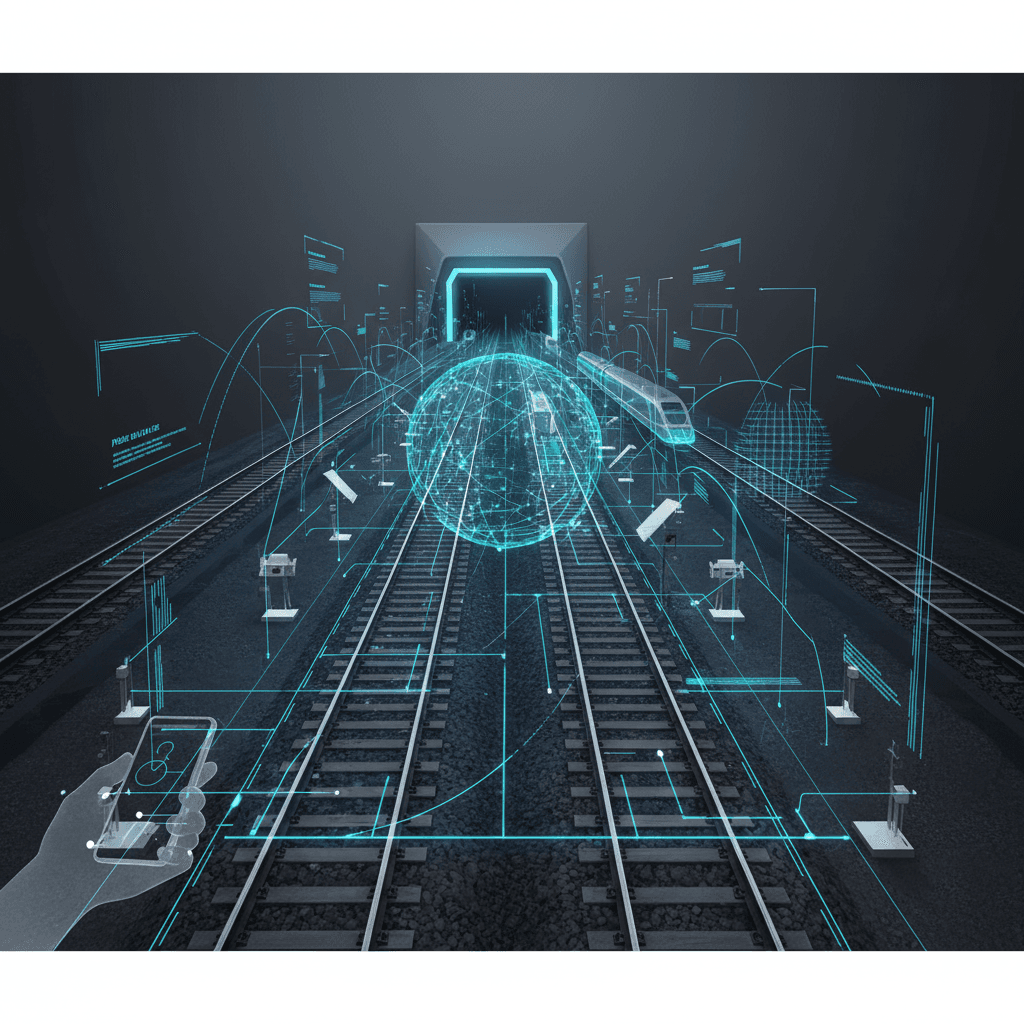
The next decade for Britain’s railway network is defined by an ambitious convergence of technology and operational complexity, setting the stage for Artificial Intelligence to become the sector’s new foundational operating system. A recent industry report forecasts that the network could facilitate an additional billion passenger journeys by the mid-2030s, significantly expanding on the 1.6 billion passenger rail journeys recorded to year-end March 2024. This massive surge in demand necessitates a shift from traditional, reactive management to a sophisticated, proactive control model, where layers of digital systems, expansive data, and interconnected suppliers create both the potential for unprecedented efficiency and a new degree of systemic risk. The professional challenge for the AI industry is not just to maintain an aging infrastructure but to fundamentally reimagine and optimize every facet of the rail experience, from the track bed to the passenger’s mobile app.
The most mature and immediately visible application of this technological shift lies in the transformation of infrastructure upkeep, moving decisively past reactive and scheduled maintenance. The industry is rapidly transitioning from a "find and fix" model to one of "predict and prevent." Network Rail’s proprietary ‘insight’ tool exemplifies this transition, leveraging machine learning algorithms to analyze vast quantities of data from measurement trains, remote condition monitoring, and track images to predict asset failures, in some cases, up to a year in advance[1]. This capacity for advanced warning allows maintenance teams to schedule work during quieter periods, drastically reducing the impact on passengers and cutting down on emergency call-outs[2]. Beyond fixed sensors, this revolution is powered by edge-AI technologies, including high-definition cameras, LiDAR scanners, and vibration monitors mounted on rolling stock, which continuously monitor the track and assets for degradation[2]. This predictive capability is projected to yield significant efficiency gains, with condition-based and predictive maintenance offering a combined efficiency improvement of 15 to 25 per cent, and predictive maintenance alone potentially cutting maintenance costs by up to 10 per cent[3]. Critically, AI also enhances safety by using computer vision and deep learning paired with electro-optic sensors to detect and classify obstacles, such as people, up to 1.5 kilometres ahead, reducing risk not only for passengers but also for engineers who must spend less time on-track[3][4][1].
Where Predictive Maintenance represents the ‘watching’ function of AI, the next critical phase involves the sophisticated ‘predicting’ and ‘learning’ necessary for high-frequency operational control. Increasing network capacity by a billion journeys without laying new track demands hyper-efficient traffic management. AI-driven decision support systems are emerging as the solution, processing immense, real-time datasets including train locations, weather forecasts, passenger flow data, and timetable constraints[5]. These systems enable dynamic rescheduling to reduce delays and improve service continuity[6][5]. Trials are underway in Europe for digital twin and AI-based traffic management that aim to increase overall network throughput[7]. Furthermore, AI extends into the control of the rolling stock itself; algorithms now advise train drivers on optimal acceleration and braking profiles based on track conditions and timetables, with studies indicating this approach can save between 10 to 15 per cent in energy consumption[7][8]. The logistical complexity of the network is also being tackled by AI in the backend, where solutions for optimizing crew and shift planning have shown promising results, generating a 10 to 15 per cent optimization in labour planning[9]. This interconnectedness of systems illustrates the core report finding: AI is not a single product, but a pervasive, optimizing ‘operating system’ layered across infrastructure, trains, and personnel[2].
The final frontier of AI in rail is the direct engagement with the end-user, transforming the passenger experience from a transactional to a personalized journey. This domain, focused on 'learning' customer behaviour and adapting services, is being reshaped by technologies like Generative AI and advanced computer vision. Smart ticketing systems are moving towards friction-less, hands-free validation using cameras and AI models to classify individuals passing through gates, enhancing convenience and security[10]. This modernization includes systems like Pay As You Go (PAYG) across a growing number of UK stations, supported by analytics to understand customer needs and the impact of fare changes[11][10]. Beyond ticketing, the biggest passenger benefit lies in real-time information and personalized assistance. Trials in major hubs, such as London Waterloo and Euston, involve AI-powered CCTV and sensors monitoring passenger movements to predict crowd build-ups, which allows operators to optimize train dispatching and provide real-time guidance via mobile notification, advising passengers on the least congested routes or gates[6][10]. Generative AI chatbots and AI video agents are now being deployed in customer service to offer instant, 24/7 support, capable of translating real-time disruption data into concise, personalized explanations of delays and offering alternative travel options with speed and accuracy far beyond traditional customer service platforms[11][12].
The digital transformation of the rail sector presents a major economic opportunity for the Artificial Intelligence industry, moving it beyond a purely consultative role into a position as a critical infrastructure partner. Global analysis estimates that greater AI adoption could unlock a monumental annual impact for railway companies worldwide, projected to be between $13 billion and $22 billion[9][13]. This value creation is not only in cost savings from maintenance and energy but also in new revenue streams derived from improved service reliability and enhanced infrastructure capacity use[13]. The necessary technological ecosystem requires continued heavy investment in analytical AI, Machine Learning, and Big Data processing, with an accelerating demand for expertise in developing and integrating complex sensor networks, advanced machine vision systems, and robust cloud architectures[1][14]. Furthermore, the complexity of managing a data-centric, interconnected network necessitates specialization in data governance and robust cybersecurity, which remain significant challenges to widespread implementation[5][15]. The opportunity is a lucrative one for specialist vendors and third-party start-ups, who can leverage rail industry initiatives like the Rail Data Marketplace to develop the next generation of solutions, positioning the AI sector as the essential engine for modernizing and capacity-expanding one of the world's oldest and most vital forms of transportation[6][13].