
900 Million Global Users Fail to Fund OpenAI's Expensive AI Ambitions.
OpenAI’s struggle to fund a trillion-dollar future hinges on monetizing its non-Western free users.
January 5, 2026
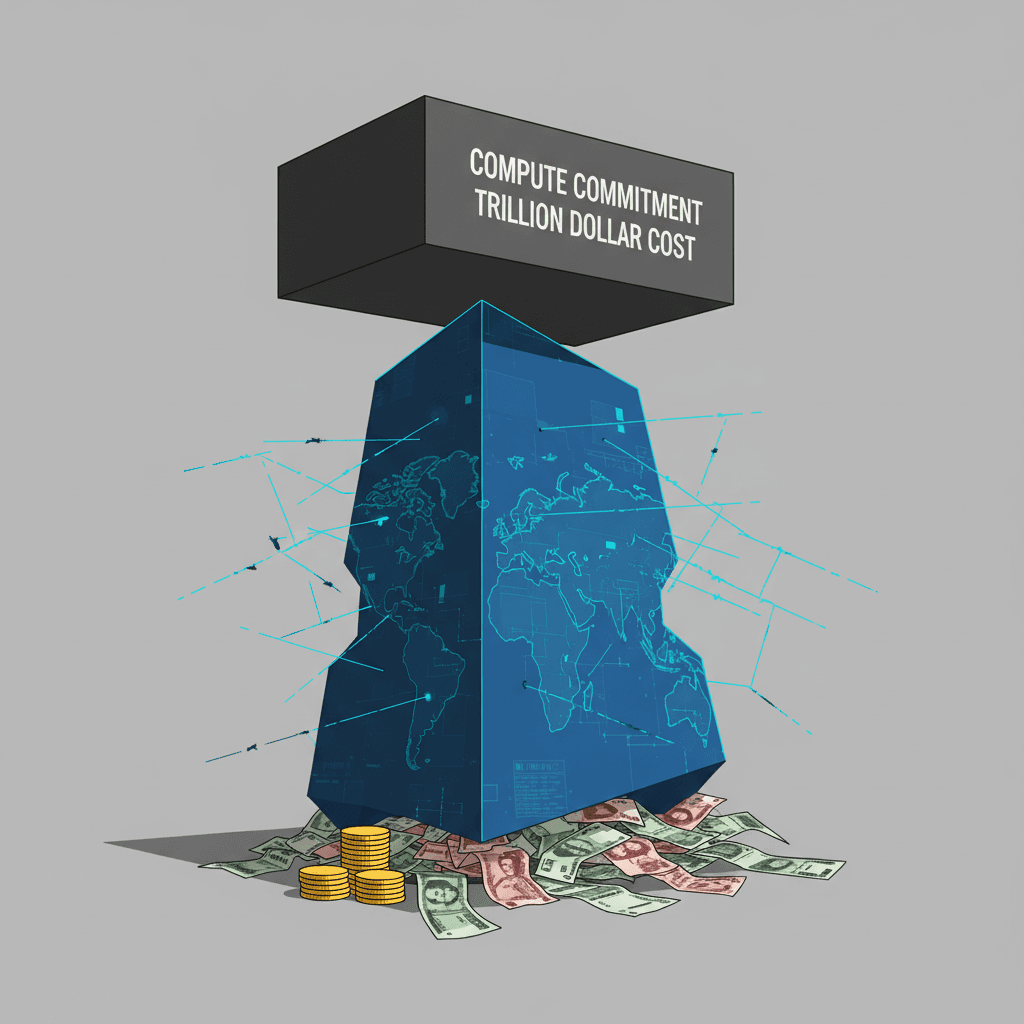
The enormous user base of ChatGPT, a figure now reportedly exceeding 900 million weekly active users, presents a misleading picture of OpenAI's financial health, as a vast majority of those users are proving difficult to monetize, raising significant questions about the long-term sustainability of the AI giant’s business model. Only approximately five percent of ChatGPT’s immense user population are paying subscribers, leaving the company with the complex challenge of funding massive, multi-billion-dollar compute infrastructure commitments primarily through a minuscule paying fraction and an unproven advertising strategy targeted at the free tier. This dynamic has created a revenue conundrum where the scale of user adoption, while impressive, does not translate directly into proportional commercial value, particularly when geographical user demographics are factored into the equation.
The core of OpenAI’s monetization challenge is rooted in the international composition of its user base. According to reports citing data from tracking platforms, nearly 90 percent of ChatGPT’s hundreds of millions of weekly users reside outside the United States and Canada. This overwhelming concentration of users in international markets, including major user hubs like India and Brazil, dramatically reduces their value to advertisers in the current global digital ad market. Traditional tech platforms, such as social media and search engines, consistently see a profound difference in the average revenue per user (ARPU) between users in high-spending Western markets and those in emerging economies. For example, the ARPU in the United States for some major platforms can be tens of times higher than the ARPU generated from users in other countries, creating a stark revenue gradient that severely impacts any advertising model OpenAI might pursue. The company has attempted to address this disparity by offering cheaper, region-specific plans like "ChatGPT Go" in markets such as India, priced around five dollars per month, yet the core issue remains: most of the global user base is utilizing the free service.[1]
This structural ad revenue problem comes at a critical time when OpenAI’s financial needs are soaring. The company is reportedly planning for aggressive revenue growth, projecting a need to generate billions from free users by the end of the decade, with advertising expected to play a major part in meeting massive data center and compute commitments that could cost over a trillion dollars. With subscription revenue confined to roughly five percent of users, which translates to an estimated 10 million paying subscribers, the pressure to develop a viable advertising model for the remaining 95 percent is immense.[1][2] The initial forays into monetization outside of core subscriptions have been rocky. The company briefly experimented with promotional messages in the chat interface that closely resembled advertisements, generating swift user backlash, which included complaints from even paying subscribers, and led to the quick disabling of the feature.[3] This episode underscored the delicate balance required to introduce commercial content into a conversational AI interface where users expect personalized, relevant, and non-intrusive responses.
Despite the hurdles, the scale of ChatGPT remains too massive for advertising to be ignored as a crucial revenue stream. Analysts and company projections suggest that an effective ad strategy could eventually account for a significant portion of the company's annual revenue. OpenAI has been exploring several subtle ad formats to integrate sponsored content, including mockups that show sidebar sponsored results and an intent to prioritize sponsored information in responses to commercial queries.[4] The company’s approach involves attempting to introduce a highly contextual advertising channel that feels helpful rather than intrusive, a challenging distinction to maintain in a space where user trust is paramount. Furthermore, the company has diversified its monetization efforts by introducing in-chat purchases and e-commerce features, allowing users to complete transactions directly within the chatbot, with OpenAI earning a commission on each sale.[5] This move positions ChatGPT as an "agentic commerce" platform, subtly shifting its role from an information tool to a direct sales channel, though similar e-commerce experiments on other platforms have struggled to gain traction.
The broader implications for the AI industry are profound. OpenAI’s struggle highlights the fundamental economic challenge of modern generative AI: revolutionary technology with extremely high operational costs running on a free-tier model that is difficult to monetize through traditional means. The low conversion rate of five percent and the geographic distribution of free users indicate that simply building a large user base is insufficient; the user base must be one that advertisers are willing to pay a premium for. As competitors like Google’s Gemini intensify the race to integrate AI into existing, highly monetized search and advertising ecosystems, OpenAI must devise a groundbreaking, culturally sensitive, and financially effective advertising model without alienating the hundreds of millions of users who are the core of its dominance but whose attention is currently valued at a fraction of that of North American users. The future of the company, and potentially the commercial viability of the entire consumer AI sector, rests on its ability to transform its massive global reach into a sustainable revenue engine.